


















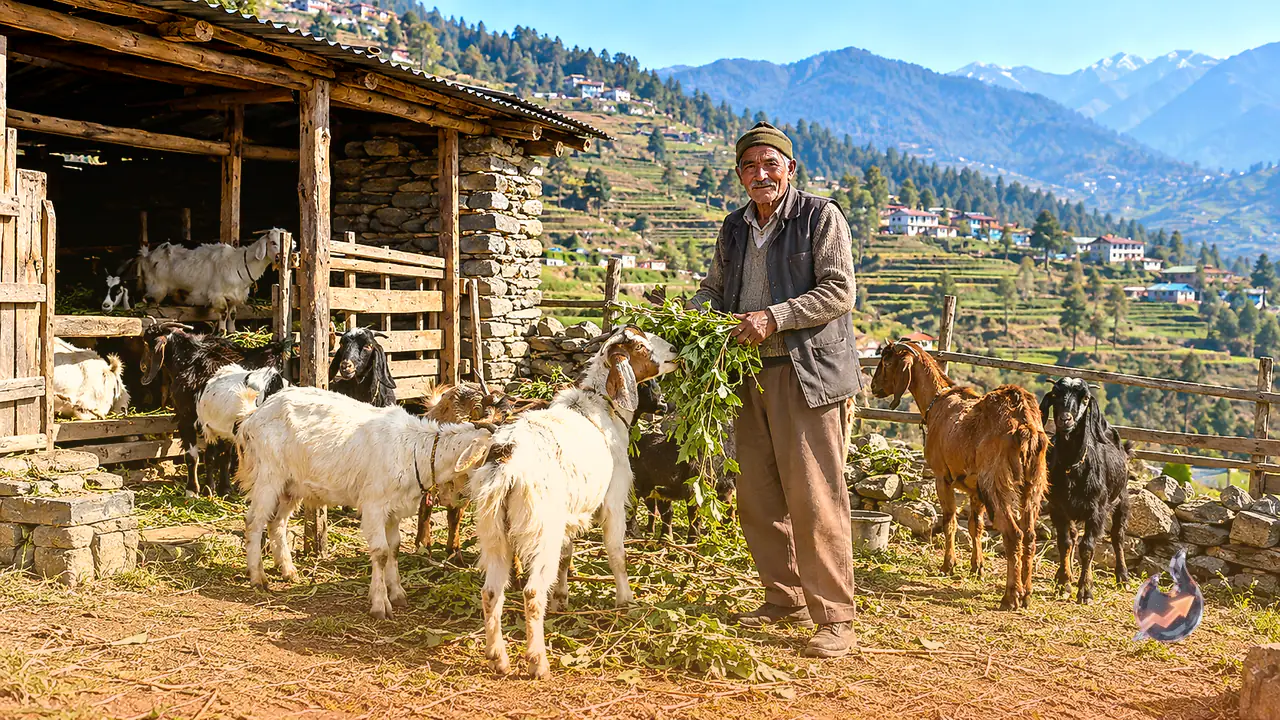

In the mountainous regions of Uttarakhand, limited employment options have long driven local youth to migrate to urban centers in search of work. However, the story of Prem Singh from Jhopra village in Bageshwar district highlights a practical path toward rural self-reliance. For the past decade, Singh has successfully managed a goat farming operation that fully supports his household expenses. Rather than remaining away from home for wages, he chose to invest his efforts into local animal husbandry, becoming an encouraging example for the regional rural economy.
Transitioning from Vehicle Attendant to Village Entrepreneur
Before establishing his goat rearing enterprise, Prem Singh worked for years as a conductor on commercial transport vehicles. That line of work kept him away from his home and family for extended periods. Realizing the personal toll of constant travel, he decided to return to his native village and build an independent source of income that allowed him to stay close to his loved ones. This decision prompted his entry into livestock management.
Starting with a modest number of animals, Singh systematically expanded his herd over time. Today, goat herding serves as his family's primary financial engine. He raises the livestock with care and sells animals as needed to cover recurring household expenses. According to Singh, the venture provides a comfortable and steady income, eliminating the need to seek low-paying jobs outside his home district.
Navigating Mountain Terrain and Daily Operational Demands
While goat farming might appear straightforward, managing livestock in high-altitude environments presents significant operational demands. Ensuring timely feeding schedules and monitoring health requires steady daily commitment. Due to the steep terrain of the hills, herdsmen often walk long distances across rough trails to reach suitable pasture lands. Continuous vigilance is necessary to prevent animals from straying or getting injured along dangerous slopes.
Seasonal weather shifts present additional complications, requiring farmers to shelter animals from sudden rainstorms and plummeting temperatures. Prompt medical treatment is critical whenever an animal falls ill, as health losses translate directly into reduced income. Consequently, success in goat farming demands physical endurance, practical care skills, and careful daily planning.
Strengthening the Hill Economy and Addressing Migration
Prem Singh's experience offers valuable insights for rural residents seeking self-employment within their native villages. Given the constraints of small landholdings in mountainous districts, livestock rearing forms a vital backbone for rural commerce. Low-capital enterprises like goat herding provide accessible earning opportunities that can help stem the ongoing trend of forced migration from remote hill regions.
Unlocking the full economic potential of rural animal husbandry requires stronger support infrastructure across mountain districts. Improving access to veterinary healthcare, securing reliable fodder supplies, and establishing direct market links for smallholder farmers remain critical priorities. Stories like Prem Singh's demonstrate that when local effort is matched with basic resource management, mountain communities can build resilient and self-sustaining local economies.