






















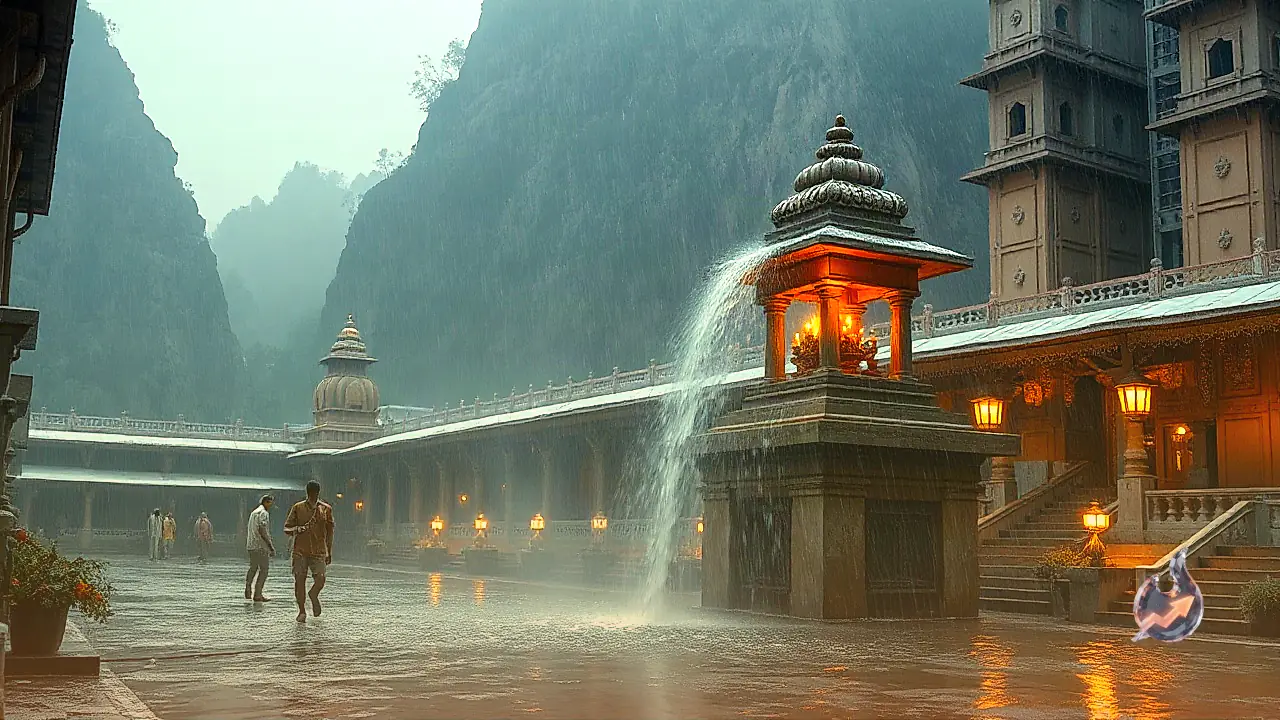

A breathtaking spectacle of faith and nature has unfolded at the revered Jatashankar Dham in the Chhatarpur district of Madhya Pradesh following intense regional rainfall. Torrential downpours lasting two consecutive days activated a sudden, powerful flow of water from the sacred Gomukh inside the temple complex, naturally bathing the ancient Shivling in a continuous stream of water. Widely referred to as the Kedarnath of Bundelkhand, the temple complex has been transformed into a majestic scene as cascading waterfalls from surrounding hills join the rushing waters of Gomukh. Devotees visiting the shrine view this natural ritual as a divine blessing and continue to gather despite the heavy rains.
The Sacred Significance of Gomukh and Mythological Lore
According to Hindu mythology, Jatashankar Dham marks the sacred location where Lord Shiva once sat in deep meditation amidst his matted locks. While the natural Gomukh spout maintains a steady trickle of water throughout the year, the heavy two-day monsoon deluge has dramatically amplified its volume and force. The rushing stream cascades directly over the sacred Shivling, offering a striking visual of nature performing its own ritual bath, or jalabhisheka, for the deity. This natural phenomenon has drawn crowds of pilgrims and local visitors who consider the amplified monsoon flow a deeply spiritual experience.
Viral Footage Captures Miraculous Temple Scenery
Local pilgrims captured the mesmerizing sight of Gomukh water splashing over the Shivling and the overflowing waterfalls along the nearby hills. Videos of the natural abhisheka quickly began circulating across social media platforms, capturing the attention of spiritual audiences nationwide. Viewers have expressed awe at the harmonious blend of natural beauty and religious devotion, with many characterizing the seasonal cascade as a timely monsoon benediction for the region.
Waterlogging and Official Safety Advisories for Visitors
While the heavy rains have created an enchanting backdrop, the continuous precipitation has also presented notable operational challenges for temple authorities and visitors. Rainwater has accumulated in the main courtyard of the temple, while the water level in the adjacent river has risen significantly. In response to these conditions, local authorities have issued precautionary guidelines advising tourists and pilgrims to exercise heightened caution. Visitors are urged to maintain a safe distance from swollen water channels, avoid waterlogged areas, and follow safety protocols while paying their respects at the shrine.