















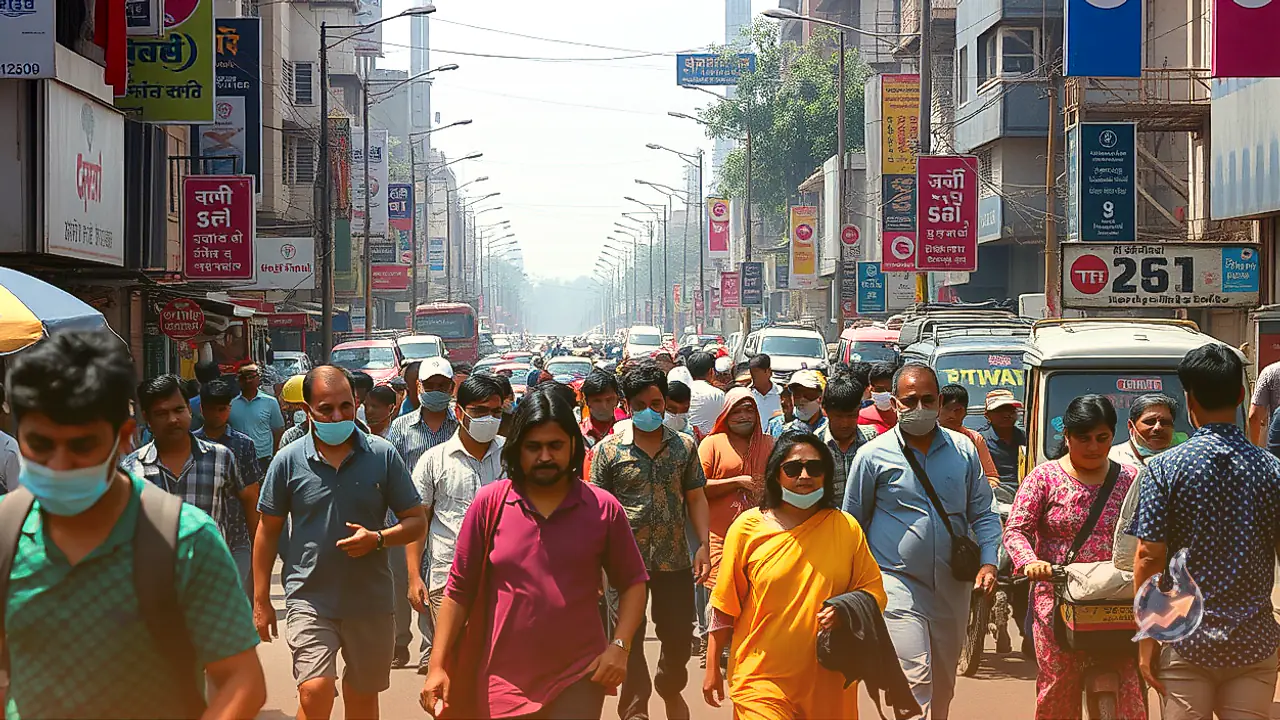

Weather patterns across India have exhibited stark contrasts in recent days, drawing keen attention to the distinct behavior of seasonal transitions. While the national capital, Delhi, has been recording comfortable daytime highs in the range of 31 to 32 degrees Celsius, India's financial hub, Mumbai, witnessed a dramatic spike with the mercury touching the 38 degrees Celsius mark. This prolonged spell of blistering heat and elevated humidity during October has sparked widespread curiosity among residents regarding whether the city will miss out on a perceptible winter entirely this season. Meteorologists assessing these developments have offered a detailed analysis of the underlying mechanisms and what lies ahead for December and January.
Seasonal projections indicate that residents waiting for a sharp drop in temperatures are likely to experience only a subdued winter. While early mornings and dawn hours in December and January are expected to turn pleasantly cool, daytime temperatures will most likely remain well on the higher side. Consequently, the city is far from seeing any prolonged, harsh cold spell this year.
The October Heatwave and Temperature Anomalies
The city has been grappling with oppressive warmth since the beginning of October. At the Santacruz observatory, the mercury climbed to 38 degrees Celsius on October 11, standing a substantial 4.9 degrees above the seasonal average. This marked the hottest October day recorded in the metropolis since October 17, 2015, when the gauge touched 38.6 degrees. The scorching trend showed persistence, recording 38.2 degrees on October 12 before matching 38 degrees once again on the subsequent day. The intensity of this heat prompted the India Meteorological Department (IMD) to issue heatwave alerts for Mumbai along with the neighboring districts of Thane and Palghar.
Atmospheric setups over central India have served as the prime catalyst for this sudden heat buildup. Meteorologists observed an active anticyclonic system lingering over southwest Madhya Pradesh and Gujarat. This circulation channeled extremely dry, warm air from the north-west and west directly toward the coastal belt. Under normal conditions, maritime sea breezes set in during early afternoon, providing natural cooling to the island city; however, this prevailing flow delayed the arrival of the sea breeze significantly. Combined with clear skies, scarce cloud cover, and intense solar radiation, surface heating intensified rapidly.
A surge in temperatures during October is a recognized post-monsoon characteristic for Mumbai once the south-west monsoon retreats. This year, the monsoon withdrew on October 3, well ahead of its standard withdrawal timeframe of October 10 to 11. Although a strong El Nino phase is being examined as a potential contributing element in global climate dynamics, experts caution that attributing the entire local heat burst strictly to this single phenomenon would be premature.
Winter Outlook: Mild Mornings Against Warm Afternoons
Current long-range models suggest a muted winter across the metropolitan region. December and January will provide a brief respite during the early morning hours with comparatively cooler readings, but daytime solar heating will quickly push afternoon temperatures upward. Forecasters emphasize that these assessments represent overarching seasonal trends rather than rigid day-to-day forecasts, meaning local developments could introduce minor variations. November is projected to stay relatively warm, followed by modest relief in mid-winter, before temperatures commence their upward trajectory again by February.
Prospects for Rain Relief Remain Limited
For citizens hoping that rain showers might break the ongoing heat, immediate prospects appear somewhat slim. The absence of a strong moisture influx across Maharashtra is keeping widespread precipitation away from the state. While isolated showers could touch parts of southern Maharashtra, prevailing atmospheric models suggest that both Mumbai and Pune may largely miss out on any substantial rain activity. Nevertheless, as models update, sudden convective activity or isolated thundershowers cannot be ruled out entirely. Even if brief localized thunderstorms materialize, they will merely provide temporary relief to afternoon maximums rather than marking the arrival of winter.
Coastal Geography and the Fog Question
Concerns regarding dense winter fog, which regularly disrupts transportation in northern inland plains, have also been addressed. Owing to its marine boundary and relatively higher baseline winter temperatures, Mumbai experiences an entirely different microclimate. Favorable night and morning conditions may bring mist and occasional shallow haze, but dense, lingering fog remains highly improbable. Visibility will strictly depend on immediate humidity levels, ambient breezes, and surface air quality.
Broader ocean-atmosphere phenomena, including a positive Indian Ocean Dipole (IOD) and El Nino, continue to inject variability into the macro climate system. However, they do not automatically ensure an unusually warm winter by themselves. Their actual imprint on Mumbai will ultimately be shaped by regional wind patterns and local pressure configurations. For now, while the city can anticipate an eventual retreat from October's intense heat, hopes for a deep, lingering winter chill appear largely out of reach.