


















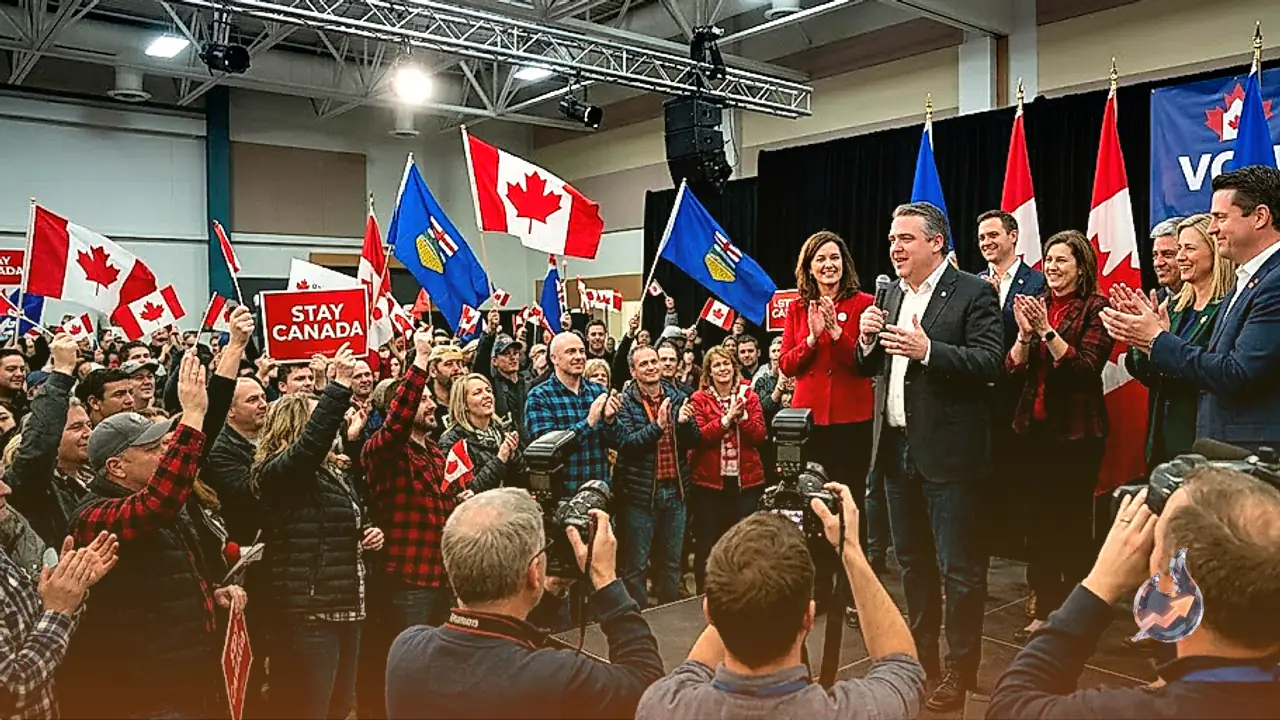

Separatists in Canada's oil-rich province of Alberta have suffered a major setback as voters resoundingly rejected moves to break away. According to projections from Canada's public broadcaster CBC, roughly 76 percent of voters in a regional referendum supported remaining part of Canada, while only about 23 percent favored initiating the process to separate. This outcome is being widely hailed as a significant political victory for Prime Minister Mark Carney and proponents of national unity. The vote took place shortly after Carney warned that external forces were attempting to fracture Canada in order to seize its abundant natural resources, remarks that were widely interpreted as a reference to United States President Donald Trump.
Alberta Referendum Delivers Blow to Separation Push
Based on CBC figures from Tuesday's early tallying, more than 1 million ballots had been counted. Approximately 76 percent of those voters backed staying with Canada, while 23 percent voted in favor of opening a legal path that could eventually lead to establishing an independent nation. However, the ballot measure was not a direct, final vote on outright independence or statehood. The core question asked whether a legal process should be initiated to pave the way for a second referendum on separation at a later date. Some hardline separation supporters had expressed frustration that the ballot did not directly ask voters to choose immediate independence. Voters in Alberta cast ballots across a total of 10 questions on Monday, covering topics such as immigration, healthcare, education, and the province's constitutional powers. Election officials noted that counting the remaining ballots could take several days.
Prime Minister Mark Carney Issues Strong Warnings
Ahead of the referendum, Prime Minister Mark Carney urged citizens not to vote for separation simply as a way to register discontent with the government. Carney, who grew up in Edmonton, Alberta, argued that voting against the country would be a dangerous gamble leading to prolonged uncertainty and missed opportunities. He stated that the world had become more insecure and fractured, adding that forces outside the country's borders wanted to break up Canada to claim its resources. While he did not name anyone specifically, his comments coincided with policies from United States President Donald Trump. Trump has repeatedly joked or spoken during his second term about making Canada the 51st U.S. state, and his administration has exerted political and economic pressure on the country, though Trump has not explicitly endorsed Alberta's independence.
The Strategic Energy Importance of Alberta's Oil Reserves
Alberta remains one of Canada's vital energy-producing powerhouses, sitting on massive petroleum deposits, particularly oil sands. This economic reality means the province's internal politics carry substantial weight for United States energy interests. While President Trump has asserted that the U.S. possesses ample domestic oil and gas and does not need Canadian energy, his administration has simultaneously shown interest in pipelines carrying crude from Alberta south, including discussions surrounding the revival of the Keystone XL pipeline. The separation debate was further fueled by remarks from U.S. officials, including U.S. Treasury Secretary Scott Bessent describing Alberta as a natural partner to the United States. Separatist factions also pointed to meetings with American officials to claim Washington was interested in their cause, though those assertions did not amount to official U.S. government backing for Alberta's independence.