























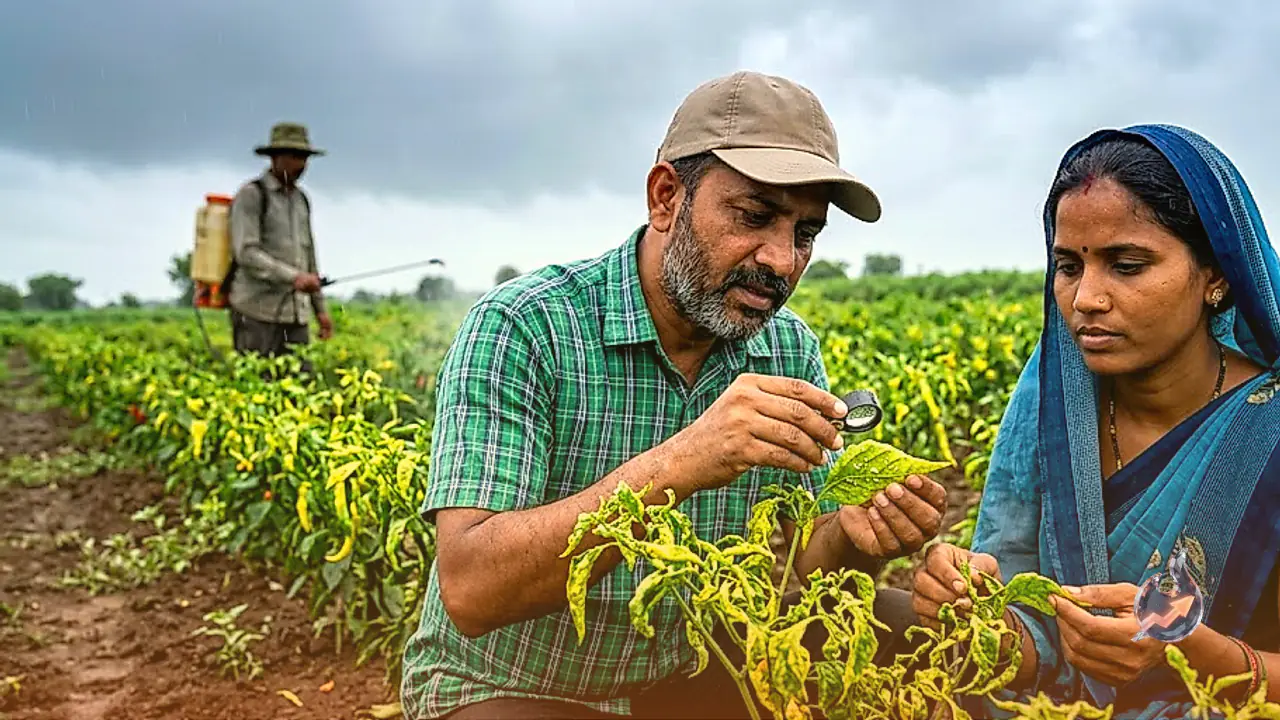

Persistent monsoon rainfall and elevated humidity levels are creating severe challenges for chilli growers. Fluctuating weather patterns have led to a rapid spread of leaf curl disease, locally known as Guchha Rog or Churda-Murda, across chilli fields. This viral condition halts the normal growth of plants and weakens their overall structure. Consequently, the fruits remain undersized, distorted, and shriveled, leading to fears of a substantial decline in crop yield and severe financial stress for farmers.
Symptoms and Impact of Leaf Curl Disease
Timely identification of leaf curl disease is critical for effective crop management. In affected chilli plants, the upper and newest leaves fail to expand normally. Instead, they turn small, crinkled, and tightly bunched together, taking on a clustered or broom-like appearance. As the infection progresses, the plant loses its capacity to synthesize nutrients and produce new, healthy chilli pods. Left unchecked, the disease stunts plant growth across the entire field and prevents fruit development.
Whitefly: The Vector Transmitting the Infection
Agricultural experts highlight that the virus causing leaf curl is primarily spread by the whitefly. This small pest feeds on the sap of infected plants and subsequently transfers the pathogen to healthy ones. In humid weather conditions, whitefly populations expand rapidly, causing the viral infection to sweep through an entire field within days. Controlling the whitefly population is therefore the most vital step in preventing the spread of leaf curl disease.
Early Detection and Preventive Practices
To safeguard crops from widespread loss, regular field inspections are essential. Farmers should act promptly as soon as early signs of leaf curling or stunted top growth appear. During the initial stage of infection, heavily diseased plants should be uprooted immediately and either buried in deep pits far from the field or burned completely. Eliminating the primary source of infection reduces the likelihood of the virus spreading to healthy vegetation.
Chemical Control and Expert Consultation
Chemical interventions are necessary to keep whitefly populations below damaging thresholds. Recommended insecticides such as Methyl Demeton or Imidacloprid can be sprayed to suppress pest activity. However, growers are advised to consult local agricultural extension officers or specialists prior to applying any chemical treatment. Using the exact prescribed dosage and adhering to recommended application schedules is vital to ensure maximum protection without causing damage to the crop.