





















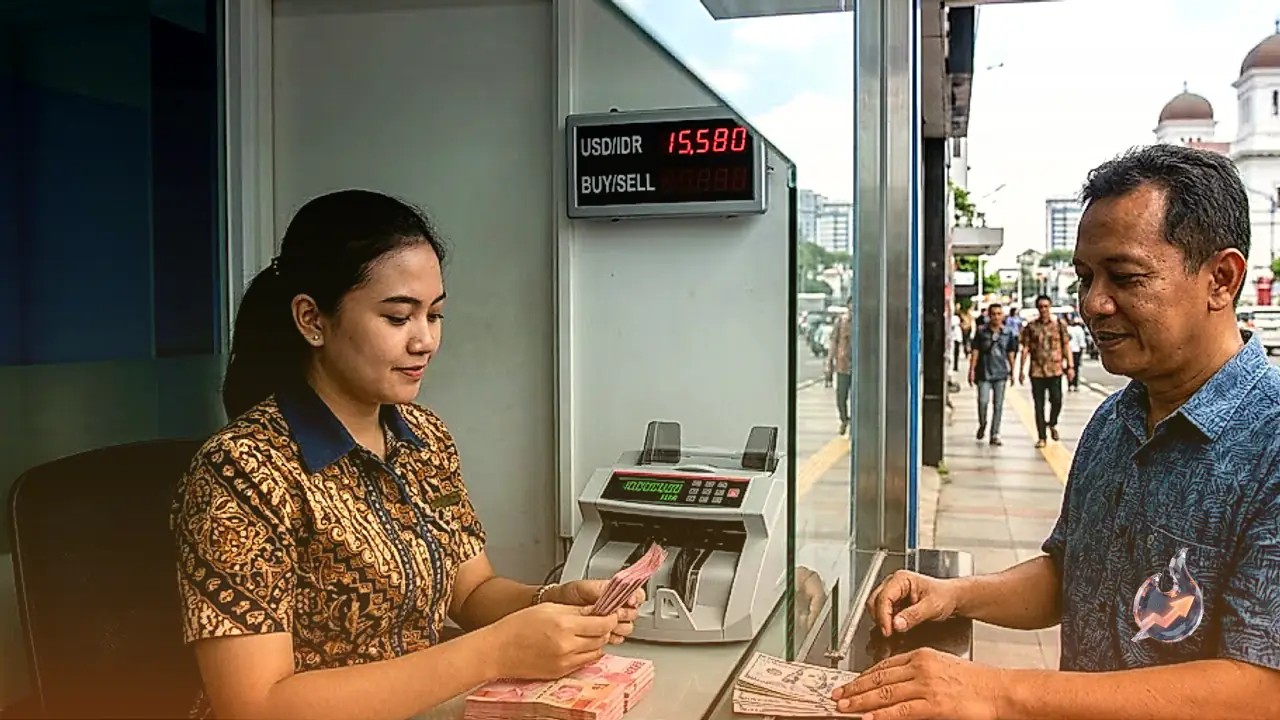

The Indonesian Rupiah (IDR) is finding much-needed stability amid a pullback in the US Dollar and easing long-end US Treasury yields. Bank Indonesia (BI) maintained its benchmark policy rate at 5.75% during its latest monetary policy assessment, prioritizing currency defense and capital stabilization. Rather than adjusting interest rates, the central bank is amplifying non-rate mechanisms, including foreign exchange hedging incentives and Bank Indonesia Rupiah Securities (SRBI), to attract overseas portfolio flows and enhance liquidity in domestic markets.
Bank Indonesia Retains Policy Rate to Anchor Currency
Strategists Sim Moh Siong and Christopher Wong highlighted that the stabilization in the Rupiah is being reinforced by weaker US Dollar momentum and lower global bond yields. Bank Indonesia reiterated its commitment to managing foreign exchange volatility without dampening broader economic growth. By pausing rate changes at 5.75%, monetary authorities are relying on targeted market operations to sustain foreign investor appetite and secure foreign exchange reserves.
USD/IDR Technical Analysis and Key Price Levels
The USD/IDR currency pair, which previously closed around 17830, is currently trading near 17,807 in live market sessions. Daily chart technicals indicate that bearish momentum remains intact for the pair, while the Relative Strength Index (RSI) stands flat at 42. Trading conditions suggest two-way range-bound action in the near term. The 20-day Exponential Moving Average (EMA20) resides at 17,881, with the 50-day EMA positioned at 17,866.
Key technical thresholds for USD/IDR traders include
- Immediate Support: Pegged at 17,760, with live pivot S1 support located around 17,747.
- Major Support Zone: Positioned at 16,630, coinciding with the 100-day Daily Moving Average (DMA) and the 38.2% Fibonacci retracement of the 2026 low-to-high move.
- Upside Resistance: Established at 17,940, where the 21-day and 50-day DMAs converge, backed by R1 resistance at 17,842.
US Treasury Doubles Buyback Program to Calm Yields
In a surprising liquidity intervention, the US Treasury Department announced an expansion of its sovereign debt buyback operations. Announced on Wednesday at 12:32 GMT, the Treasury will double its maximum liquidity buyback allowance from $2 billion to at least $4 billion per operation across the 10-year to 20-year and 20-year to 30-year maturity sectors. Scheduled to run from September 9 through November 4, this intervention helped absorb market volatility, stabilizing the benchmark 10-year US Treasury yield near 4.672% after a sharp retreat across the yield curve.
Global Forex Markets: Sterling Holds Gains as Euro Softens
Foreign exchange markets witnessed mixed reactions to the shifting US Dollar environment. The British Pound (GBP/USD) held onto most of its intraday gains, fluctuating within the 1.3630 to 1.3620 range as traders awaited key UK macroeconomic releases. Meanwhile, the Euro (EUR/USD) experienced mild selling pressure, pulling back to 1.1670 after failing to hold peak levels above the 1.1700 threshold.
Gold Crosses $4,500 as Bitcoin and Altcoins Rally
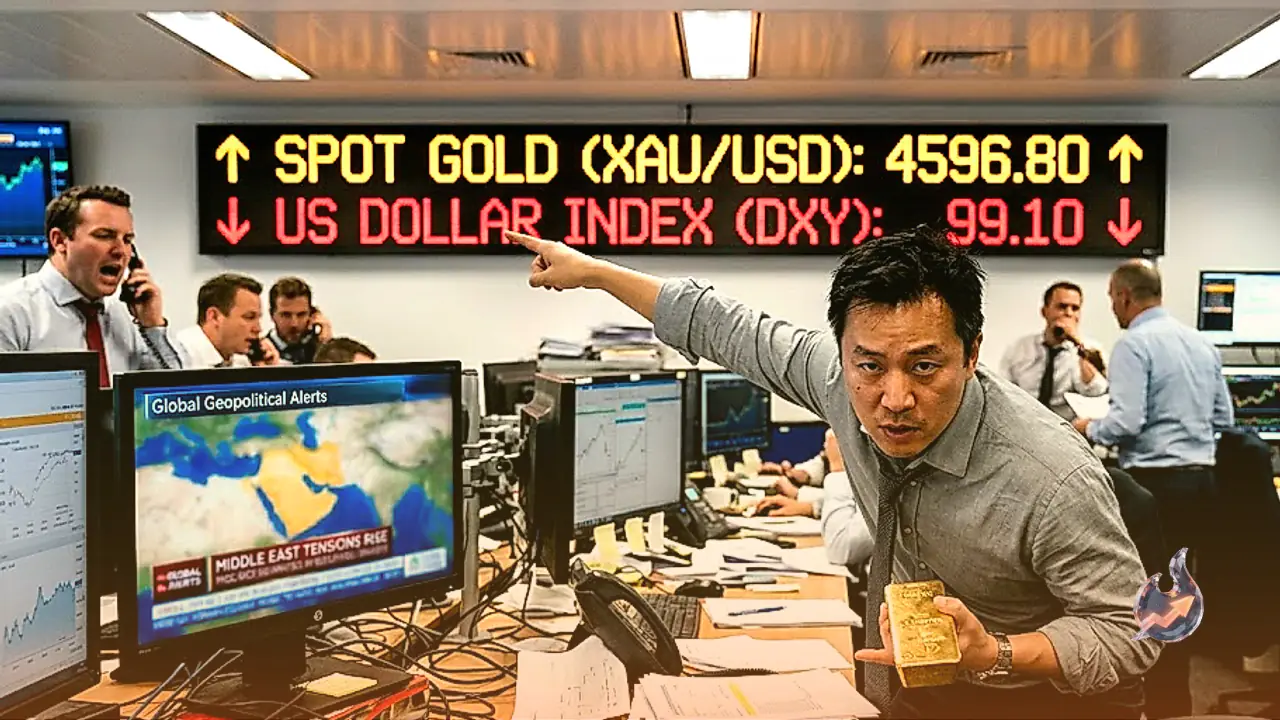
Alternative asset classes recorded strong demand despite modest rebounds in the Greenback. Spot gold demonstrated renewed buying appetite, pushing back above the critical $4,500 per troy ounce mark.
Concurrently, cryptocurrency benchmarks extended their weekly advances
- Bitcoin (BTC): Reclaimed momentum to trade solidly above $70,000.
- Ethereum (ETH): Maintained a clear bullish bias, staying comfortably above $2,200.
- Ripple (XRP): Rebounded back over $1.15 as buying interest consolidated across crypto exchanges.