























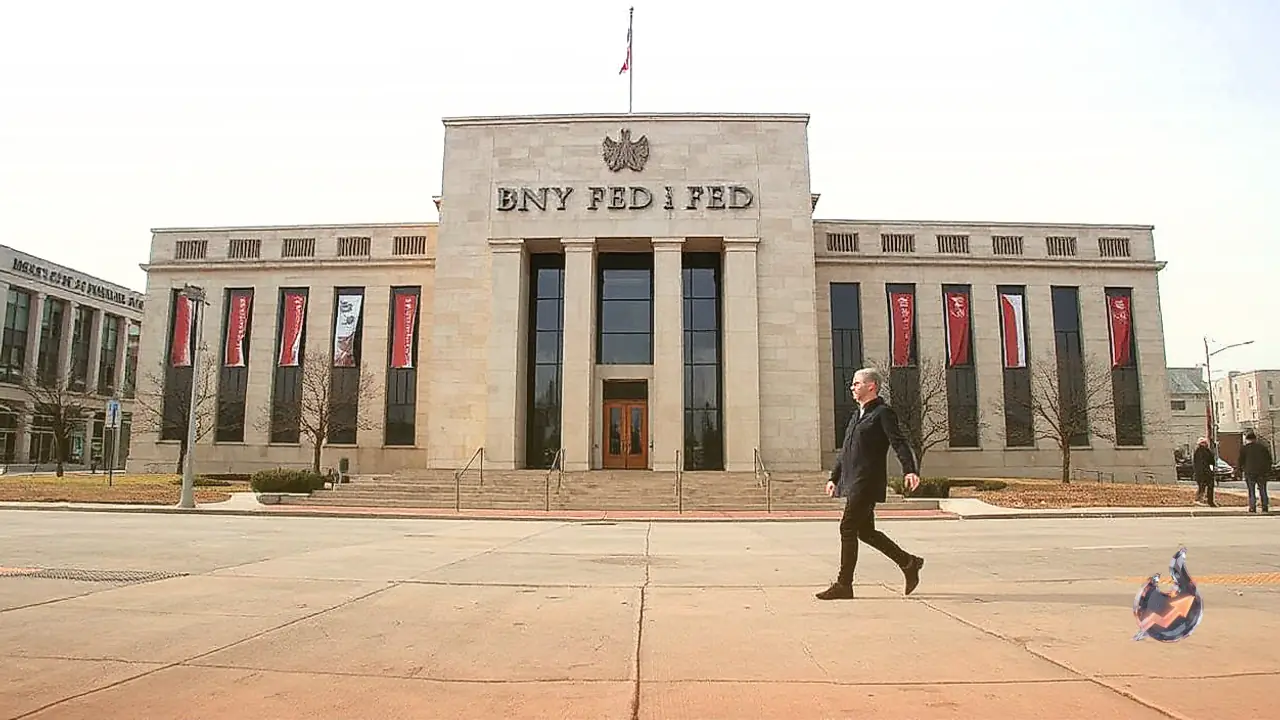

Mounting ambiguity surrounding the trajectory of the Federal Reserve's monetary policy continues to cast a shadow across global financial markets. An evaluation published by BNY indicates that the US central bank will likely implement merely one additional interest rate hike in 2026, leading into a noticeably more uncertain policy environment thereafter. Elevated domestic inflation, exacerbated by recent surges in crude oil costs, is maintaining consistent upward pressure on broader price levels. Market strategists maintain that this inflationary cycle stems predominantly from supply-side bottlenecks rather than runaway consumer demand, while noting that long-term inflation expectations remain structurally anchored.
Supply Bottlenecks and Monetary Policy Effectiveness
Traditional monetary tightening tools operated by central banks are structurally engineered to dampen consumer demand rather than repair strained supply chains. Analysts at BNY argue that increasing benchmark borrowing costs will provide limited relief against persistent supply pressures. Close attention will nevertheless be paid to whether genuine demand-driven inflation surfaces during 2027, under which conditions further interest rate remedies would become economically justified.
The assessment highlighted commentary from Warsh during a recent press briefing, where it was contended that the September rate increase meaningfully tightened broader financial conditions. However, analysts pointed out that outside of October's localized fluctuations across artificial intelligence equities, concrete evidence of systemic tightening permeating the real economy remains sparse. Should volatility and financial unease persist across market sectors, financial conditions may tighten autonomously, which would diminish the necessity for the two 2027 rate hikes currently priced in by market participants.
Foreign Exchange Dynamics and Central Bank Divergence
Developments across foreign exchange trading on Tuesday mirrored the broader climate of policy reassessment. The Australian Dollar declined against the US Dollar (AUD/USD) for a second consecutive session during the Asian trading window, touching a fresh two-week low following the Reserve Bank of Australia's anticipated 25 basis point rate increase. The decision revealed significant internal division, with three board members voting to leave benchmark rates steady at 4.60%. This split stance tempered expectations for aggressive tightening in future meetings, leaving the currency vulnerable against modest greenback resilience.
Concurrently, the USD/JPY pair lost ground during Tuesday's Asian hours, relinquishing a portion of its prior climb toward 158.00. The US Dollar encountered headwinds tied to diplomatic signals regarding Iran alongside investor caution in advance of upcoming US midterm elections. Lingering expectations of potential currency intervention provided baseline support for the Japanese Yen, though persisting ambiguity regarding when the Bank of Japan will advance its next rate hike restricted meaningful upside, preserving an established trading corridor.
Precious Metals, Energy Rebound, and Crypto Consolidation
Momentum in commodities shifted noticeably on Tuesday as bullion experienced downward pressure. Spot Gold (XAU/USD) dropped by 0.93% on the session to trade near $3,909 per ounce. This softness coincided with a rebound in crude oil valuations following a Wall Street Journal report detailing a US military strike on Iran's Qeshm Island, which injected fresh geopolitical considerations into energy pricing.
Cryptocurrency benchmarks also retreated across the board. Bitcoin moved lower to trade at $76,566, testing six-week valuation lows during Tuesday's session. Ethereum mirrored this weak sentiment, remaining under consistent selling pressure as it consolidated within a constricted support band. Meanwhile, Ripple hovered marginally above the $1.25 benchmark. These parallel pullbacks across metals, foreign currencies, and digital tokens underline a cautious investor approach while the path for international monetary policy and interest rates remains unresolved.