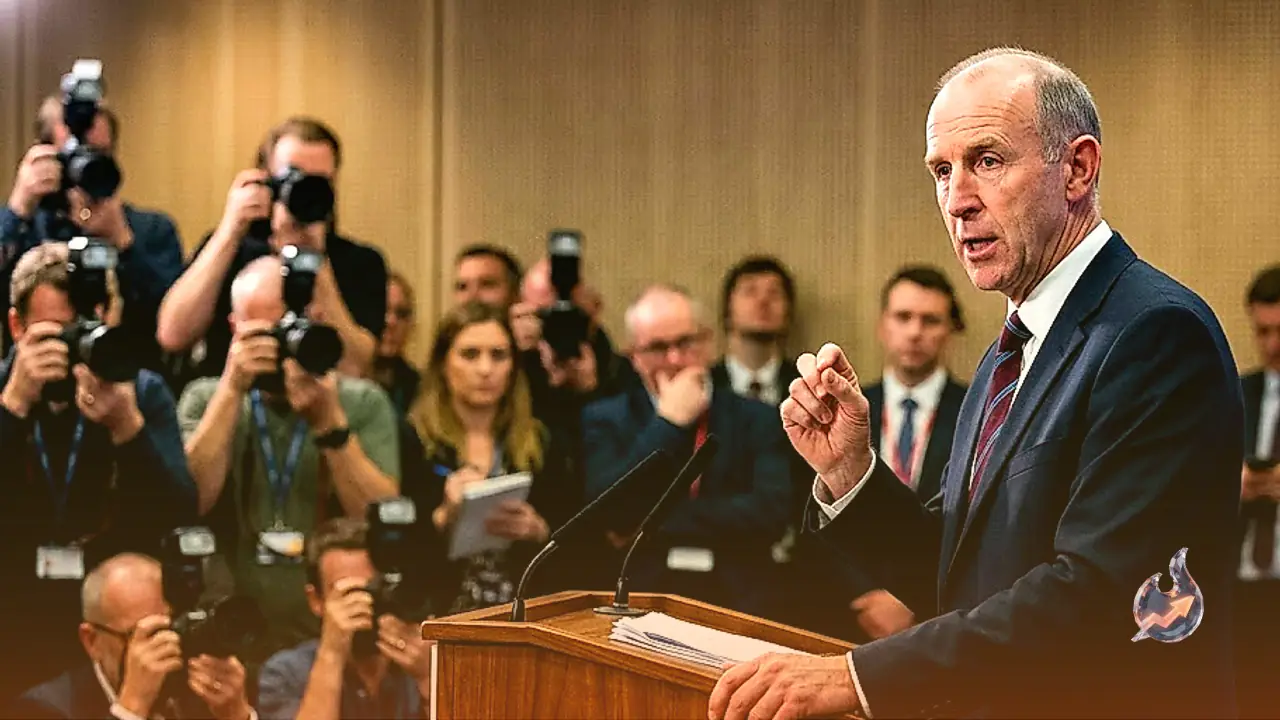
























The British Pound (GBP) is trading with mild gains against the US Dollar (USD), hovering near the 1.3525 region as the Greenback faces broad consolidation. Despite surprisingly upbeat US Nonfarm Payrolls (NFP) figures released late last week, the US Dollar has struggled to build upside momentum. Foreign exchange market participants are currently turning their focus toward an upcoming speech by UK Chancellor John Healey, which is anticipated to set the stage for next month's crucial budget announcement.
Simultaneously, the US Dollar Index (DXY), which tracks the value of the Greenback against a basket of six major currencies, trades in a subdued manner around the 99.10 zone, well within Friday's established price range. Investor attention is now shifting toward the upcoming release of the US Consumer Price Index (CPI) data for August, scheduled for Friday, which will provide fresh cues regarding the Federal Reserve's interest rate trajectory.
GBP/USD Technical Structure and Pivotal Levels
From a technical standpoint on the daily chart, the GBP/USD currency pair is moving close to the 1.3533 mark. Price action remains tethered to the 20-day Exponential Moving Average (EMA) located around 1.3533, keeping the short-term directional bias neutral as the market oscillates around this key pivot without establishing a clear breakout in either direction.
The broader structural advance continues to be framed by an upward-sloping trendline that was previously breached near 1.3435. Meanwhile, the 14-day Relative Strength Index (RSI) stands near 52, signalling balanced market momentum following a recent retracement from overbought territory. On the downside, the initial support layer rests at the 1.3533 EMA pivot, while a deeper structural floor is positioned at the former trendline break area near 1.3435 should selling pressure intensify. A sustained departure from the 20-day EMA will be required to establish a fresh directional trend.
UK Fiscal Outlook and Chancellor Healey's Policy Signals
Fiscal developments in the United Kingdom are coming under intense scrutiny. According to market analysis from Brown Brothers Harriman (BBH), upcoming remarks by Chancellor John Healey are expected to focus heavily on potential tax increases and spending reductions aimed at mitigating growing sovereign fiscal risks ahead of the October 28 Budget.
Analysts highlight that the UK government's fiscal headroom has effectively halved to approximately £12 billion due to elevated public borrowing costs. This significant reduction underscores the limited room for fiscal manoeuvre available to HM Treasury. As a result, market participants expect the Chancellor to announce a tighter fiscal policy mix, balancing revenue-raising measures with expenditure cuts to create an adequate fiscal buffer against economic uncertainty.
US Macroeconomic Dynamics and Federal Reserve Outlook
In the United States, Friday's nonfarm payrolls report showed that the economy added 162K new jobs, substantially outperforming the consensus estimate of 56K. Furthermore, the employment figures for July were revised upward to show a gain of 21K positions, compared to the previously reported contraction of -23K. Despite these strong numbers, the Greenback failed to launch a sustained rally.
Ahead of the crucial August inflation report, key Federal Reserve officials have offered reassuring comments. New York Fed President John Williams and Governor Christopher Waller noted that recent inflation metrics have been encouraging, indicating that inflation expectations remain firmly anchored. These remarks have helped temper expectations of aggressive monetary tightening, softening the US Dollar's tone.
Mechanics of Nonfarm Payrolls and Market Correlations
The Nonfarm Payrolls report, published monthly by the US Bureau of Labor Statistics (BLS), measures the net change in US employment excluding the agricultural sector. Because the Federal Reserve operates under a dual mandate of fostering maximum employment and maintaining price stability near 2%, NFP figures play a central role in guiding US monetary policy decisions.
A stronger-than-expected NFP print typically signals robust economic activity and rising wage pressures, which can lead to higher inflation. In response, the Federal Reserve may raise interest rates or delay rate cuts to cool the economy, a scenario that generally supports the US Dollar. Conversely, weak employment data suggests economic slack, prompting the central bank to ease monetary policy, which tends to weigh on the currency.
Nonfarm Payrolls also exhibit an inverse correlation with Gold prices. When NFP data beats expectations, the combination of a stronger US Dollar and higher real interest rate expectations reduces the appeal of holding non-yielding bullion. However, headline payroll figures are often interpreted alongside secondary metrics such as Average Weekly Earnings, the Unemployment Rate, and the Participation Rate. If job growth is strong but wage growth decelerates, markets may view the overall release as non-inflationary, blunting the US Dollar's upside potential.
Performance Across Global Asset Classes
Broader financial markets are exhibiting notable movements across multiple asset classes
- AUD/USD: The Australian Dollar is consolidating near 0.7200, just below its mid-May highs. Hawkish expectations surrounding the Reserve Bank of Australia (RBA) continue to lend support, while escalating US-Iran geopolitical friction and Fed rate expectations bolster safe-haven demand for the US Dollar, capping AUD gains.
- USD/JPY: The Japanese Yen continues to firm, keeping USD/JPY under pressure below 156.00 during European trading hours. Hawkish repricing of Bank of Japan (BoJ) policy expectations is driving the Yen higher, while US fiscal deficit concerns weigh on Greenback sentiment.
- Gold: Spot Gold is hovering around $4,400 per ounce, recording modest losses for a second consecutive session. However, prices remain above last week's post-NFP low, keeping short-term bears cautious.
- Bittensor (TAO): In the cryptocurrency space, Bittensor is trading firmly in positive territory, extending a five-day rally with gains exceeding 25%. Market interest has risen following social media buzz around related Solana tokens and discussions surrounding ChatGPT-6 Astra, with technical buyers targeting a breakout above $300.
- Energy Sector: While crude oil prices remain relatively stable, middle distillate markets are showing extreme tightness. The US diesel crack spread—measuring the premium of ultra-low sulphur diesel futures over WTI crude—recently surged past $100 to touch an intraday record high above $102.00 per barrel.