





















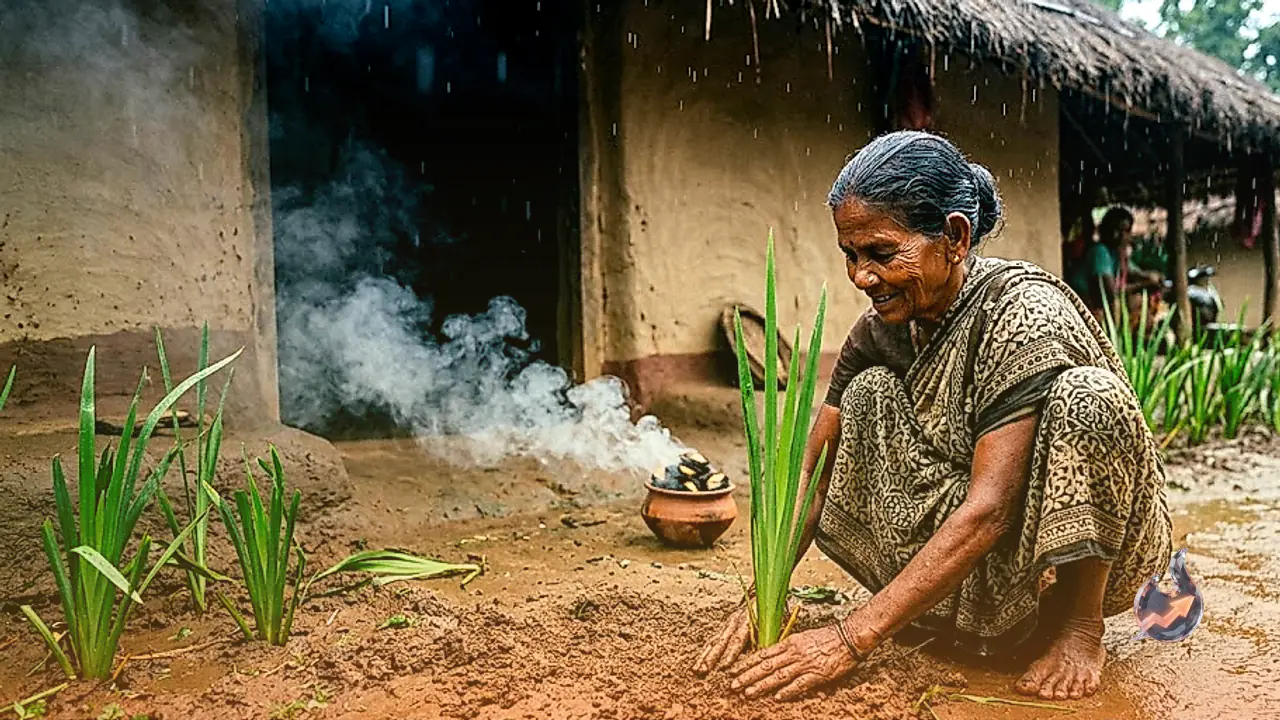

Heavy monsoon rains submerge underground snake burrows across rural and forested pockets of Palamu district, driving dangerous reptiles into human habitats for shelter. To combat this heightened risk of fatal snake encounters during the rainy season, members of the Chero indigenous community depend on centuries-old ecological remedies rather than chemical repellents.
Natural Barriers Planted Around Residential Premises
Umesh Singh, a representative from the local Chero community, explained that villagers routinely cultivate a compact botanical species known as Ghorbach along house perimeters and near entrance doors. The plant emits a distinctive aromatic scent that acts as a natural deterrent against serpents. Snakes reportedly avoid crossing areas infused with this aroma, leading residents to regard the vegetation as an effective protective boundary or physical shield.
Sanjay Kumar, another community member, highlighted that this botanical defense is rooted in generations of empirical observation. He noted that multiple varieties of snake-repellent vegetation can be grown strategically around residential spaces to discourage reptiles from venturing indoors.
Handling Indoor Intrusions With Mahua Smoke And Kerosene
When a reptile manages to breach household entryways, villagers deploy targeted domestic measures to force its exit safely. One primary technique involves burning the solid byproduct derived from Mahua seeds. After extracting oil from the seed kernels, locally referred to as dori, the remaining organic residue, termed 'khali', is collected and ignited.
The dense smoke produced by burning this Mahua residue prompts snakes to retreat rapidly out of the building. However, residents are advised to handle fire with extreme care during this smoke treatment to prevent accidental domestic hazards. Additionally, community members utilize kerosene fuel, applying or sprinkling it in affected quarters to induce reptiles to flee immediately.