























The British Pound to US Dollar exchange rate (GBP/USD) has maintained a largely flat trajectory during the early Asian trading session on Monday, hovering around the psychological and technical 1.3450 mark, while current live market data shows the asset trading at 1.35. This represents a marginal decline of 0.12% from its previous close. The currency pair finds itself caught in a tug-of-war between profound geopolitical instability in the Middle East, shifting monetary policy expectations in the United States, and a seismic political transition occurring within the United Kingdom. Market participants are closely evaluating these intersecting global events, which are collectively shaping risk appetite and currency flows. The pair has established a 52-week range between 1.30 and 1.38, with the current price action reflecting a long-term broader uptrend despite some underlying technical headwinds.
Escalating US-Iran Conflict and Regional Tensions
Geopolitical tensions have taken centre stage as the military confrontation in the Middle East continues to deteriorate. On Sunday, the United States launched a fresh wave of military strikes targeting Iranian assets, pushing its sustained military campaign into a ninth consecutive night. The cost of this escalating conflict is mounting in terms of human lives. The US government confirmed the death of another American service member, who was tragically killed in northern Iraq. The casualty occurred during a controlled detonation procedure involving a downed Iranian drone, marking the third American troop fatality reported over the course of just two days.
Furthermore, the US Central Command (CENTCOM) announced on Sunday that unidentified remains have been located in Jordan. As per Bloomberg, this discovery is connected to a separate Iranian attack in the region that had previously resulted in the deaths of two US troops, while one had been listed as missing in action. The persistence of these military engagements continues to inject significant risk-off sentiment into global financial markets. While this geopolitical uncertainty typically bolsters the US Dollar as a safe haven, the Greenback has paradoxically posted losses recently, even as crude oil prices rise in direct response to the lingering threat of supply disruptions in the Middle East.
UK Political Upheaval: Burnham to Become Prime Minister
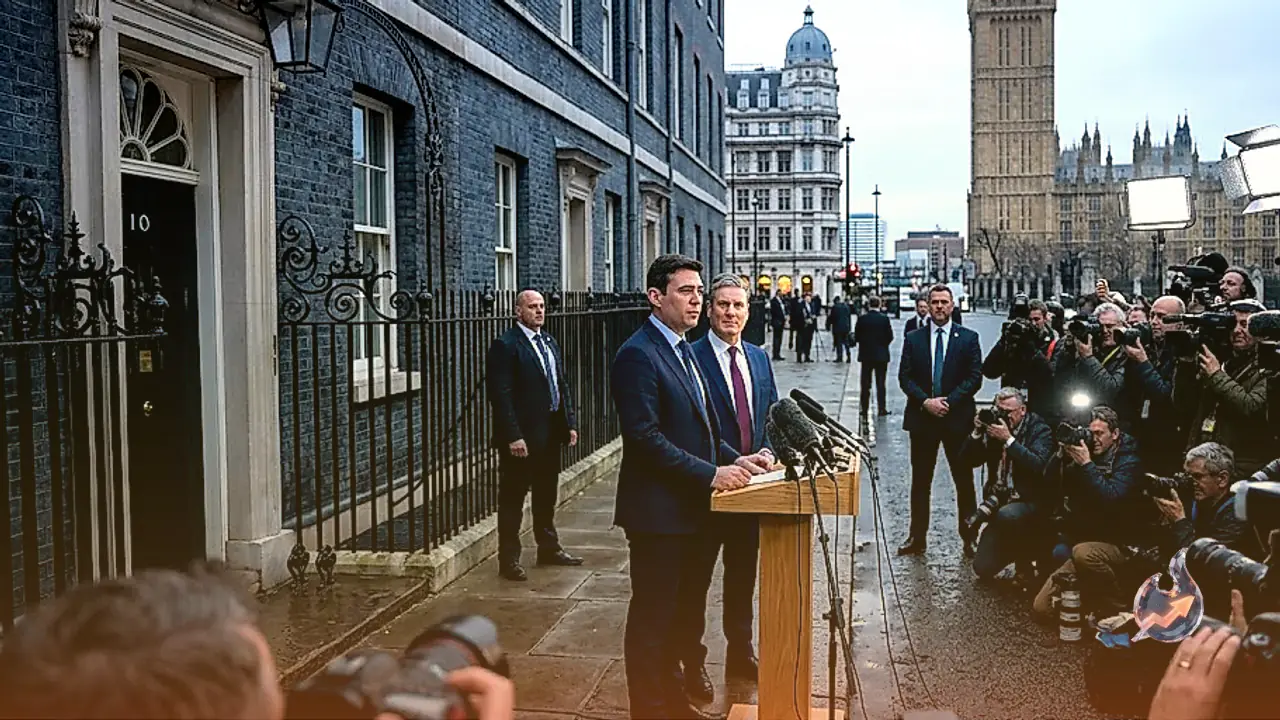
In the United Kingdom, the domestic political landscape has experienced a dramatic upheaval that could carry long-term implications for the nation's economic trajectory and the Pound Sterling. On Friday, Andy Burnham was officially elected as the leader of the UK's governing Labour Party. This internal election serves as the final and decisive step before Burnham formally assumes the office as the 59th Prime Minister of the United Kingdom. He steps into the role succeeding Sir Keir Starmer, who was forced to resign in the wake of severe political setbacks. Starmer's departure followed a catastrophic collapse in public polling figures and substantial, damaging losses for the Labour Party during the recent local elections. Currency traders will be paying close attention to Burnham's forthcoming policy agenda, as any shifts in fiscal strategy could influence the Bank of England's monetary calculus.
US Inflation Cools, Altering Fed Rate Expectations
Across the Atlantic, macroeconomic data has significantly altered the outlook for US monetary policy. The consumer price index (CPI) for June recorded a surprising month-on-month decline of 0.4%. This drop represents the largest single-month contraction in inflation since April 2020. Consequently, the headline annual inflation rate was dragged down from 4.2% in May to 3.5%, effectively breaking a three-month streak of accelerating prices. The underlying Core CPI, which excludes volatile food and energy costs, also exhibited softness; it remained completely flat on a monthly basis and fell to 2.6% year-on-year. Both of these figures came in noticeably under market consensus expectations.
This decisive cooling of inflationary pressures has heavily impacted the futures market's pricing of Federal Reserve interest rate hikes. According to the CME FedWatch tool, the implied probability of a Fed rate hike occurring in July has plummeted to just 14%, a stark contrast to the 25% chance priced in during the prior week. Market participants are now factoring in only 30 basis points (bps) of total rate hikes by the end of December. The prospect of a less aggressive Federal Reserve has weighed on the US Dollar, providing a cushion of support for the GBP/USD pair around the 1.3450 and 1.35 levels.
Technical Outlook for GBP/USD
Looking at the live technical indicators for GBP/USD, the asset is trading right at the 1.35 level. The 14-period Relative Strength Index (RSI) sits at 58, indicating a relatively neutral momentum that leans slightly bullish but remains well away from overbought territory. The Moving Average Convergence Divergence (MACD) indicator is entirely flat at 0.00 against its signal line, with a neutral-to-bullish histogram. The pair's short, medium, and long-term Exponential Moving Averages (EMA 20, 50, and 200) are all clustered at 1.34, although a 'death cross' formation exists between the 50-day and 200-day EMAs, signalling potential long-term friction. The Bollinger Bands (20,2) show the price comfortably within the upper channel, ranging from 1.31 to 1.35, with the mid-line at 1.33. Crucial support levels to watch are S1 and S2 at 1.34, with stronger 20-day support around 1.31, while resistance is capped at 1.35 (R1 and R2). The Average True Range (ATR) is currently 0.01, providing a metric for daily volatility and stop-loss placements.
Understanding the Pound Sterling's Heritage and Mechanics
For context on the currency's standing, the Pound Sterling is historically significant as the oldest currency in the world, dating back to 886 AD. Today, it remains the official currency of the United Kingdom and commands a massive presence in global finance. It stands as the fourth most traded unit for foreign exchange globally. Based on 2022 data, it accounts for 12% of all daily FX transactions, averaging a staggering $630 billion in daily volume. Its most prominent trading vehicle is the GBP/USD pair—affectionately known by traders as the 'Cable'—which alone makes up 11% of the entire forex market. Other key pairs include GBP/JPY (known as the 'Dragon', holding a 3% share) and EUR/GBP (2%). The currency is issued and managed by the Bank of England (BoE).
The fundamental value of the Pound is intricately tied to the monetary policy decisions enacted by the Bank of England. The central bank's primary mandate is to achieve "price stability," defined as maintaining a steady inflation rate of approximately 2%. The BoE's main lever for achieving this target is the manipulation of interest rates. In scenarios where inflation runs excessively high, the BoE will intervene by raising interest rates to cool the economy, thereby making credit more expensive for consumers and businesses. This action is historically positive for the GBP; higher domestic interest rates offer better returns, making the UK a more attractive destination for global investors seeking yield. Conversely, if inflation drops too low, it signals economic stagnation. To combat this, the BoE will consider slashing rates to lower the cost of borrowing, encouraging corporate investment and consumer spending to stimulate growth.
The Impact of Economic Indicators and Trade Balance
Beyond monetary policy, regular data releases act as a barometer for the UK economy's health, directly dictating the Sterling's trajectory. Key indicators such as Gross Domestic Product (GDP), Purchasing Managers' Indexes (PMIs) for both Manufacturing and Services, and comprehensive employment data can trigger significant volatility. In the immediate future, the upcoming UK employment report, scheduled for Tuesday, will be heavily scrutinized by the market. Robust economic data bolsters the Pound, attracting foreign capital and giving the BoE leeway to raise rates. Weak data, conversely, drags the currency down.
The national Trade Balance is another critical component. This metric tracks the net difference between a country's export revenues and its import expenditures over a specific timeframe. When the UK produces high-value, sought-after exports, foreign entities must purchase Pound Sterling to facilitate those transactions, creating organic demand. Consequently, a positive net Trade Balance naturally strengthens the currency, while a sustained negative balance acts as a depreciative force.
Broader Market Dynamics: Crypto, Oil, and Earnings
Looking at the wider financial ecosystem, other assets are displaying unique price action. In the cryptocurrency sector, Ethereum demonstrated notable outperformance over the past week, securing double-digit percentage gains and outpacing other major digital assets like Bitcoin, XRP, and Solana. However, beneath the surface, key on-chain and volume metrics suggest that this relative strength remains fragile, especially as the broader crypto market initiated a corrective phase on Thursday. In commodities, crude oil prices are grinding higher due to the aforementioned Middle East tensions, while the US Dollar struggles. As the new trading week unfolds, market attention will rotate heavily toward upcoming US corporate earnings reports, critical European Central Bank (ECB) announcements, and the ongoing UK domestic newsflow. US equity markets, in particular, are approaching a pivotal juncture as the spotlight pivots toward highly anticipated technology sector earnings.