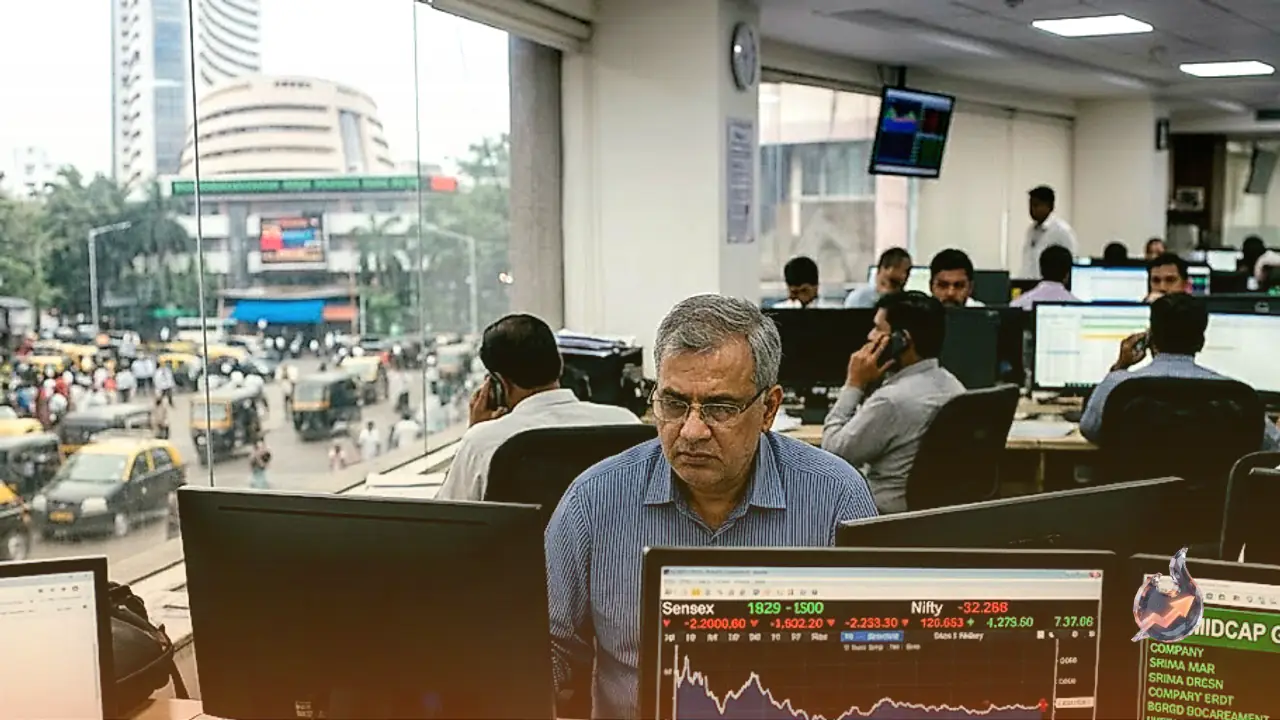

























Indonesian financial markets were jolted after Bank Indonesia Governor Perry Warjiyo unexpectedly stepped down from his post on Monday. Following the abrupt departure, the Indonesian Rupiah came under sustained selling pressure, driving the USD/IDR exchange rate higher for two consecutive trading sessions to hit nearly 18,130 during early European trading hours on Tuesday. The surprise exit of the central bank chief has reignited debate over institutional independence and policy predictability. While rating agency S&P affirmed that the leadership transition will not directly alter Indonesia's sovereign credit ratings, it cautioned that the change amplifies uncertainty regarding the future trajectory of the nation's monetary stance.
Central Bank Turmoil Weighs Heavily on the Rupiah
The abrupt resignation has created ripples across Indonesian financial assets, as investors recalibrate their exposure to emerging market risk. Unplanned departures at the helm of a central bank typically unsettle foreign capital inflows, prompting market participants to seek clarity on governance and policy continuation. According to rating agency evaluations, although the core economic indicators remain stable, the transitional phase naturally introduces hesitation among international asset managers. Consequently, the currency faced heightened volatility, dragging the Rupiah lower against a broadly resilient US Dollar.
Federal Reserve Outlook Keeps the Greenback Supported
On the global stage, the US Dollar maintained a firm footing as market participants braced for the Federal Reserve's upcoming policy announcement on Wednesday. Investors are navigating significant rate path ambiguity. Market pricing via the CME FedWatch Tool reflects approximately a 38% probability of a rate hike at the July meeting, alongside an 81.4% chance of at least a 25-basis-point increase taking place by September. Financial analysts at Citadel Securities noted that an immediate rate increase could be leveraged to reinforce Chairman Kevin Warsh's inflation-fighting credentials, aligning with repeated assurances to restore long-term price stability.
Middle East De-escalation Offers Relief to Oil Markets
In contrast to monetary policy uncertainties, developments in international diplomacy provided a measure of relief to global inflation expectations. US President Donald Trump announced that the United States is engaged in positive discussions with Iran to resolve ongoing tensions in the Middle East. Washington paused its 13-night military campaign over the weekend, resulting in three consecutive days without military strikes. Although Tehran's foreign ministry clarified that direct bilateral talks with Washington are not occurring, stating that active dialogue remains confined to Oman regarding maritime navigation in the Strait, the reduction in military action successfully drove down crude oil prices, dampening broader inflationary fears.
Understanding Risk-On vs Risk-Off Dynamics
In global macro trading, the terms risk-on and risk-off describe the prevailing risk appetite among institutional investors. During a risk-on regime, market participants exhibit optimism about economic growth, actively allocating capital toward higher-yielding, risk-sensitive assets. Under these conditions, equity indices generally advance, commodities rally with the exception of gold, and currencies tied to export-heavy economies experience capital inflows. Currencies such as the Australian Dollar, Canadian Dollar, New Zealand Dollar, South African Rand, and Russian Ruble typically appreciate as demand for raw materials expands.
Conversely, a risk-off environment shifts capital flows toward capital preservation. Apprehensive about macroeconomic or geopolitical shocks, investors retreat into safe-haven instruments such as sovereign government bonds, bullion, and reserve currencies including the US Dollar, Japanese Yen, and Swiss Franc. The US Dollar benefits from its status as the world's primary reserve asset and sovereign backing, the Japanese Yen gains strength due to heavy domestic bondholder retention during crises, and the Swiss Franc attracts capital owing to stringent banking secrecy and asset protection frameworks.
Broader Foreign Exchange, Gold, and Crypto Movements
The pervasive strength of the US Dollar has exerted downward pressure across multiple asset classes. In major foreign exchange markets, GBP/USD traded defensively near 1.3300 during Tuesday's European session, while EUR/USD consolidated near its monthly low around mid-1.1300s as traders refrained from committing aggressive directional capital prior to the FOMC policy outcome.
Precious metals faced similar headwinds. Gold prices traded below $4,050 per ounce, marking a daily drop of 0.85% after failing to hold ground above the key $4,100 psychological threshold in the previous session. Technical indicators suggest that momentum remains tilted to the downside. Meanwhile, cryptocurrency assets suffered notable losses, with Ripple and Stellar sliding more than 4% and 5% respectively. Deteriorating derivative metrics and weakening buying interest suggest short-term control remains firmly with sellers across altcoin markets.