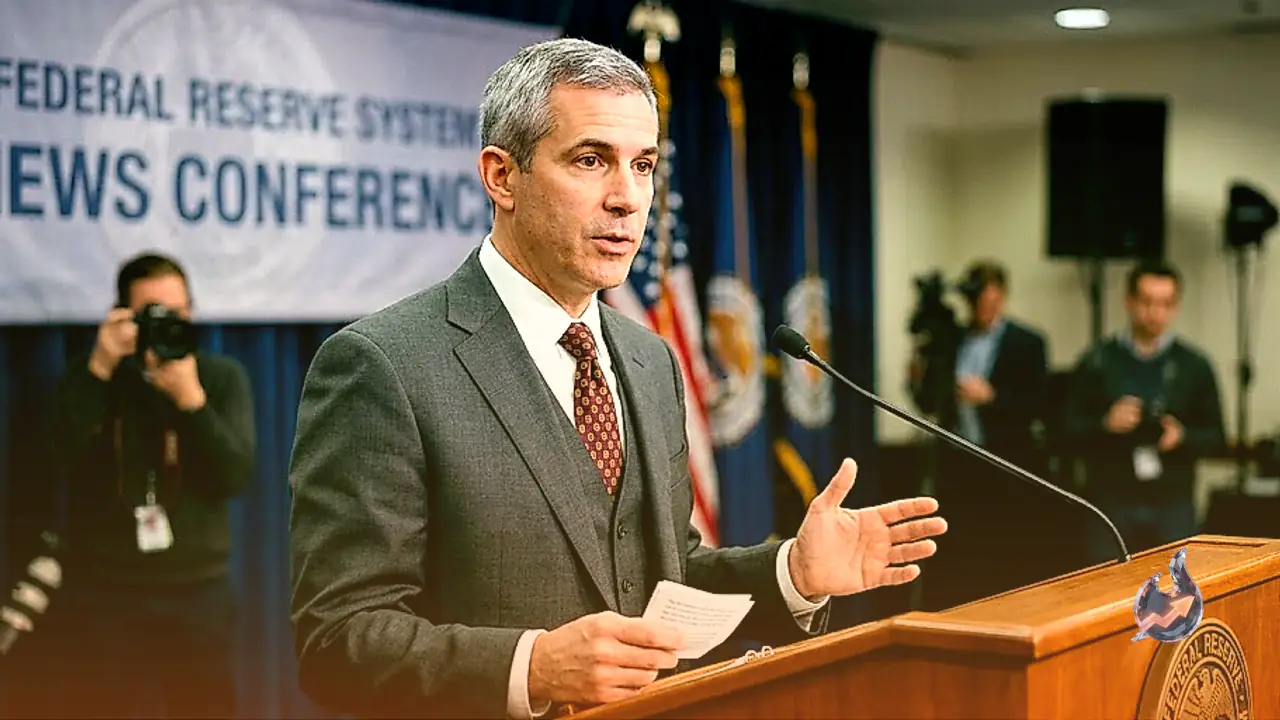

























A comprehensive examination of Federal Reserve policy communications has revealed how forward guidance has historically eclipsed direct rate adjustments in moving currency markets. Commerzbank analysts Pfister and Liebke conducted an empirical review covering 30 years of Federal Open Market Committee (FOMC) meetings to isolate interest rate shocks from forward guidance announcements. Their findings indicate that unexpected adjustments in forward guidance account for a significantly higher proportion of daily US Dollar variance during policy shocks compared to immediate interest rate changes. This dynamic extends across the broader basket of G10 currencies, illustrating how expectations regarding the future interest rate trajectory shape currency valuations.
The Evolution from Greenspan to Yellen
The research demonstrates that the impact of central bank communication followed distinct phases under previous Federal Reserve leadership. During the later portion of Alan Greenspan's tenure and throughout Ben Bernanke's chairmanship, decomposing policy actions into interest rate surprises and forward guidance shifts explained only a minor slice of US Dollar exchange rate variance on decision days. Market participants during those years concentrated predominantly on immediate policy actions rather than nuanced wording choices regarding future horizons.
A pronounced structural shift occurred under Janet Yellen. During her leadership, the share of daily exchange rate fluctuations explained by policy surprises more than doubled. The combination of interest rate surprises and forward guidance accounted for nearly 39% of daily US Dollar variance on meeting days under Yellen. Traders and institutional investors increasingly scrutinized formal policy statements to anticipate long-term borrowing costs, significantly magnifying the currency's sensitivity to central bank projections.
The Powell Era and Information Redistribution
Under Jerome Powell, this statistical relationship broke down unexpectedly. The explanatory power of the decomposition model collapsed entirely, leaving both interest rate surprises and formal guidance changes statistically insignificant in driving meeting-day exchange rate variance. While counterintuitive given the heightened reliance on forward guidance throughout Powell's tenure, the researchers identified a clear structural migration in how the Federal Reserve communicates.
In recent years, the central bank has steadily shifted market-moving insights away from the written policy release and into broader meeting components, such as press briefings and live question-and-answer sessions. Across the last 21 policy meetings since early 2024, comprising 19 under Powell and two under Warsh, the same-day movement in Overnight Index Swaps (OIS) accounted for approximately 62% of US Dollar daily variance. Rather than relying on static text inside the statement, currency traders now derive their rate projections from dynamic press conference commentary and real-time swap market pricing adjustments.
Leadership Transition, Dot Plots, and Independence Questions
Kevin Warsh has led only two FOMC gatherings to date, an interval too limited for a definitive statistical assessment of his long-term tenure. Nevertheless, historical insights from the 30-year study, coupled with Warsh's explicit scepticism toward forward guidance frameworks, point toward two emerging policy paths. Warsh recently abstained from voting on the dot plots, the graphical forecast tracking individual committee members' projected interest rate trajectories, underscoring his philosophical divergence from conventional forward guidance tools.
At the same time, central bank policy autonomy faces fresh scrutiny as political calls from Donald Trump seek lower borrowing costs. These pressures coincide with renewed expectations for monetary tightening following recent PPI and CPI inflation reports, which bolstered bets on another Federal Reserve rate hike. Market participants are positioning ahead of the updated dot plot release to gauge currency implications. To preserve and extend its recent upward trajectory, the US Dollar relies heavily on the central bank satisfying these prevailing hawkish market expectations.
Market Reactions Across FX, Commodities, and Crypto
The resurgence in US yields and Dollar momentum has exerted uneven pressure across global asset classes. In the foreign exchange market, the AUD/USD pair drifted lower during Monday's Asian trading session, hitting a one-and-a-half-week trough near 0.7140 before finding stability. The pair hovered just above the mid-0.7100 zone, reflecting a daily decline of nearly 0.25% as downside momentum stalled.
Conversely, USD/JPY drew fresh bids to open the trading week, climbing toward the 154.00 threshold during Asian trade and erasing a portion of Friday's losses. Spot prices nevertheless remained locked in a range that has contained price action over the past week, staying close to a seven-month low registered the previous Tuesday as investors stayed sidelined ahead of major central bank decisions scheduled throughout the week.
Gold came under significant selling pressure, declining toward multi-week lows near $4,250 per troy ounce on Monday. The downward move in bullion was driven by a broad recovery in the US Dollar and a climb in US Treasury yields across all maturities. Bullion was further weighed down by expectations of Fed rate hikes alongside revived inflationary concerns triggered by advancing crude oil prices.
Meanwhile, the digital asset sector showed relative resilience as Bitcoin advanced toward $77,884 on Monday, mirroring a constructive sentiment across crypto markets. Major altcoins tracked this trajectory, with Ethereum preserving critical technical support at $2,521 and Ripple maintaining its foothold at $1.38.