





















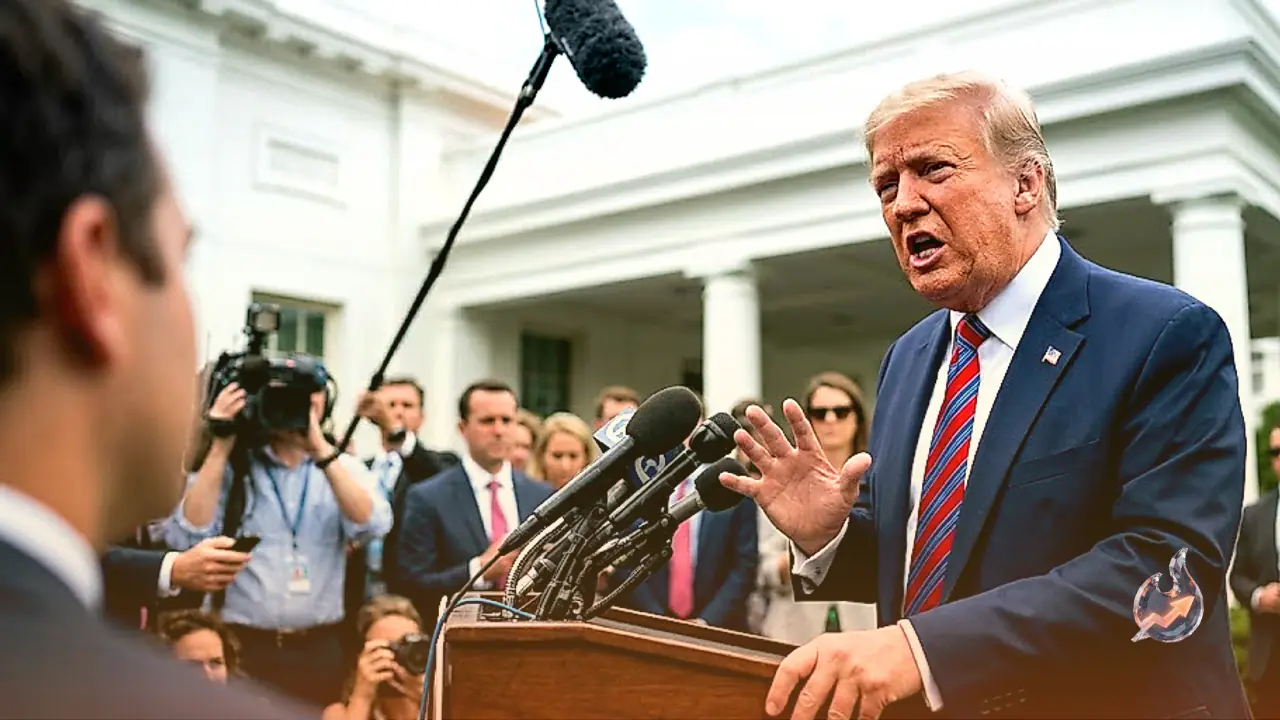

US President Donald Trump claimed on his Truth Social platform that global crude oil prices will experience a sharp decline once the ongoing military conflict with Iran is brought to an end. Trump projected that crude oil prices, which currently stand at around $3 per gallon, could eventually drop below the $2 per gallon mark as global energy markets quickly stabilize in the post-war environment. He directly linked the current surge in energy costs to ongoing military operations in the Middle East, assuring that markets will adjust rapidly once hostilities cease.
Trump Projects Precipitous Drop in Crude Oil Prices
In his post on Truth Social, Donald Trump detailed his expectations for the energy market, writing that oil prices will fall rapidly once the US achieves victory in the conflict with Iran. He stated that the decline in crude oil rates would outpace price reductions seen in other commodities. Specifically, he noted that while crude oil prices are presently hovering at $3 per gallon, they will ultimately fall below $2 per gallon. He emphasized that the stabilization of prices would be one of the immediate economic outcomes following the end of armed confrontation in the region.
Reiterating a central pillar of US foreign policy, President Trump also renewed his warning regarding Tehran's nuclear ambitions. He asserted that events would unfold swiftly and maintained that Iran will never be allowed to acquire a nuclear weapon. He concluded his public statement with his signature political slogan, MAGA, reflecting his administration's strong posture on Middle Eastern security and energy independence.
Iranian Speaker Issues Retaliatory Threat Over Energy Assets
Trump's comments followed a stern warning issued earlier on Monday by Iranian Parliament Speaker Mohammad Bagher Ghalibaf. Addressing Washington via a social media statement, Ghalibaf warned of severe consequences if the US targets Iran's critical energy infrastructure. He highlighted that Iran's oil and gas production chain is sprawling, easily accessible, and exposed, making any escalation in the sector a high-stakes hazard for all parties involved.
Ghalibaf specifically warned that American oil and gas companies operating within regional waters and facilities face identical exposure and security risks. He cautioned that any attack on Iranian assets would prompt direct retaliation against American assets, citing previously targeted military bases that are no longer operational as proof of Iran's retaliatory capabilities. Accompanying his post with a graphic statement, Ghalibaf predicted a lost decade for the American economy, blaming strategic choices made by decision-makers at D.O.I.W.
Escalating Rhetoric Follows Defense Secretary's Remarks
The fiery response from Iranian Speaker Ghalibaf came after US Secretary of Defense Pete Hegseth reshared a post claiming that Iran's fleet of oil tankers remains highly vulnerable. Hegseth had also echoed official Washington assertions that key components of Iran's naval and air forces had already been destroyed during recent military engagements.
This back-and-forth rhetoric between senior officials in Washington and Tehran underscores the deepening crisis in the Persian Gulf. With both nations exchanging threats regarding maritime trade routes, oil tankers, and processing facilities, energy analysts remain focused on how these geopolitical developments will impact long-term oil supply stability and broader global inflation dynamics.