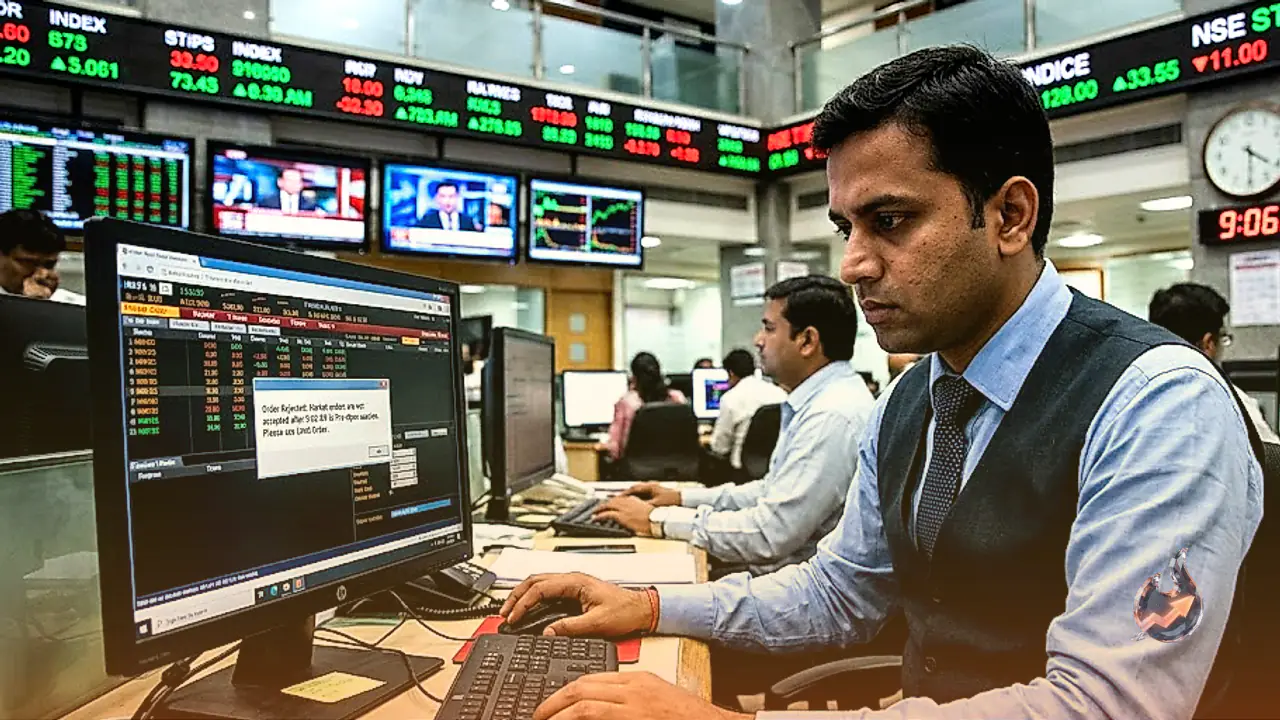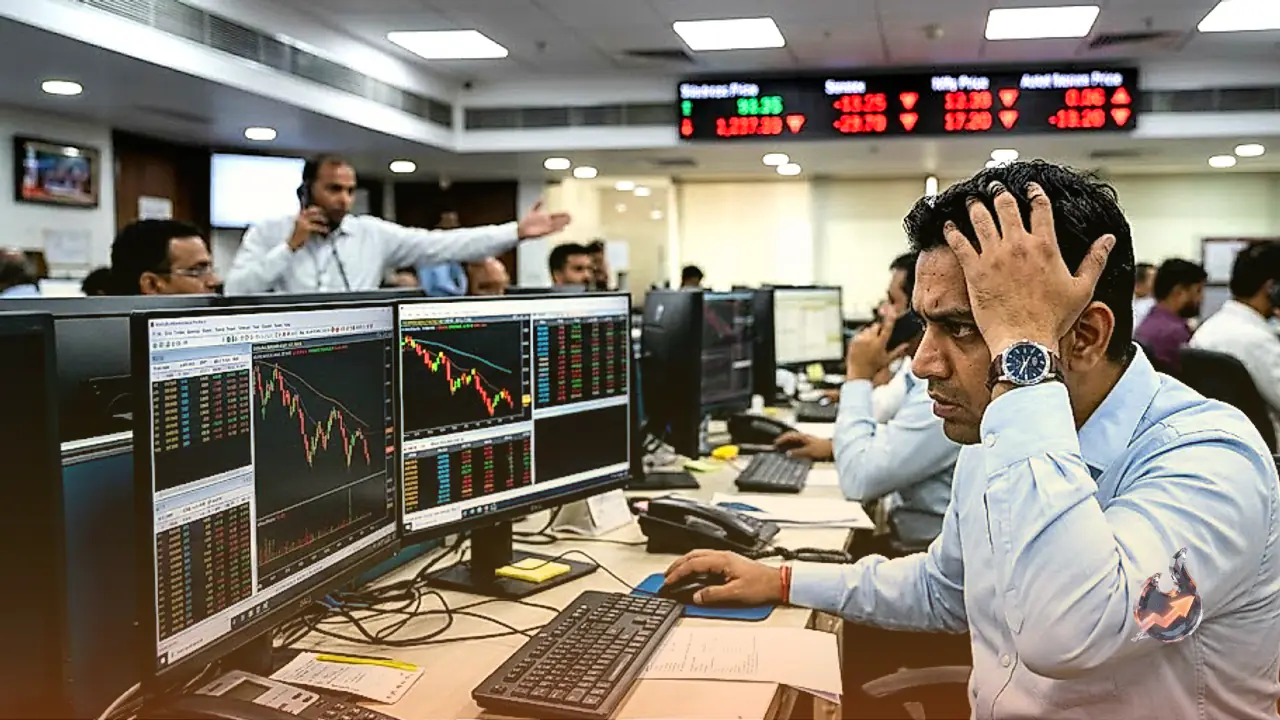

























The global financial markets are currently navigating a complex web of geopolitical tensions and shifting economic indicators, with crude oil emerging as the primary barometer for the ongoing instability. As the conflict in the Middle East continues to unfold, market participants are closely monitoring every diplomatic signal and military maneuver. The delicate balance between escalating hostilities and potential peace negotiations is creating a highly reactive trading environment across various asset classes, from energy commodities and traditional safe-haven metals to major fiat currencies and digital assets.
The Middle East Conflict: A Managed Yet Unstable Phase
According to analysis from BNY's Geoff Yu, the current situation in the Middle East has entered a phase that can be described as managed but inherently unstable. Following nine consecutive days of military strikes, the geopolitical landscape remains highly charged. Iran has made it explicitly clear that it is maintaining its readiness for a continued military response. However, alongside these martial signals, Tehran is also actively keeping diplomatic channels wide open, a dual strategy that has profound implications for global risk sentiment.
Esmaeil Baghaei, the spokesman for Iran's Foreign Ministry, recently elaborated on this strategic posture. He confirmed that diplomatic efforts have remained remarkably active in recent days, noting that Tehran has received multiple proposals from international mediators. These proposals are specifically aimed at preventing the current hostilities from spiraling into a much wider regional conflict. Baghaei emphasized that Iran intends to continue these vital talks, which are geared towards halting United States actions, even as its armed forces continue to respond militarily on the ground.
Furthermore, the Foreign Ministry spokesman firmly rejected the notion that Tehran is backed into a corner where it faces a simple, binary choice between engaging in negotiations or going to full-scale war. Instead, he argued that both diplomatic outreach and military defense are complementary tools that serve the exact same national interest. For financial markets, this nuanced stance is critical. It suggests that while the risk of escalation is ever-present, the survival of a tangible diplomatic track provides a marginal but significant boost to broader risk sentiment, preventing a full-scale investor panic.
Crude Oil Prices Surge on Supply Disruption Fears
The immediate consequence of this managed instability is most visible in the energy markets. Crude oil prices remain elevated following the recent military strikes, driven primarily by fears of potential supply chain disruptions in one of the world's most critical oil-producing regions. Market reports indicate that WTI Crude Oil continues to advance as traders aggressively price in the geopolitical risks while simultaneously waiting for the upcoming American Petroleum Institute (API) inventory report.
Live trading data reflects this bullish momentum, with Crude Oil (CL=F) currently priced at $84.70, marking a solid increase of 1.77% from its previous close of $83.23. The commodity is trading within a massive 52-week range of $54.98 to $119.48, highlighting the extreme volatility seen over the past year. From a technical perspective, the outlook remains robust. The market is currently in a long-term uptrend, cemented by a classic golden cross where the 50-day Exponential Moving Average (EMA) at $81.95 has successfully crossed above the 200-day EMA at $75.27.
Momentum indicators further support this upward trajectory. The Relative Strength Index (RSI) stands at 62, indicating strong buying interest without yet crossing into overbought territory. Additionally, the MACD histogram shows a bullish reading of 2.23. The price is currently navigating near the upper bounds of its Bollinger Bands, with the pivot point established at $84.69. Traders are closely watching immediate resistance levels at $84.81 and $84.93, while significant 20-day support rests around $67.04.
Currency Markets Await Key Economic Data
The ripple effects of the Middle East crisis are deeply felt in the foreign exchange markets, where the United States Dollar is demonstrating notable resilience against its major rivals. The weekend hostilities have prompted a classic flight-to-safety, bolstering the greenback. The GBP/USD currency pair is currently holding steady, trading just above the critical 1.3450 level on Monday. However, despite this stability, the British Pound is struggling to build any meaningful bullish momentum. Currency traders are largely sitting on the sidelines, waiting to assess the broader implications of the US-Iran conflict while keeping a close eye on the highly anticipated UK employment report scheduled for release on Tuesday.
Meanwhile, the Euro is facing more intense pressure. The EUR/USD pair has been trading on the back foot for three consecutive days, slowly approaching the critical 1.1400 contention zone as Monday progresses. This persistent pullback is fueled by the ongoing uncertainty surrounding the Middle East crisis, which traditionally impacts European economic sentiment heavily due to the region's reliance on energy imports. The situation is further compounded by the decent gains logged by the US Dollar. As the week unfolds, market attention will drastically shift toward the European Central Bank (ECB), as investors eagerly await its upcoming interest rate decision to gauge the continent's monetary policy direction in these turbulent times.
Safe-Haven Gold and Cryptocurrency Volatility
In the realm of traditional safe-haven assets, Gold is experiencing a complex tug-of-war. At the beginning of the week, the precious metal came under some mild downside pressure, yet it managed to sustain its position just above the monumental $4,000 mark per troy ounce. The escalating military action and geopolitical uncertainty in the Middle East continue to provide an underlying layer of foundational support for Gold. However, this bullish factor is being counterbalanced by macroeconomic headwinds. Expectations that US interest rates will remain higher for longer are actively bolstering the US Dollar, which inversely keeps non-yielding assets like Gold firmly under the microscope of cautious investors.
Conversely, the cryptocurrency market is exhibiting its own unique volatility patterns, largely detached from traditional geopolitical safe-haven flows. Over the past week, Ethereum demonstrated significant outperformance, indicating that it was rapidly gaining relative strength against other top-tier digital assets. Between last week and Wednesday, Ethereum recorded impressive double-digit percentage gains, cleanly outperforming major peers such as Bitcoin, XRP, and Solana.
However, technical analysts noted that beneath the surface of this rapid ascent, key underlying metrics indicated that Ethereum's rise remained fundamentally fragile. This cautionary assessment proved accurate when the broader cryptocurrency market initiated a widespread correction on Thursday, erasing some of the recent speculative gains and reminding investors of the inherent fragility within the digital asset ecosystem.