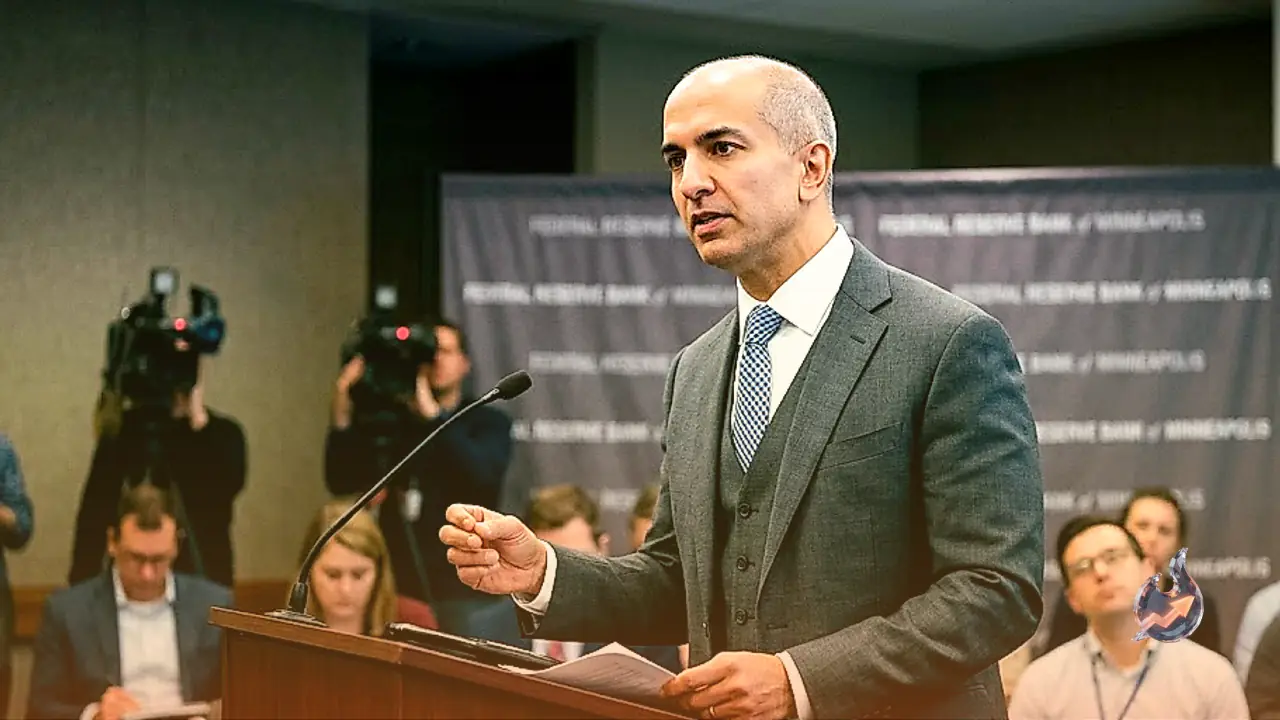


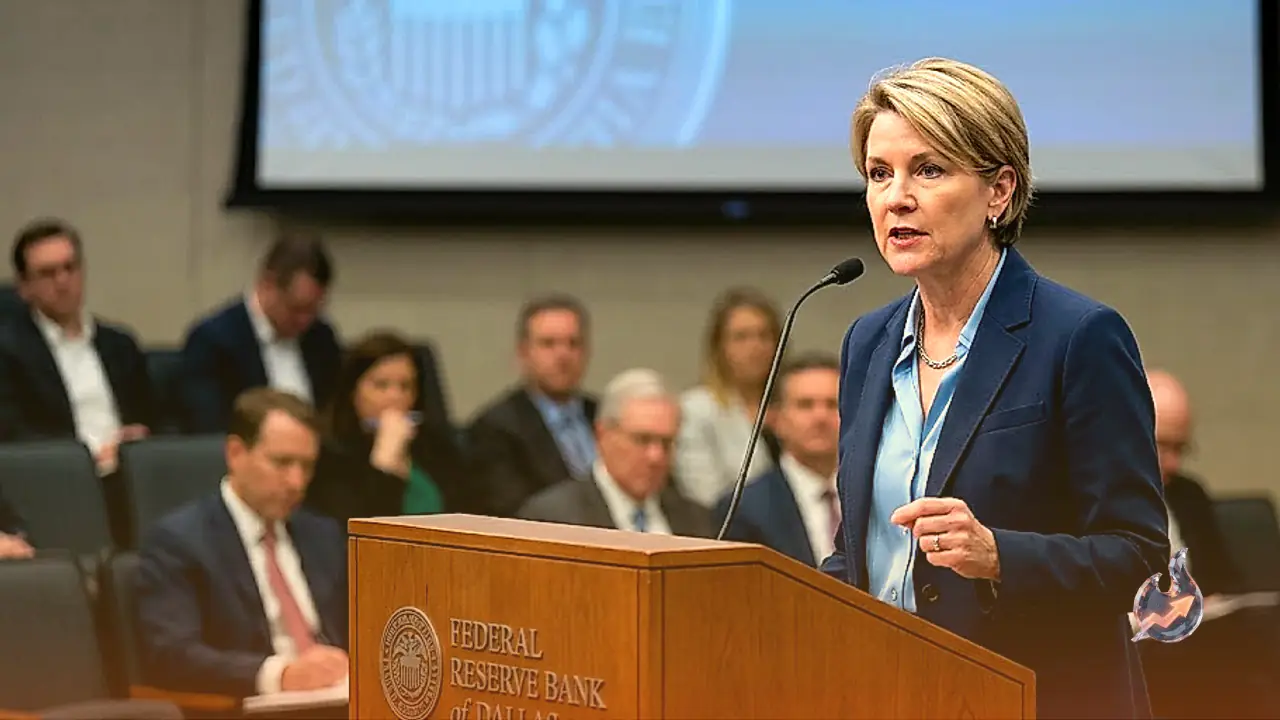



















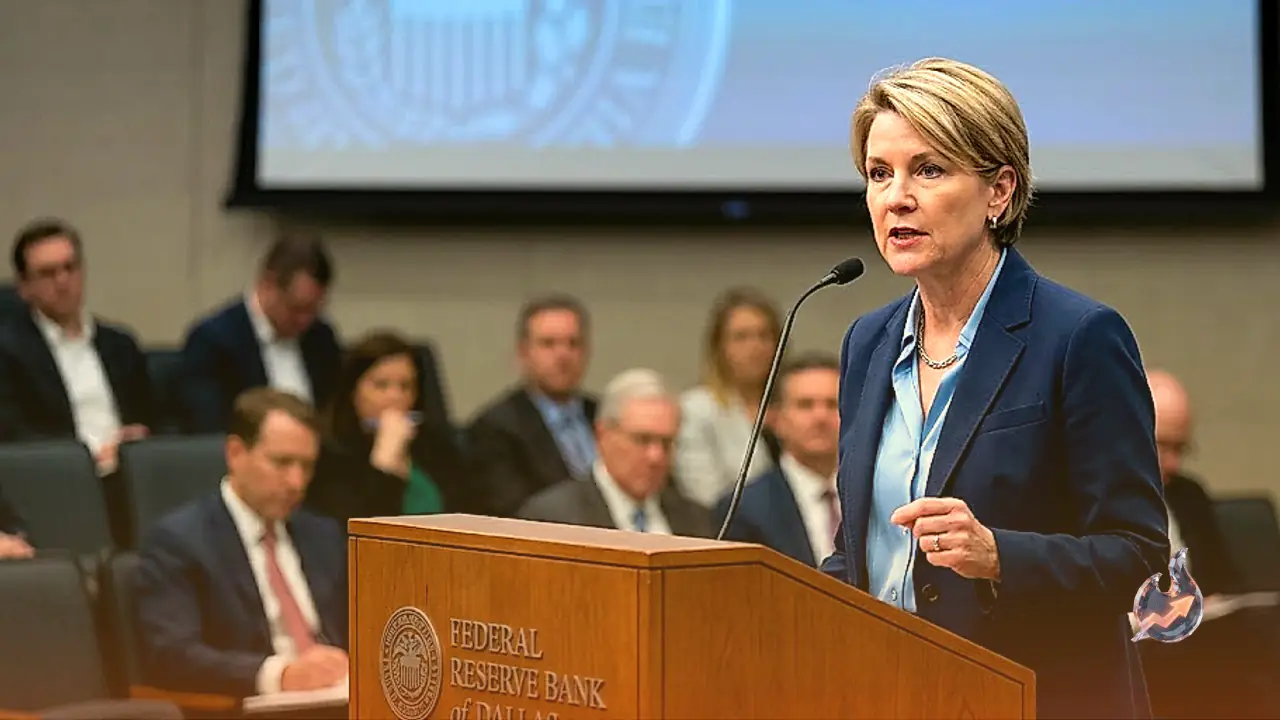

Monetary policy debates within the US central bank took a decisively hawkish turn on Thursday as Federal Reserve Bank of Dallas President Lorie Logan advocated for raising short-term borrowing costs by at least another half of a percentage point. According to Logan, benchmark rates need to push higher to render overall monetary policy modestly restrictive and ensure that consumer prices return sustainably to the official target. The hawkish message triggered broad buying across currency markets, propelling the US Dollar Index (DXY) higher by 0.52 percent on the day to trade around 102.00.
The Case for Additional Rate Increases
Logan explicitly stated that current monetary conditions are not yet restrictive enough, asserting that policy must transition into modestly tight territory. In her assessment, economic expansion is gaining strength while the domestic labor market remains well balanced. Given these firm underlying fundamentals, restoring price stability stands as an unavoidable priority. She noted that without higher policy settings, inflation will fail to converge back to the central bank's 2 percent goal. At a minimum, implementing several additional interest rate hikes would be necessary to undo the reductions seen during the previous autumn.
Despite this firm stance, Logan acknowledged lingering uncertainty regarding the exact terminal level required to tame price pressures. Yield advances on longer-dated Treasury debt indicate that financial markets anticipate prolonged higher borrowing costs. Concurrently, elevated yields can reflect larger term premiums, an effect that might partially substitute for direct policy tightening. Logan indicated that monetary authorities will continue monitoring movements across bond yields to evaluate their real-world economic consequences before finalizing subsequent adjustments.
How the Federal Reserve Guides Economic Conditions
The Federal Reserve operates under a statutory dual mandate from Congress aimed at fostering price stability alongside maximum sustainable employment. Changing the cost of overnight borrowing serves as the institution's primary mechanism for steering national macroeconomic performance. When inflationary pressures run above the 2 percent benchmark, policymakers elevate borrowing costs, curbing credit demand across businesses and households. This dynamic regularly strengthens the US Dollar by offering international investors higher relative returns on dollar-denominated assets. Conversely, when economic growth falters or joblessness spikes, the central bank lowers borrowing benchmarks, creating downward pressure on the currency.
Decisions of this magnitude are formulated across eight scheduled meetings per year by the Federal Open Market Committee (FOMC). This policy-setting panel comprises twelve official members, including the seven sitting governors from the Federal Reserve Board, the president of the Federal Reserve Bank of New York, and a rotating group of four presidents chosen for one-year terms from the remaining eleven regional Reserve Banks.
Balance Sheet Tools: Quantitative Easing Versus Quantitative Tightening
Under severe macroeconomic stress or when standard interest rate cuts encounter structural limits, the Federal Reserve deploys non-standard monetary tools like Quantitative Easing (QE). Designed to restore liquidity to impaired financial networks, QE involves purchasing large tranches of high-grade debt from financial institutions with newly issued central bank reserves. This strategy served as the primary emergency mechanism during the Great Financial Crisis in 2008 and traditionally weakens the exchange value of the US Dollar.
Quantitative Tightening (QT) executes the exact opposite operation. Under QT, the Federal Reserve ceases asset acquisitions and permits maturing debt instruments to roll off the balance sheet without reinvesting principal payments. By absorbing excess cash reserves from the banking system, quantitative tightening normally provides structural support to the value of the greenback.
Reactions Across Foreign Exchange and Commodity Markets
Logan's assertive rhetoric reverberated across global financial assets, driving significant cross-currency realignments. The AUD/USD currency cross languished near defensive levels, bouncing slightly from three-month troughs near 0.6900 prior to Friday's Asian trading session. Strong dollar demand and an extensive pullback from risk-correlated assets hastened weekly selling across the Australian pair.
In contrast, USD/JPY consolidated near the upper boundary of its weekly range above 158.00 during Thursday's Asian trade. Even though softer US PCE inflation figures emerged, oil-fueled inflation concerns kept Treasury yields hovering around multi-year highs. Geopolitical frictions between the United States and Iran additionally burnished safe-haven dollar bids, overshadowing hawkish expectations regarding the Bank of Japan as well as lingering intervention risks from Japanese authorities.
Gold endured an indecisive trading session on Thursday, lingering continuously beneath the critical threshold of $4,200 per troy ounce. Tensions in the Middle East provided an underlying safety floor, yet broad-based dollar gains capped the precious metal's potential upward momentum. Market sentiment regarding the Fed has experienced rapid fluctuations; whereas investors previously priced an October interest rate increase as the baseline expectation, subsequent cooling inflation numbers and guarded commentary from central bankers had established a pause as the prevailing consensus, a premise that Logan's fresh remarks now complicate.