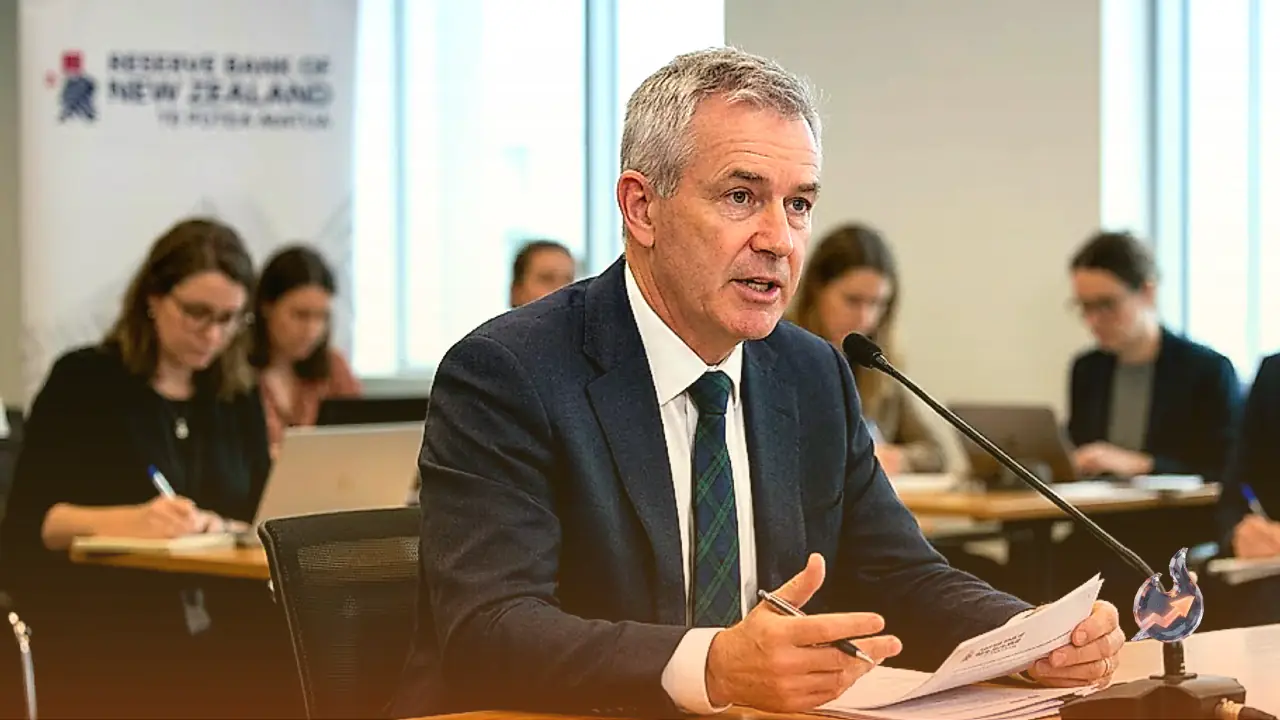























Reserve Bank of New Zealand Monetary Policy Committee member Carl Hansen stated on Thursday that future monetary policy decisions will heavily depend on trends observed across a broad spectrum of economic data sets. He emphasized that officials are monitoring data surprises rather than focusing on any single indicator ahead of the upcoming October policy decision.
Consensus on Rate Hikes and Market Movements
The recent rate increase implemented on Wednesday was characterized as a clear and unified consensus decision by the central bank. At the time of writing, the currency markets reflected these developments as the NZD/USD pair registered a 0.51 percent increase on the day, trading near the 0.5883 region.
Core Economic Objectives of the Central Bank
The Reserve Bank of New Zealand serves as the nation's primary central banking institution, with core economic mandates centered on achieving and maintaining price stability. This stability is defined as keeping inflation, measured by the Consumer Price Index, within a target band ranging between 1 percent and 3 percent, alongside supporting maximum sustainable employment.
Mechanisms of Official Cash Rates and Inflation Control
The central bank's Monetary Policy Committee determines the appropriate level of the Official Cash Rate to meet its established objectives. When inflation exceeds targeted levels, the institution attempts to tame it by raising the key rate, thereby increasing borrowing costs for households and businesses to cool down economic activity. Higher interest rates typically benefit the New Zealand Dollar by generating stronger yields and attracting foreign capital, whereas lower interest rates tend to exert downward pressure on the currency.
Employment Dynamics and Sustainable Labor Markets
Employment remains a critical consideration because a tight labor market can potentially fuel inflationary pressures. The institution defines maximum sustainable employment as the highest utilization of labor resources sustainable over time without triggering accelerating inflation. Maintaining employment at this balanced threshold ensures low and stable price growth, whereas sustained excess employment eventually forces the committee to tighten monetary policy.
Quantitative Easing and Broader Financial Markets
In extraordinary situations, the central bank retains the authority to deploy quantitative easing as an alternative policy tool. This process involves expanding the domestic money supply by purchasing financial assets from institutions to stimulate economic activity, a measure previously utilized during the Covid-19 pandemic. Meanwhile, global currency and commodity markets experienced simultaneous movements, with various exchange pairs and asset classes reacting to shifting international macroeconomic indicators.