








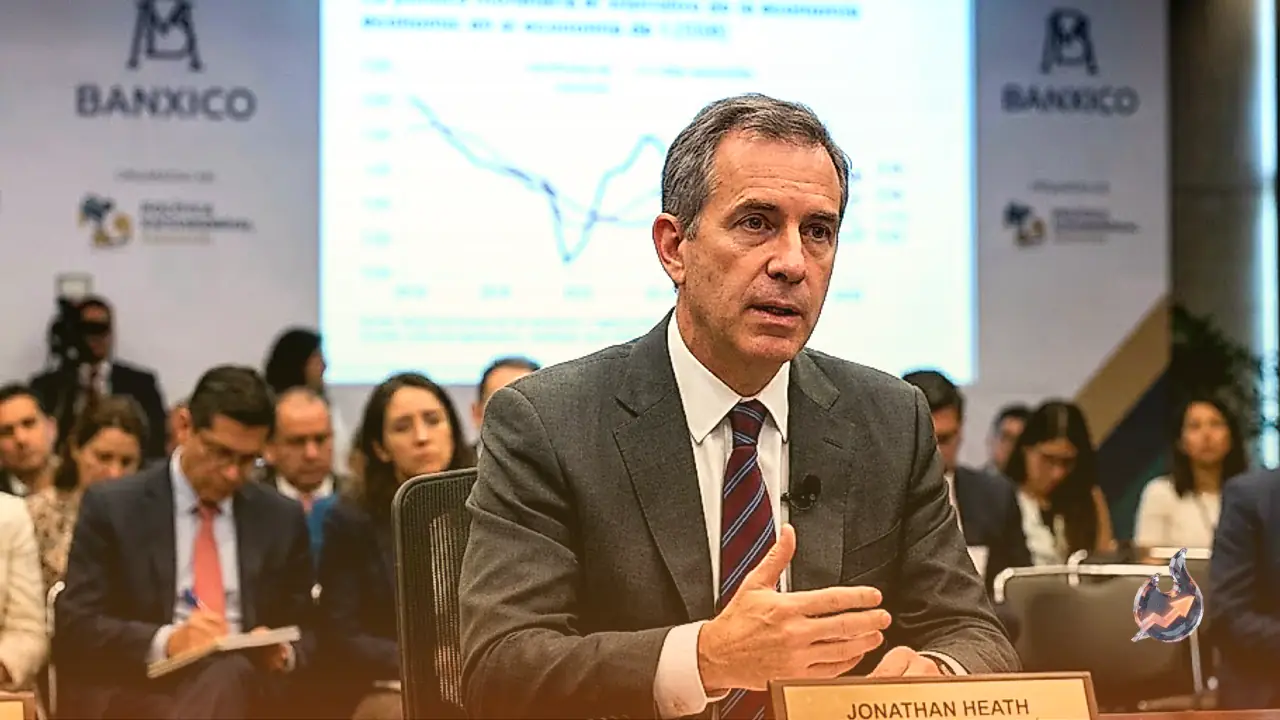















In a podcast discussion with Banorte, Jonathan Heath, a key official at the Bank of Mexico, known as Banxico, stated that maintaining the current monetary stance is the most appropriate path forward. He emphasized that the only justifiable condition for implementing rate cuts is when core inflation successfully converges toward Banxico’s established 3% target.
Inflation Dynamics and Downside Risks
Even though the disinflation process has made some progress, Heath cautioned that it is far too early to declare victory. He pointed out that the recent drop in headline inflation was driven primarily by non-core components, which are inherently volatile and less responsive to central bank monetary policy. Furthermore, he recognized that persistent inflationary pressures stem largely from the services sector, viewing overall inflation risks as tilted to the upside.
Banxico Mandate and Monetary Tools
The Bank of Mexico serves as the country’s central authority tasked with preserving the purchasing power of the Mexican Peso and overseeing monetary policy. Its primary objective is maintaining low and stable inflation anchored around a 3% target, operating within a tolerance band of between 2% and 4%. To guide monetary policy, Banxico relies primarily on adjusting interest rates. When inflation exceeds target levels, the central bank raises rates to make borrowing more expensive for businesses and households, thereby cooling down economic activity.
Exchange Rates and Federal Reserve Influence
Higher interest rates generally benefit the Mexican Peso by generating attractive yields, which draws foreign investors to the country, whereas lower rates tend to weaken the currency. Banxico holds eight scheduled policy meetings annually and closely aligns its decisions with the actions of the US Federal Reserve. Typically convening a week after the Fed, the Mexican central bank often reacts to or anticipates US monetary shifts. For instance, following the COVID-19 pandemic, Banxico raised rates ahead of the Fed to mitigate potential currency depreciation and prevent destabilizing capital outflows.
Broader Financial Market Movements
Across global financial markets, currency and commodity sectors continue to react to macroeconomic shifts. The Japanese Yen has experienced a sudden strengthening amid growing expectations that the Bank of Japan could implement another interest rate hike during its September 18 policy meeting. Meanwhile, the US Dollar has faced selling pressure as market participants position themselves ahead of critical US economic data releases. In the energy sector, while overall oil markets appear relatively stable, diesel pricing has shown extreme tightness, with ultra-low sulphur diesel futures premiums recently surging past the $100 per barrel mark to hit intraday record levels.