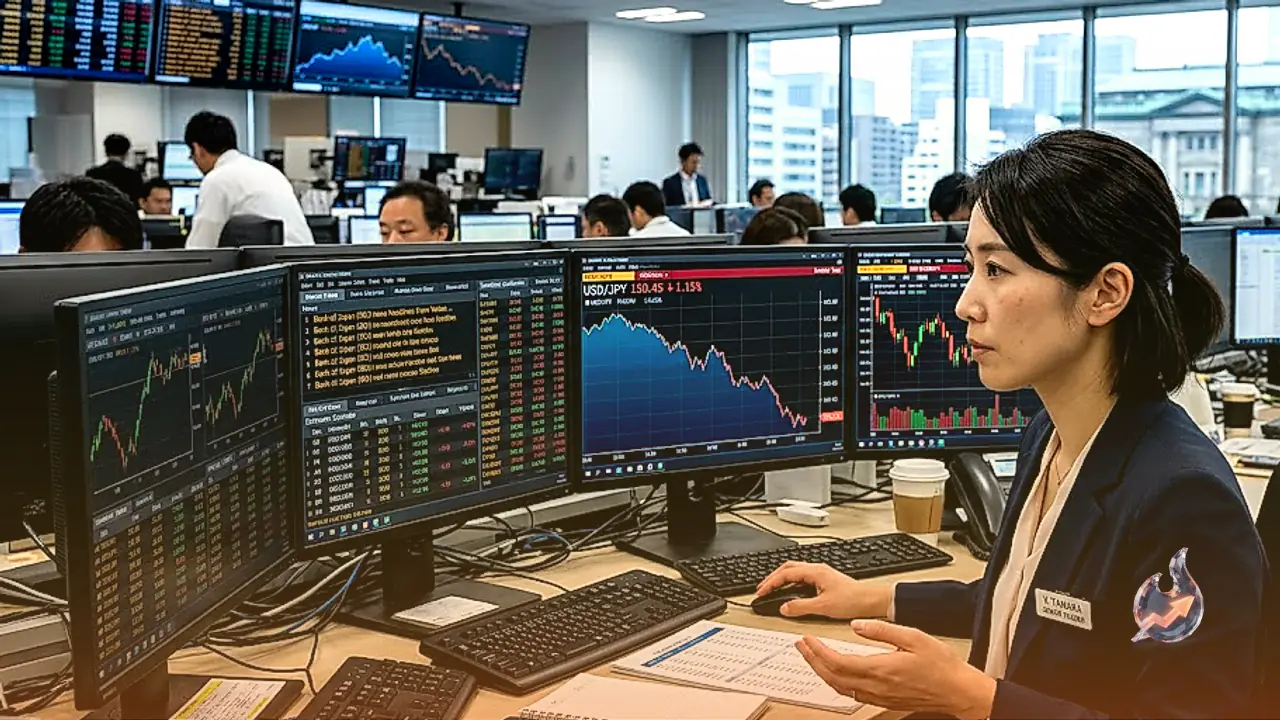

























Global equity and currency markets experienced significant shifts following the Labor Day holiday in the United States, marked by a surge in technology stocks driven by artificial intelligence innovations and historic volatility in energy products. While trading volumes were lighter across Asia due to the US holiday closure, European indices presented a mixed picture as investors weighed rising government bond yields against strong semiconductor demand. Meanwhile, foreign exchange markets saw the Japanese Yen gain momentum, pushing the US Dollar lower and influencing precious metals, even as energy markets recorded unprecedented spreads in diesel refined products.
Tech Sector Leadership and the AI Compute Expansion
The technology sector emerged as the primary driver of market momentum, with semiconductor manufacturers and artificial intelligence hardware suppliers recording notable gains. This surge was primarily ignited by the release of ChatGPT's new Astra model on Friday. Astra has been specifically engineered to execute complex reasoning tasks, representing a significant technological step forward that requires exponentially greater processing capability.
The deployment of Astra has fundamentally altered market expectations regarding hardware requirements. Executing these advanced reasoning models demands substantially higher compute power, increased memory capacity, and intensive graphics processing unit (GPU) resources. Market analysts note that Astra directly challenges the recent narrative suggesting that artificial intelligence hardware demand or compute requirements might be plateauing. Instead, the computational intensity required by next-generation reasoning architectures reinforces the necessity for continued heavy infrastructure investment in high-performance semiconductors.
European Equity Movements and Global Index Trends
In European equity markets, major benchmark indices exhibited flat to modest performance on Monday. The broad-based Stoxx 600 index closed unchanged, reflecting a balance between advancing tech shares and declining interest-rate-sensitive equities. Regional indices showed slight divergence, with the OMX Nordic index securing a 0.4% gain, supported by regional technology and industrial exposure.
Conversely, real estate companies and other rate-sensitive sectors lagged behind the broader market. A steady rise in government bond yields created headwinds for capital-intensive industries and property developers, offsetting the optimism seen in the tech space. Across the globe, Asian stock markets experienced sharp rallies, though trading activity remained thin due to the closure of financial markets in the United States for the Labor Day holiday. Moving into Tuesday morning trading, US equity index futures showed little movement, remaining broadly unchanged as institutional investors prepared for the full resumption of American trading activity.
Foreign Exchange Dynamics: Yen Surge and Major Currency Pairs
Foreign exchange markets were defined by notable strength in the Japanese Yen and pressure on the US Dollar. The USD/JPY currency pair declined to six-month lows, hovering near 153.50 during Tuesday's Asian trading session. The strengthening of the Yen was fueled by encouraging economic indicators out of Japan, including robust wage growth data and an upward revision to second-quarter Gross Domestic Product (GDP) figures. These strong macroeconomic signals have solidified market expectations that the Bank of Japan (BoJ) will proceed with an interest rate hike at its upcoming policy meeting next week.
Meanwhile, the AUD/USD pair traded above 0.7200 in Tuesday's Asian session, lingering near its highest level recorded since May 14. The Australian Dollar benefited from broader US Dollar weakness, as the powerful rally in the Japanese Yen overshadowed support the Greenback might have otherwise received from hawkish Federal Reserve expectations and ongoing geopolitical friction. Furthermore, growing market expectations that the Reserve Bank of Australia (RBA) may implement another interest rate hike later this month provided a strong tailwind for the Aussie. However, upside momentum for AUD/USD was somewhat constrained by mixed trade balance data released by China, Australia's largest trading partner.
Precious Metals and Historic Energy Market Spreads
In commodities, gold managed to attract buying interest during the Asian trading session on Tuesday, effectively halting a two-day losing trend. The rebound in bullion was largely propelled by the US Dollar pulling back from its recent three-week high, a movement accelerated by the ongoing rally in the Japanese Yen. Nevertheless, the upside potential for gold remained capped, as expectations of a hawkish policy stance from the US Federal Reserve and persistent geopolitical uncertainties continued to provide underlying demand for the US Dollar as a traditional safe-haven asset.
The energy sector presented a striking contrast between raw crude oil and refined products. While benchmark crude oil markets appeared relatively stable compared to previous months, the diesel market flashed clear indicators of supply tightness. The US diesel crack spread, which measures the price premium of ultra-low sulfur diesel futures over West Texas Intermediate (WTI) crude oil, surged past $100 per barrel for the first time in history. During intraday trading, the spread reached a record high of slightly over $102.00 per barrel, underscoring severe refinement margins and structural supply constraints in the middle distillate fuel segment.