


















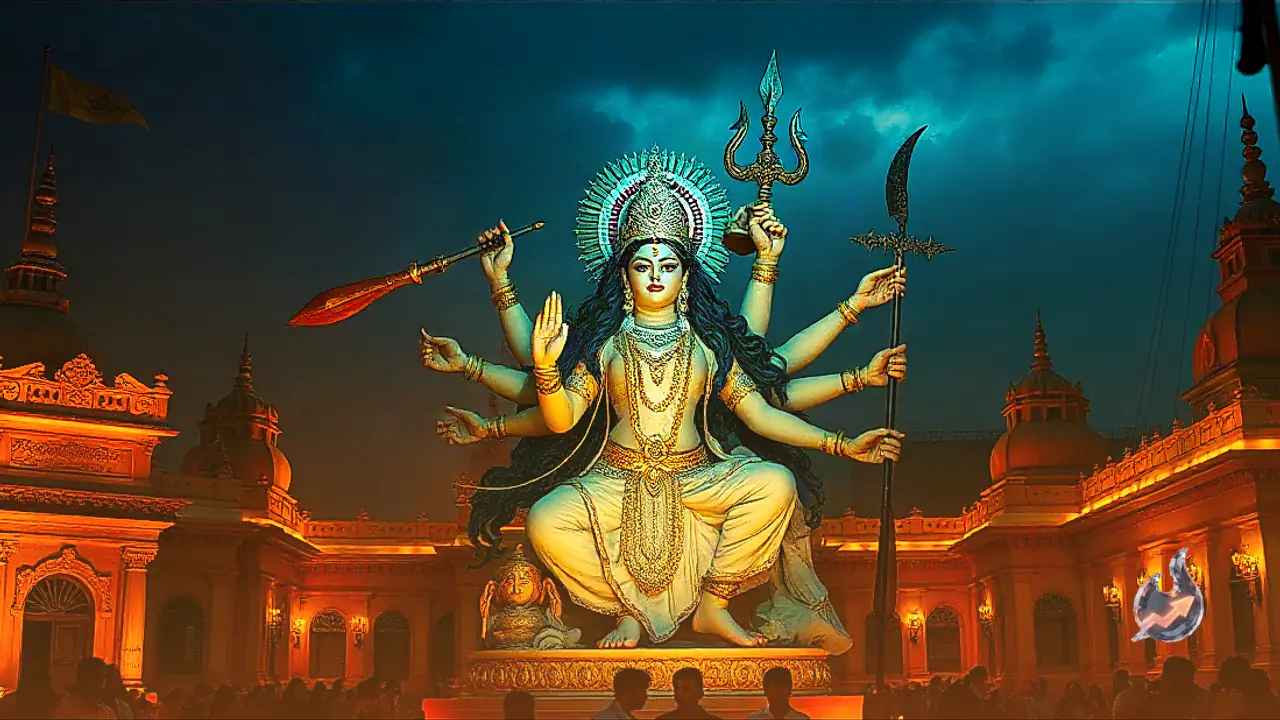

The moment one looks at an idol of Maa Durga, her ten distinct arms instantly draw attention. Each hand holds a different weapon or sacred object, which naturally sparks curiosity about why the goddess possesses precisely ten hands, whether every single weapon was genuinely bestowed by a different deity, and if ancient scriptures actually mention exactly ten hands.
Popular Belief Versus Classical Texts
An interesting aspect of this subject is the slight variation between popular belief and the original scriptural descriptions. The Devi Mahatmya, also widely known as Durga Saptashati, portrays the goddess adorned with numerous weapons, yet it does not specify her arm count as ten everywhere. Therefore, understanding the meaning of her ten hands requires looking at scriptural evidence and later artistic traditions separately.
Connection to the Mahishasuramardini Form
The ten-armed imagery of Maa Durga is specifically associated with her Mahishasuramardini manifestation. Its most significant scriptural basis is the Devi Mahatmya found within the Markandeya Purana, which describes the assembly of divine energies when deities troubled by the oppression of Mahishasura came together to manifest the goddess.
Weapons Bestowed by Various Deities
The second chapter of Durga Saptashati details how major deities including Shiva, Vishnu, Varuna, Agni, Vayu, Indra, Yama, Brahma, Kaala, and Vishwakarma provided distinct weapons and items to the divine mother.
Do Scriptures Strictly Mention Ten Hands?
Durga Saptashati does not uniformly mandate ten hands for Mahishasuramardini in every single context. Different meditative verses present varying arm configurations, with one place describing an eighteen-armed meditation, while combat descriptions portray the goddess as encompassing directions with a thousand arms. Thus, considering the popular ten-armed statue as the sole scriptural mandate is not entirely accurate.
Symbolism of the Ten Weapons
Weapon combinations in idols can vary by tradition, commonly featuring a trident, discus, sword, bow and arrow, conch shell, thunderbolt, mace, noose, goad, and lotus. The trident symbolizes Lord Shiva and the three universal gunas. The discus represents the divine weapon received from Lord Vishnu for upholding righteousness. The thunderbolt from Indra signifies unwavering resolve, while the conch from Varuna denotes auspiciousness. Bows and arrows associated with Vayu represent focus and speed, and the sword and shield given by Kaala cut through ignorance.
The Ultimate Message of Ten Arms
The ten arms of Maa Durga are generally understood to symbolize active power and protection operating simultaneously across multiple directions, encompassing the four cardinal points, four intermediate corners, and the zenith and nadir.
Texts Providing Authentic Evidence
The most crucial evidence regarding Maa Durga and her weapons stems from the Devi Mahatmya in the Markandeya Purana. Additionally, traditions of worshipping her various forms have flourished extensively across the Devi Bhagavata Purana, Kalika Purana, and Shakta Agamic traditions.