























The global financial landscape is currently navigating a period of significant transition and reassessment. While some of Asia’s primary growth engines continue to post impressive macroeconomic expansion figures, they are simultaneously confronting domestic economic imbalances such as rising living costs and widening trade disparities. At the same time, the persistent strength of the US Dollar is exerting notable pressure across international currency markets, commodity sectors, and digital assets. This complex interplay of rapid economic growth, rising inflation, and shifting monetary policies has left global investors highly vigilant, setting the stage for increased market volatility in the near term.
Vietnam’s High-Growth Trajectory and Rising Trade Imbalances
Vietnam continues to solidify its reputation as one of the most dynamic and rapidly expanding economies in the Asian region. This robust performance is primarily underpinned by a structural boom in electronics exports and a highly active manufacturing sector. However, this rapid pace of industrialization has come with substantial side effects, including an expanding trade deficit and elevated international energy prices. These factors are beginning to chip away at the country's current account surplus and have pushed inflation well past the official limits established by the country's central bank. Consequently, major financial institutions have lowered their projections for Vietnam's external surplus while upwardly revising their domestic inflation expectations for 2026.
Economic indicators show that Vietnam achieved a highly respectable year-on-year growth rate of 7.8% during the first quarter of 2026. Although this represents a minor moderation from the 8% growth rate recorded in the previous year, it remains more than sufficient to keep the country at the forefront of Asia's economic expansion. A deeper examination of recent trade metrics highlights the structural resilience of Vietnam’s export engine. Driven by insatiable global demand for electronic components and hardware, overall shipments abroad surged by nearly 20% year-on-year on a year-to-date average.
Despite this stellar export performance, the country’s import volumes grew at an even faster rate, climbing by 30% year-on-year over the same period. This sharp rise in imports is considered normal for an economy like Vietnam, where the manufacturing and assembly sectors are heavily dependent on imported raw materials and intermediate goods. Vietnam has consistently recorded a trade deficit since December 2025, culminating in a record-breaking deficit of USD 5.2 billion in May. Nonetheless, economists believe that the country is unlikely to enter a structural double deficit, as steady tourism inflows and secondary private remittances are expected to provide a sufficient financial buffer.
Breaching the Inflation Ceiling in Hanoi
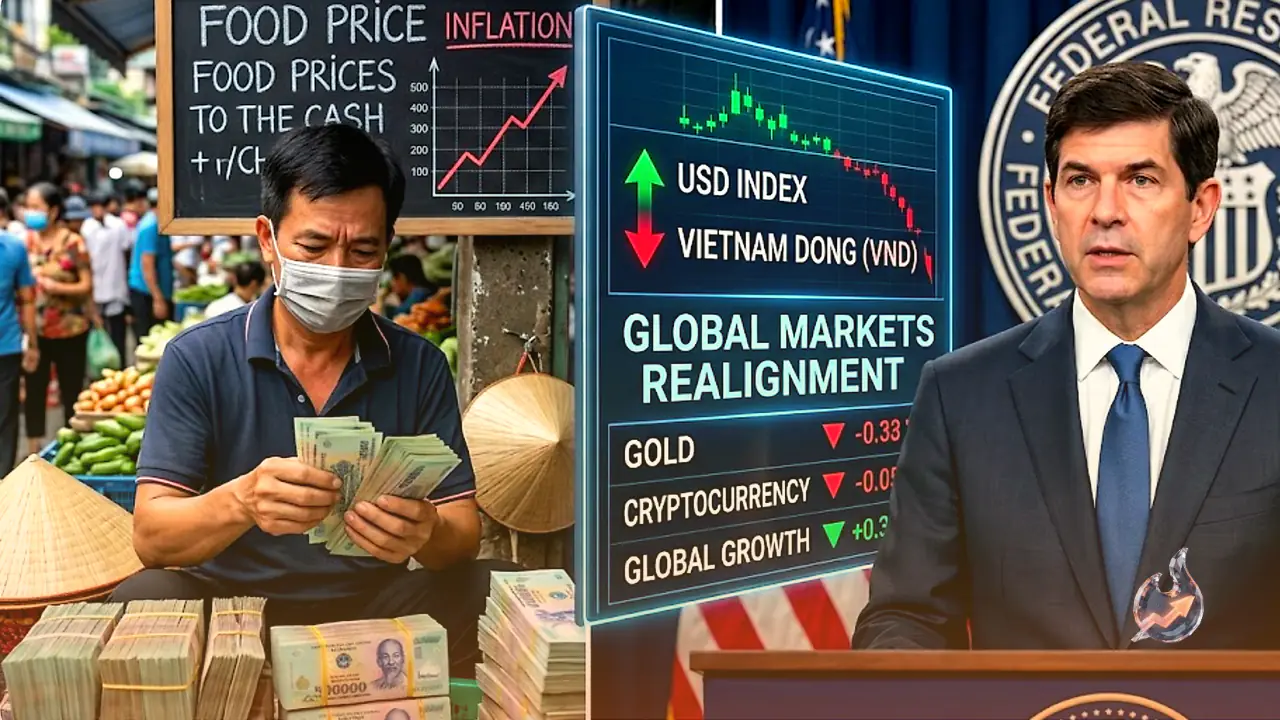
Domestically, inflation in Vietnam experienced a sharp upward move, reaching 5.6% in May. This mark represents the third consecutive month that consumer prices have exceeded the State Bank of Vietnam’s (SBV) official inflation ceiling of 4.5%. While escalating retail gasoline and fuel prices were identified as the primary drivers of this inflationary pressure, a notable rise in agricultural and food prices has also added to the burden, complicating the central bank’s policy options and straining household budgets.
US Dollar Dominance Shapes Forex Movements
In the foreign exchange markets, the US Dollar's renewed upward momentum has kept other major global currencies on the defensive. The GBP/USD currency pair is finding it difficult to maintain its recent positive trajectory, pulling back toward the 1.3200 support zone. This weakness is largely a reaction to a fresh wave of buying interest supporting the greenback, even as market participants closely monitor geopolitical developments in the Middle East, specifically the US-Iran friction, alongside domestic political shifts in the United Kingdom.
Similarly, the EUR/USD pair has surrendered a portion of its previous gains, dropping back toward the key 1.1400 support level. This retracement in the single currency occurred alongside minor corrections in the US Dollar, while market participants remained focused on geopolitical tensions in the Middle East and the broader performance of global technology equities.
Gold Approaches Milestones While Crypto Tests Key Support
On the commodities front, Gold has accelerated its recent recovery, moving closer to the historic $4,000 per troy ounce milestone. The precious metal has built steadily upon its previous gains, though its overall upside potential remains somewhat restricted by expectations of a hawkish Federal Reserve. Investors remain wary of making highly aggressive bullish bets on non-yielding assets while interest rates are projected to stay elevated.
The digital asset market has faced a more challenging environment. Major cryptocurrencies, including Bitcoin (BTC), Ethereum (ETH), and Ripple (XRP), are all trading in negative territory. This slide follows three consecutive days of losses across the crypto space, forcing these digital currencies to test critical technical support levels that could dictate their direction in the coming weeks.
A New Era at the Fed Under Kevin Warsh
The broader macroeconomic sentiment remains heavily influenced by the Federal Reserve's policy direction. During the latest Federal Open Market Committee (FOMC) meeting, policymakers chose to keep the benchmark interest rate unchanged, maintaining it at the 3.50% to 3.75% range for the fourth consecutive meeting. This decision was fully anticipated and priced in by financial markets.
However, the lack of interest rate movement was overshadowed by the communication style of the new Fed Chairman, Kevin Warsh. In his inaugural press conference, Warsh moved away from the highly structured forward guidance framework that global markets have relied upon for over a decade. This hawkish policy tone has allowed the US Dollar to maintain its market dominance, overshadowing geopolitical worries and lower crude oil prices. Looking ahead, the upcoming Non-Farm Payrolls (NFP) data release is expected to be a major market catalyst, potentially reinforcing expectations for a September rate hike. Meanwhile, the Eurozone continues to search for fresh positive catalysts, with investors turning their attention to the upcoming preliminary inflation report and the ECB Forum.