




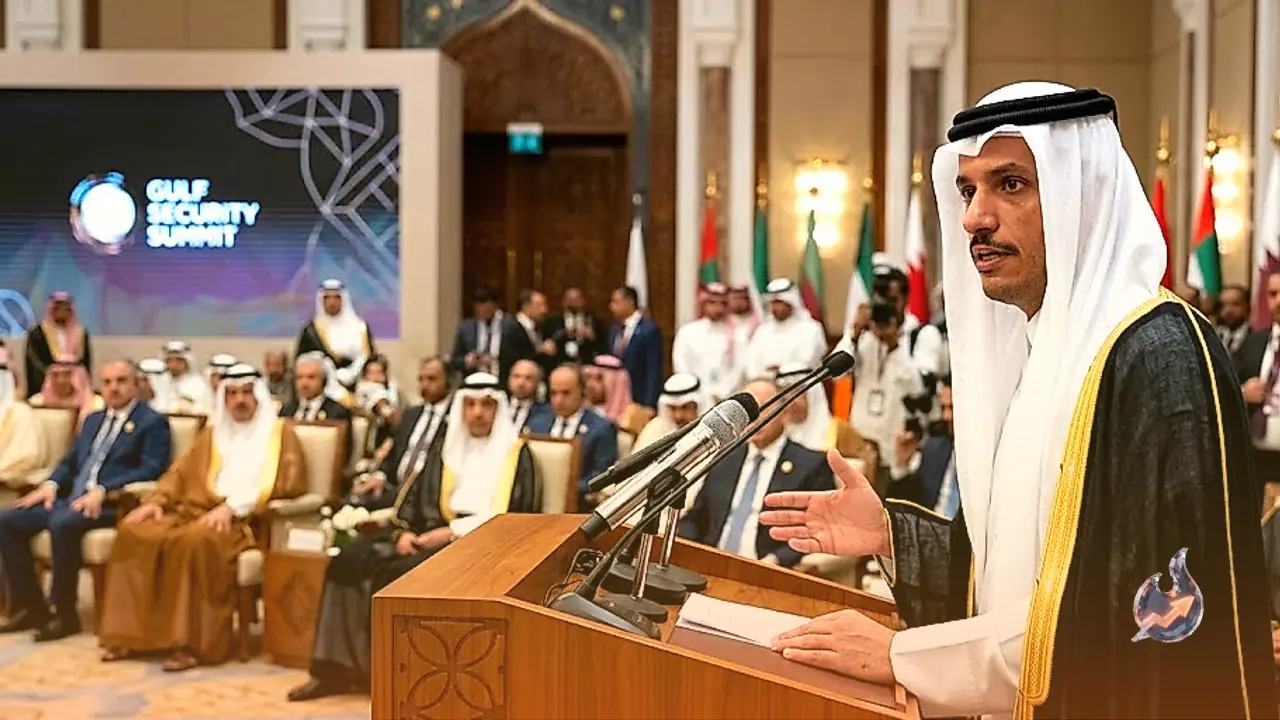


















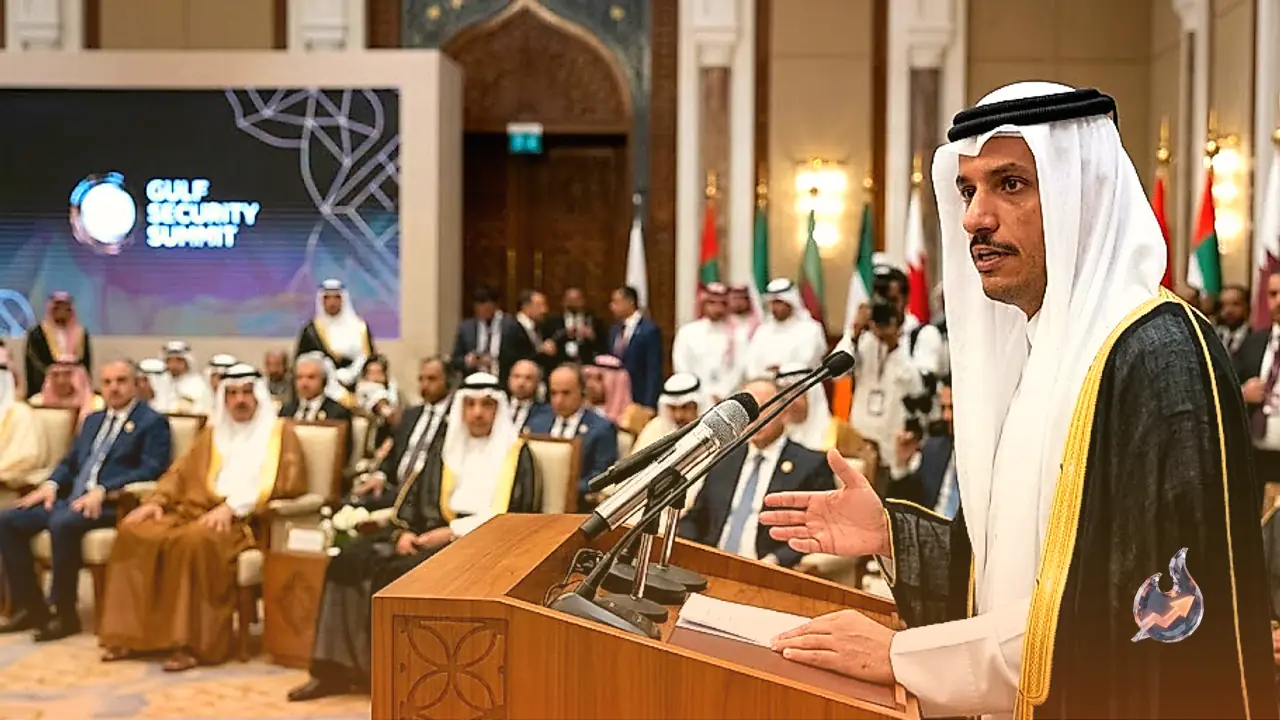

Amid escalating friction across the Middle East, Qatar has issued a direct diplomatic call for collective responsibility among regional neighbours. Qatar's Prime Minister, Sheikh Mohammed bin Abdulrahman Al-Thani, stated that Gulf states must work together to restore regional stability and actively help achieve a diplomatic settlement between the United States and Iran. The initiative comes at a critical juncture where regional security and international commerce remain deeply vulnerable to continued confrontations.
Al-Thani emphasized that the ongoing hostilities should serve as a wake-up call for everyone involved, urging the region to act together responsibly. Qatar has consistently positioned itself as a central mediator in high-stakes regional diplomacy, and this coordinated effort aims to prevent further military escalation while building a bridge between Washington and Tehran through shared Gulf diplomacy.
Dispute Over the Strategic Importance of the Strait of Hormuz
Alongside diplomatic developments, high-ranking Qatari officials have taken issue with recent assertions regarding vital maritime shipping infrastructure. Qatari Energy Minister Saad Al-Kaabi stated that US Treasury Secretary Scott Bessent is mistaken in his assessment that the strategic Strait of Hormuz will be worthless in two years.
Bessent argued earlier this month that the vital maritime corridor will diminish in importance as global powers and regional producers construct alternative pipeline infrastructure to bypass the passage. However, Saad Al-Kaabi firmly rejected Bessent's projection, reaffirming the enduring strategic value of the waterway. The Strait of Hormuz remains the single most important transit choke point for global crude oil and liquefied natural gas shipments, making complete bypass infrastructure practically unfeasible in the immediate term.
WTI Crude Oil and Its Role as a Global Energy Benchmark
The stability of Gulf transit corridors is intimately connected to pricing dynamics in global energy markets, where several crude varieties serve as international pricing standards. WTI Oil is a major type of Crude Oil traded extensively across international markets. The acronym WTI stands for West Texas Intermediate, which represents one of three primary global benchmarks alongside Brent and Dubai Crude.
WTI is commonly categorized as a light and sweet crude oil due to its relatively low gravity and minimal sulfur content. These chemical properties give it high quality status, as refiners can process it into finished fuels like gasoline and diesel with greater ease. Sourced in the United States, WTI is stored and distributed primarily through the Cushing delivery hub in Oklahoma, widely recognized as 'The Pipeline Crossroads of the World'. Given its liquidity and transparency, the WTI price functions as a primary pricing reference across international commodities exchanges.
Market Forces and Inventory Dynamics Driving Oil Valuations
Like any traded commodity, the valuation of WTI Crude is driven primarily by the interaction of global supply and demand. Accelerated global economic growth drives up industrial and transportation fuel consumption, strengthening prices, whereas slowing macroeconomic performance suppresses fuel demand and exerts downward pressure on crude futures.
Supply dynamics are equally sensitive to geopolitical turbulence, warfare, and sanctions, which threaten physical production and transport corridors. Furthermore, production quotas established by the Organization of the Petroleum Exporting Countries exert considerable influence over pricing trends. Currency fluctuations also play a crucial role: because crude oil is predominantly invoiced and settled in US Dollars, a weakening greenback renders oil cheaper for international buyers holding foreign currencies, whereas a stronger dollar dampens international purchasing power.
Market participants also closely track weekly oil inventory figures released by two major tracking bodies: the American Petroleum Institute (API) and the Energy Information Agency (EIA). Fluctuations in commercial crude stockpiles offer immediate insight into consumption trends. A reported drop in inventories suggests expanding consumption relative to supply, pushing crude values higher, while an inventory build indicates excess supply and drags prices lower. The API publishes its private sector estimates every Tuesday, followed by the EIA's official figures the subsequent day. Historically, both reports align closely, tracking within 1% of each other approximately 75% of the time, with institutional traders placing higher reliance on the EIA given its status as an official government agency.
At the sovereign supply level, OPEC operates as a coalition of 12 oil-producing countries that gather twice annually to determine mandatory production targets. Output curtailments tighten aggregate supply and boost crude valuations, while production hikes exert downward pressure. This structure expands into OPEC+, which incorporates ten additional non-OPEC oil producers, the most prominent among them being Russia.
Developments Across Currency and Precious Metals Markets
Beyond energy markets, broader financial trading reflected active shifts across major currency pairs and precious metals. AUD/USD maintained positive momentum for a second consecutive session, holding above the 0.7100 handle during Friday's Asian trading as softer US bond yields pressured US Dollar buyers. The Australian currency drew additional tailwinds from hawkish comments by Reserve Bank of Australia Governor Michele Bullock, which reinforced domestic rate hike expectations. Nonetheless, lingering geopolitical risks and the Federal Reserve's hawkish baseline helped limit US Dollar downside, keeping the currency pair within a defined trading channel.
Conversely, USD/JPY resumed its upward trajectory during European trading on Friday, approaching the 158.00 threshold and setting fresh two-week highs. The Japanese Yen remained weak despite the Bank of Japan executing an anticipated short-term interest rate hike, raising its benchmark target from 1.00% to 1.25% in a 7-2 vote. Bank of Japan Governor Kazuo Ueda noted that monetary policy had entered a new phase, yet the presence of two dissenting votes against the hike weighed heavily on yen sentiment.
Meanwhile, gold experienced persistent upside momentum heading into the weekend, trading with solid gains just below the $4,400 per troy ounce milestone on Friday. The rally in bullion was bolstered by declining crude oil prices alongside renewed selling pressure against the US Dollar, driving demand for safe-haven assets across global trading desks.