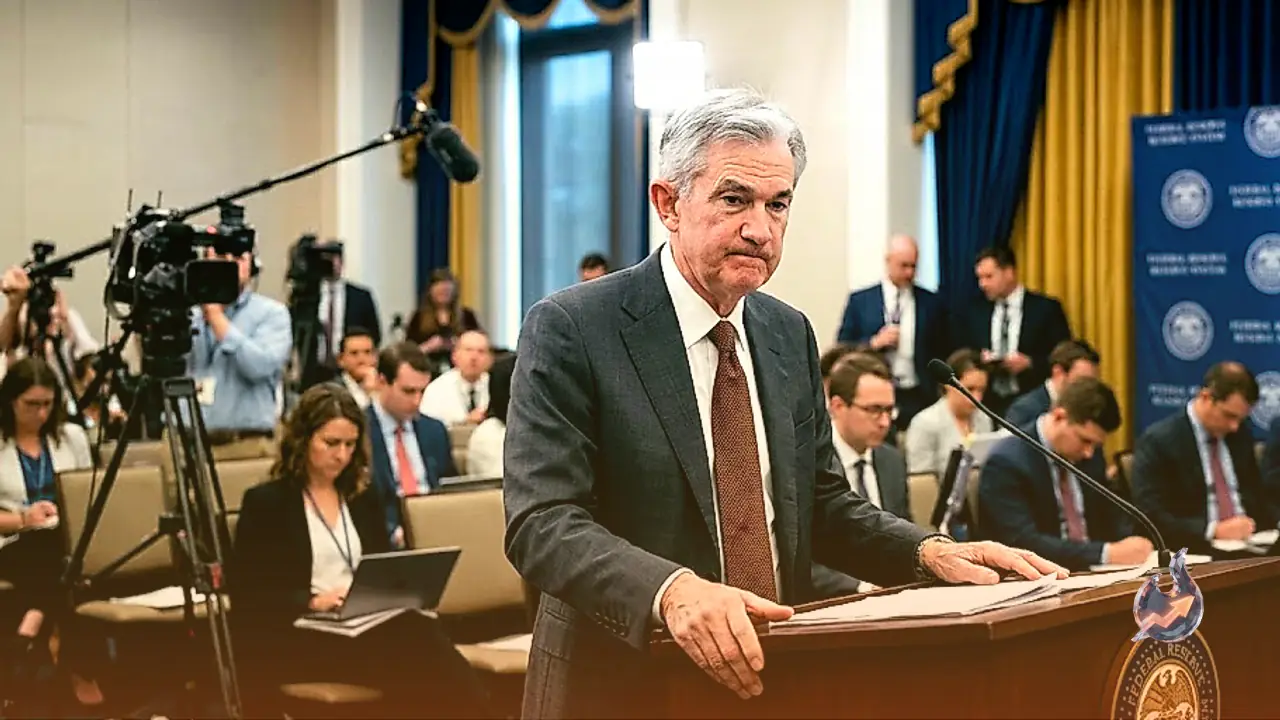

























Expectations surrounding monetary policy decisions in the United States have undergone a significant transformation following recent central bank communications. Previously, financial market participants broadly anticipated that monetary authorities would maintain interest rates at current levels well into 2027. However, explicit signals delivered during the annual Jackson Hole Symposium have fundamentally altered this baseline scenario. The keynote address by Chair Warsh highlighted persistent price pressures and resilient economic activity, shifting the default policy posture ahead of the upcoming September interest rate decision.
Jackson Hole Keynote Forces Re-evaluation of September Meeting
The revised monetary outlook stems directly from messaging delivered at the Jackson Hole gathering. For an extended period, the dominant market consensus assumed that benchmark policy rates would remain unchanged unless incoming economic metrics explicitly warranted an increase. Following the address by Chair Warsh, that framework has effectively inverted. The current operational assumption indicates that rate setters are prepared to implement an interest rate increase unless economic indicators provide a compelling justification for a temporary pause.
Central to this hawkish pivot is the prolonged duration of elevated inflation. Official measures of price growth have consistently exceeded the central bank's target threshold for 65 consecutive months. Additionally, policy makers observed that broader financial conditions do not appear restrictive when evaluated against an economy operating under conditions of full employment. Consequently, the threshold for keeping policy steady has risen substantially.
Monetary Credibility and the 1990s Risk Management Parallel
Institutional credibility plays a crucial role in shaping the central bank's decision-making process. Having adopted a restrictive tone in June before adopting a more cautious stance in July, reverting to a hawkish posture in August presents a strategic dilemma. Reverting once again to a dovish position during the September meeting could undermine market confidence in policy consistency. Furthermore, Chair Warsh emphasized macroeconomic trends over isolated monthly data points, signaling a firming conviction among members of the Federal Open Market Committee (FOMC).
With no visible institutional resistance to tightening within the decision-making body, a 25 basis point rate increase is now viewed as more probable than holding rates steady. However, analysts note that a single rate hike may not necessarily initiate an extended tightening cycle. Weak job creation statistics and moderating inflation metrics may mitigate broader institutional anxieties. Because consumer and market inflation expectations remain anchored, historical parallels are being drawn with monetary adjustments executed in the late 1990s.
During that period, policy easing in early 1996 was followed by an extended pause, after which a single 25 basis point risk management rate increase was enacted in March 1997. That isolated adjustment was subsequently followed by an extended period of unchanged interest rates lasting through late 1998. Market observers suggest a similar single-hike scenario could unfold under current economic conditions.
Foreign Exchange Dynamics Across Major Currency Pairs
In currency markets, shifting interest rate expectations and regional central bank dynamics continue to drive significant volatility. The USD/JPY pair experienced persistent selling pressure, dropping toward the 156.00 key technical level during the second half of Thursday's trading session. Support for the Japanese Yen has been reinforced by market anticipations of potential policy tightening by the Bank of Japan (BoJ), alongside ongoing market awareness of potential official currency intervention risks. Traders in this pair remain focused on upcoming economic releases from the United States, particularly the August Institute for Supply Management (ISM) Services Purchasing Managers Index (PMI).
Concurrently, the AUD/USD pair struggled to build upon its prior session rebound from a near two-week low. The currency pair traded within a tight consolidation range above 0.7150 during Asian market hours on Thursday. Crosscurrents influenced the Australian dollar: disappointing domestic trade performance figures created downward pressure, which was partially counterbalanced by upbeat services activity data from China via the RatingDog Services PMI. Although softer US private employment statistics from the ADP report initially dragged down the greenback, broader US Dollar losses were contained by rising geopolitical friction between the United States and Iran, as well as firming market expectations for a September Fed rate increase.
Commodity Trends and Record Energy Margins
Precious metals and energy commodities exhibited distinct market behaviors amid changing macroeconomic expectations. Gold maintained a firm buying interest heading into the European session, remaining just below $4,450 per ounce as investors weighed conflicting fundamental signals. The metal built upon its previous recovery from a nearly four-week trough, supported by declining US Treasury bond yields and a weaker US Dollar following the soft ADP employment statistics. Nonetheless, potential upside momentum remains constrained by elevated bond yields stemming from firming rate hike expectations and lingering inflation concerns driven by energy prices.
While crude oil futures displayed relative stability compared to previous months, the refined middle distillate market signaled significant supply pressures. The US diesel crack spread, which measures the refining margin premium of ultra-low sulphur diesel futures over West Texas Intermediate (WTI) crude oil futures, surpassed the $100 per barrel threshold for the first time on record. The spread established a new intraday high slightly above $102.00 per barrel, underscoring tight structural capacity in global energy processing.
Upcoming ISM Services PMI and Economic Outlook
Financial markets are monitoring the upcoming publication of the US service sector survey by the Institute for Supply Management (ISM). The August Services PMI is scheduled for release on Thursday at 14:00 GMT. Economic consensus projections point toward a marginal increase in the index to 54.3, compared to the 54.1 reading recorded in July.
If confirmed by official data, a reading above 50.0 indicates continued expansion in the service sector, which represents a dominant portion of broader economic activity. Such a result would reinforce perceptions of underlying economic resilience and provide support for policy makers considering monetary tightening.