


















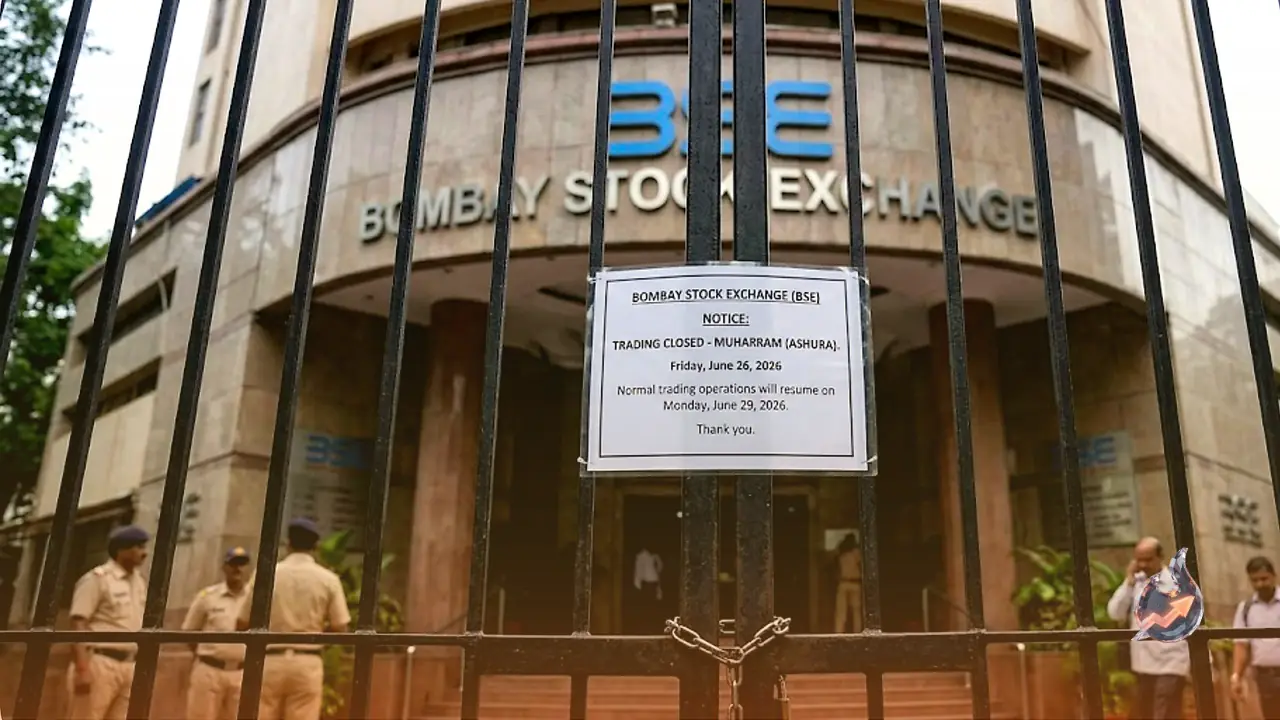

If you invest in stocks or trade regularly, here is an update worth noting. On Friday, June 26, 2026, both of India's major stock exchanges, the NSE and BSE, will stay completely shut. What makes it significant is that the holiday falls right before the weekend, which means investors and traders are getting a long three-day break in one stretch.
The markets are closed today on account of Muharram (Ashura). After this, June 27 and 28 fall on Saturday and Sunday, the regular weekly off. As a result, trading will now resume only on Monday, June 29.
Why the market closes for Muharram
Muharram is the first month of the Islamic calendar, and its tenth day is observed as Ashura. The day carries deep religious significance for the Muslim community, which is why a public holiday has been declared in the Indian stock market for this date.
According to the official trading holiday list of the NSE and BSE, business across equity, equity derivatives, currency derivatives and all other major segments will be fully suspended on June 26. In simple terms, there will be no buying or selling of shares, no futures and options trading, and no other market transactions today. Normal activity will pick up again only from June 29.
What it means for traders and investors
The biggest impact of a long weekend falls on traders who leave positions open. The market opened at its usual time on Thursday, June 25, which was the final trading session of the week. After that, there will be no trading for three straight days.
Market experts believe that during such a long break, movements in global markets, crude oil prices, the dollar index and any major international event could show up the moment the market reopens on Monday. That is exactly why short-term traders and derivatives investors are being advised to pay close attention to risk management in advance.
Other market holidays in 2026
As per the stock exchange holiday list, a total of 16 trading holidays have been fixed for 2026, excluding weekends. The next big holiday after Muharram falls in September on Ganesh Chaturthi. Beyond that, the market will also remain closed on occasions such as Gandhi Jayanti, Dussehra, Diwali, Guru Nanak Jayanti and Christmas. However, no major trading holiday is scheduled during July and August, so the market will function normally through these two months.
What investors should do before the break
Experts suggest that investors should review their portfolios once before any long holiday. Those holding open short-term positions should adopt a sound strategy keeping the potential risk in mind. Likewise, anyone who wanted to buy a particular stock or book profits could have wrapped up their key decisions by June 25.
Overall, this Muharram holiday is simply part of the market's regular calendar and has no major bearing on long-term investments. Even so, volatility could rise a little when the market reopens after a three-day gap, which is why investing thoughtfully and with a proper plan remains the smart approach.