






















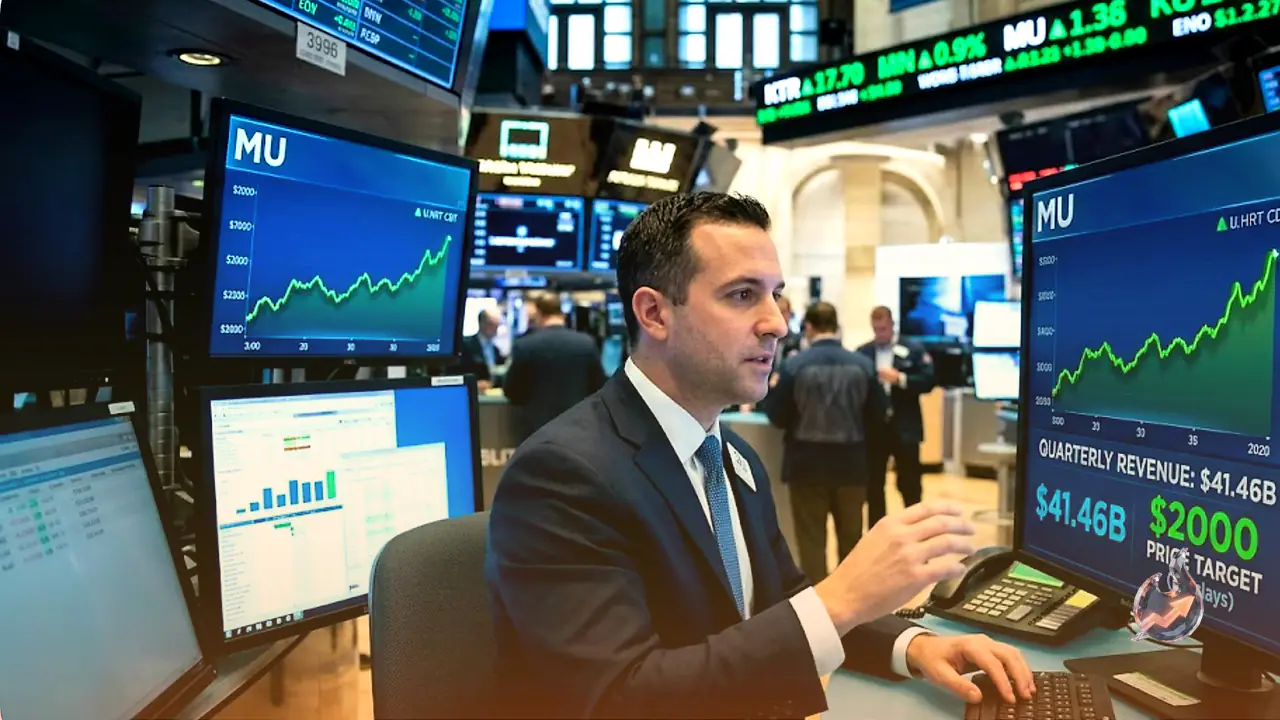

Micron (MU) has become one of the most closely watched stocks in this year's market. The company delivered extraordinary quarterly results this week, with revenue jumping fourfold compared to the same period last year to reach $41.46 billion. Following the announcement, MU shares climbed to a new all-time high of $1242 in after-hours trading. With production fully sold out and record earnings in hand, Barclays has now raised its price target for Micron from $1175 to $2000, a lift of nearly 70%.
When Could MU Actually Hit $2000?
TipRanks data puts Wall Street's consensus price target for Micron at $1527, which remains comfortably above where the stock is currently trading. The broadly bullish stance stems from surging demand for AI-powered memory chips. Micron's competitors SK Hynix and Samsung Electronics have held commanding positions in the memory chip market throughout the AI boom. Micron's earnings release also signals that supply-demand conditions for both DRAM and NAND chips are expected to stay tight well beyond calendar year 2027.
Despite the upbeat analyst outlook, whether MU will actually reach $2000 and when it might do so remains far from certain. The market is already flashing warning signs. MU fell 3.43%, or 41.62 points, in pre-market trading.
A Global Market Shock Hits the Sector
Rivals SK Hynix and Samsung Electronics have also been swept up in a severe global market downturn, suffering steep losses alongside Micron. The situation in South Korea grew severe enough that the KOSPI stock exchange was halted after a circuit breaker was triggered following an 8% crash.
What Is Fueling the Selloff?
Micron and the broader tech stock market have faced mounting selling pressure over the past week. Multiple explanations have been put forward for the move. Some investors appear to be booking profits after a powerful run-up. Rising inflation and uncertainty surrounding the US-Iran peace deal are also weighing on sentiment. Some market observers have additionally raised the possibility that the correction reflects growing concern over a potential AI stock bubble.