























Asian currencies are caught in a genuine tug-of-war between forces pulling in opposite directions. Superior regional economic growth relative to the United States is building a natural foundation of support for the region's exchange rates, while a firmer US Dollar, elevated yields and an uncertain shift in Federal Reserve policy under Chair Kevin Warsh are all generating countervailing pressure. MUFG currency strategist Michael Wan has laid out this detailed picture of where Asia's foreign exchange markets stand today.
AI Export Economies Are Best Positioned to Benefit
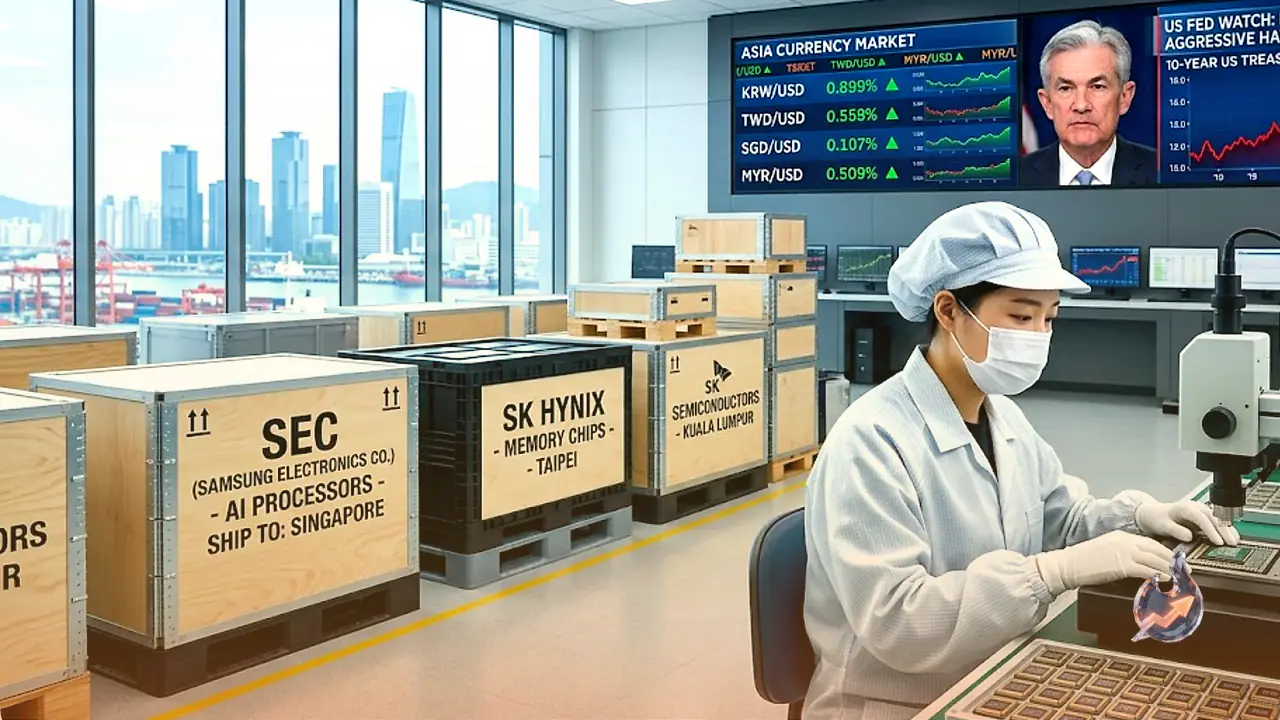
Wan identifies a specific cluster of Asian economies as the primary candidates to gain from this evolving growth dynamic. South Korea, Taiwan, Malaysia and Singapore have established themselves as the region's core hubs for AI-related electronics exports, and their economies are expanding at a pace that meaningfully outstrips that of the United States. That divergence in growth trajectories, Wan argues, gives their currencies a structural tailwind that goes well beyond the standard interest rate differential story.
"Moving forward, our base case for Asian currencies is that they will also receive support from better growth differentials with the US, especially the likes of AI electronic exporting currencies such as South Korea, Taiwan, Malaysia, and Singapore."
Yield Differentials Are Only One Piece of the Picture
MUFG's analytical framework, built on studying how Asian currencies moved through past Federal Reserve rate cycles, points to a more layered set of drivers than markets typically assume. Yield differentials between Asian economies and the US do carry influence, but Wan's research shows that growth differentials and overall risk sentiment are equally powerful forces, and can sometimes be even more decisive in shaping which direction a currency moves.
"Our previous framework on the drivers of Asia FX analysing past Fed rate cycles shows that yield differentials is only one factor influencing currencies in our region, with growth differentials and risk sentiment just as importantly if not sometimes more important."
A Hawkish Fed Shift Is the Sharpest Downside Risk
Despite the tailwinds from AI-driven export growth, MUFG is clear-eyed about where the danger lies. Under Chair Kevin Warsh, the FOMC held its benchmark rate at 3.50% to 3.75% for a fourth consecutive meeting, exactly as markets had priced in. However, if the Fed shifts to a materially more hawkish stance from here, and if that shift triggers a broader retreat in risk appetite across global financial markets, Asian currencies would face significant headwinds regardless of any growth advantage they currently hold.
"Of course, if the Fed does turn materially more hawkish and this also results in declines in risk appetite in markets this will certainly matter for Asia FX."
Dollar Strength and Oil-Driven Sentiment Add Further Complexity
Beyond the Fed debate, Wan flags several additional forces weighing on the regional FX outlook. A broadly stronger US Dollar is already working against Asian currencies at the margin, compounded by yields that remain sticky at elevated levels. Separately, the shifting risk sentiment generated by movements in global oil markets is adding another layer of uncertainty to an already complex regional picture.
The net takeaway from MUFG is that Asian currencies sit at a genuine inflection point. The growth momentum being built by the region's AI electronics exporters represents a real and potentially durable tailwind. But it will only prove to be the dominant force if the Federal Reserve maintains a measured policy path and broader market confidence stays intact. How that tension resolves will shape the next significant directional move across Asia's foreign exchange markets.