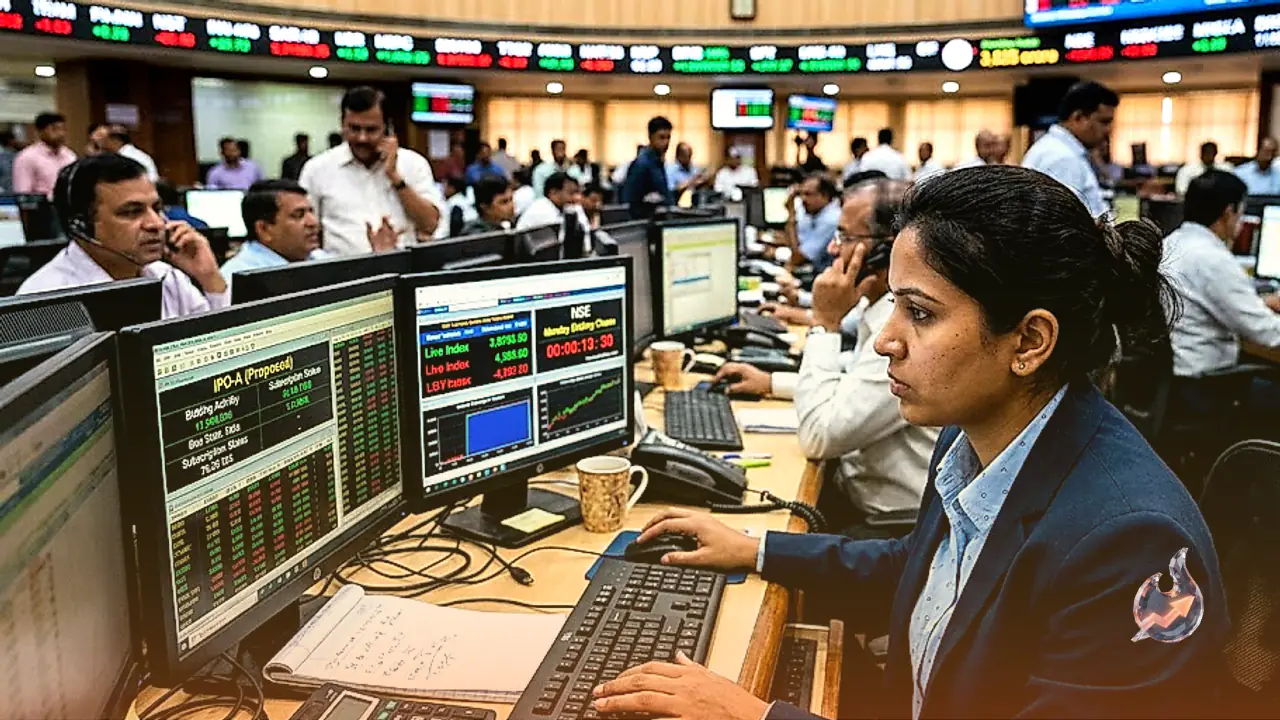

























A major structural change has hit the Indian stock market trading mechanism as the National Stock Exchange introduced a dedicated Closing Auction Session for selected equities, altering both the final trading phase and the calculation of official closing prices effective from Monday, August 3, 2026. This regulatory shift applies strictly to equities that form part of the Futures & Options segment. While the opening bell timing remains untouched, the final stretch of the trading day now operates under a completely revamped framework for these specific instruments.
How the New Auction Differs From Past Methods
Prior to this implementation, all stocks continued trading uninterrupted until 3:30 pm, with the official settlement price derived from the Volume Weighted Average Price of every transaction executed between 3:00 pm and 3:30 pm. In straightforward terms, the closing figure represented the arithmetic mean of trades conducted during the final half-hour of the session. Under the updated system, however, F&O equities trade normally only until 3:15 pm. Upon reaching this milestone, they transition directly into the newly established Closing Auction Session, which remains active until 3:35 pm, allowing market participants to submit orders that the exchange ultimately aggregates to determine a unified official closing rate.
Mechanics of the Closing Auction Session
The auction window operates on a distinct logic that contrasts sharply with continuous intraday trading. Rather than matching orders instantaneously as they arrive, the platform accumulates every buy and sell instruction entered throughout the auction duration. It then scans for a single equilibrium price point where the maximum aggregate volume of shares can successfully change hands. That specific clearing price becomes the official daily close for the security. Consequently, the closing valuation no longer relies on the average activity of the final thirty minutes, but instead reflects the exact point where aggregate buying pressure and selling interest achieve optimal balance.
Significance for Portfolio Valuation and Benchmarks
The closing price carries immense weight beyond being merely the final recorded transaction value of the trading day. It functions as the foundational benchmark for computing daily portfolio gains and losses, and is heavily relied upon by mutual funds, exchange-traded funds, institutional investors, and index providers when valuing assets and tracking benchmark indices. A more dependable and transparent closing price ensures that institutional portfolios and index performance metrics align more closely with true underlying market liquidity and conditions.
Revised Closing Schedules Across Market Segments
Even though market opening hours remain uniform, investors must account for divergent closing schedules across different market segments. Continuous trading for F&O equities now wraps up at 3:15 pm, followed by the auction window through 3:35 pm. Securities outside the F&O coverage continue normal trading until 3:30 pm, whereas stock and index derivatives maintain operations until 3:40 pm. This fragmentation means different trading desks now operate on distinct closing timelines.
Impact on Intraday Auto Square-Off Timings
The updated operational framework also brings necessary adjustments to auto square-off schedules for intraday traders utilizing Margin Intraday Square-off facilities. For equities governed by the Closing Auction Session, intraday positions are now automatically squared off at 3:10 pm. For non-CAS equities, the square-off deadline remains at 3:20 pm, while stock and index Futures & Options positions undergo automatic square-off at 3:25 pm. Traders depending on intraday leverage must incorporate these tightened schedules into their execution strategies to prevent unintended position closures ahead of the market close.