























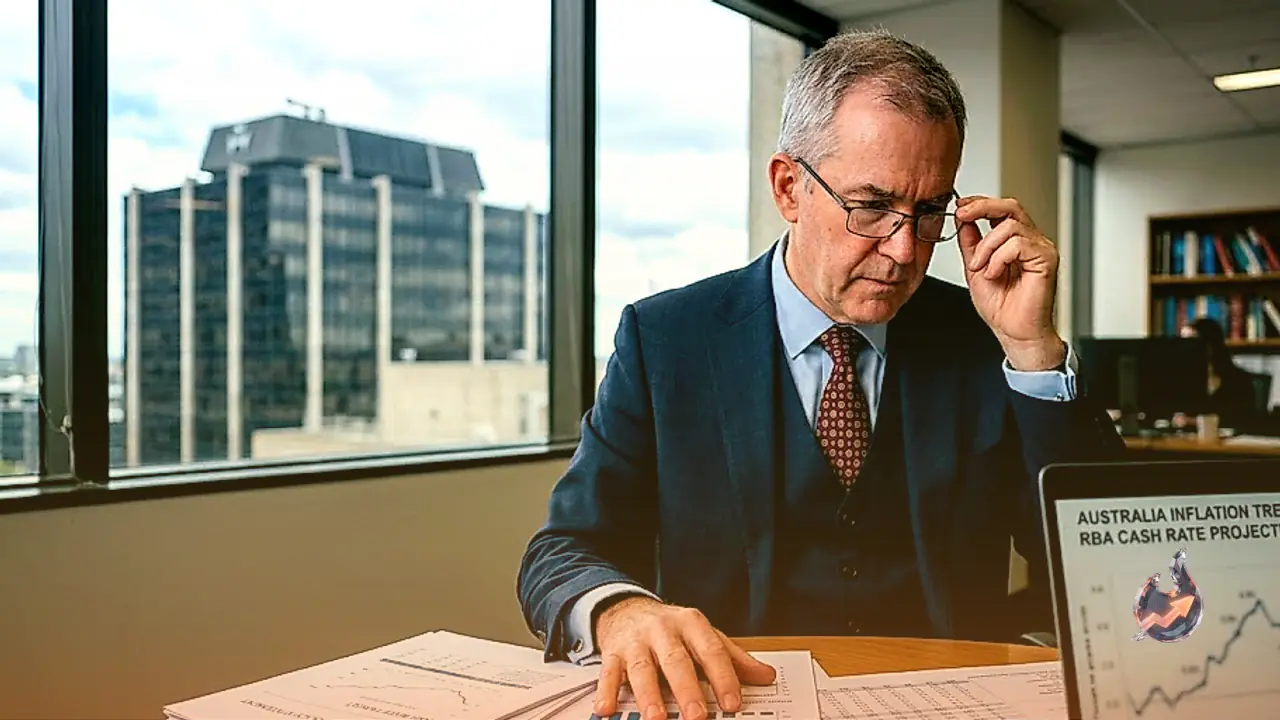

Market expectations regarding Australian monetary policy have shifted notably, with Standard Chartered analyst Nicholas Chia projecting that the Reserve Bank of Australia will raise its benchmark cash rate to 4.60% during its scheduled meeting on 29 September. This latest call revises an earlier anticipation that the central bank would keep borrowing costs on hold. The projected rate of 4.60% would surpass the current policy cycle peak of 4.35%. Alongside the anticipated increase, the estimated start date for eventual rate reductions has been deferred from the first quarter of 2027 to the third quarter of 2027.
Mounting Inflation Pressures and Economic Resilience
Prior forecasts had anticipated that emerging soft patches in the labor and property sectors would sufficiently rein in underlying consumer price pressures, allowing the Reserve Bank of Australia to moderate its hawkish stance. However, recent communications from central bank policymakers indicate heightened sensitivity to upside inflation risks. Crude oil trading near triple-digit price levels and the ongoing artificial intelligence boom have introduced renewed price pressures, creating a more complicated policy trade-off for the monetary authority.
According to Nicholas Chia, these developments remove potential barriers to additional monetary tightening, irrespective of what the August labor market data reveals when it is released on 24 September. Overall economic momentum appears to be holding steady despite the three rate increases implemented so far, leading the central bank to perceive the present monetary stance as only modestly restrictive. Nicholas Chia does not dismiss the possibility of another rate increase during the fourth quarter, although such an action would likely require an upside surprise in the third-quarter consumer price index print scheduled for late October, combined with persistent resilience in broader growth and domestic spending. The deferral of the first projected rate cut to the third quarter of 2027 highlights an expectation that policymakers will demand sustained proof of below-trend economic activity before initiating easing measures.
Currency Fluctuations and Central Bank Dynamics
In foreign exchange trading, the Australian Dollar strengthened against the US Dollar, with the AUD/USD pair finding buyers above 0.7100 during Tuesday's Asian trading window. The pair drew momentum from firm statements delivered by Reserve Bank of Australia Assistant Governor Sarah Hunter and Governor Michele Bullock. Nevertheless, ongoing geopolitical friction in the Middle East and a hawkish outlook from the US Federal Reserve have maintained underlying strength in the US Dollar, potentially capping further upside for the currency pair. Market participants are also closely watching the upcoming Trump-Xi summit scheduled for later in the week.
Meanwhile, the USD/JPY currency pair traded with modest gains near 157.50 during Tuesday's Asian session, as lingering concerns over potential currency intervention provided some support for the Japanese Yen. However, the Bank of Japan's dovish framing around its latest interest-rate increase to a 31-year high kept Yen buyers defensive. In a 7-2 vote, the Bank of Japan elevated its short-term interest-rate target to 1.25% from 1.00%, marking another incremental step toward policy normalization that matched broad market consensus. Across currency markets, the supportive environment for the US Dollar continues to be underpinned by expectations of prolonged Federal Reserve tightening and elevated global risk factors.
Precious Metals Retraction and Cryptocurrency Movements
In the commodities space, gold recorded its second consecutive daily decline, dropping beneath the $4,300 per troy ounce threshold before finding temporary footing. The precious metal remains under downward pressure as market expectations that the Federal Reserve will preserve elevated interest rates for an extended period continue to bolster both US Treasury yields and the greenback.
Digital assets experienced a consolidation phase, with Bitcoin trading below $85,500 on Tuesday following a rapid 6.7% advance recorded on the preceding day. Institutional interest remains a stabilizing pillar for the cryptocurrency, highlighted by spot Bitcoin Exchange Traded Funds attracting nearly $1 billion in net inflows on Monday. Furthermore, Strategy expanded its corporate reserves by purchasing an additional 950 BTC, underscoring ongoing balance-sheet accumulation amid broader macroeconomic adjustments.