
























India has issued a stern response to Pakistan's recent aerial bombing campaign targeting the Kunar and Paktika provinces of Afghanistan. Strongly condemning the military strikes, New Delhi characterized the cross-border operation as an act of aggression directed against a neighboring country. The Ministry of External Affairs emphasized that such unilateral military actions are deeply detrimental to peace and security across the entire region.
External Affairs Ministry Mourns Civilian Casualties
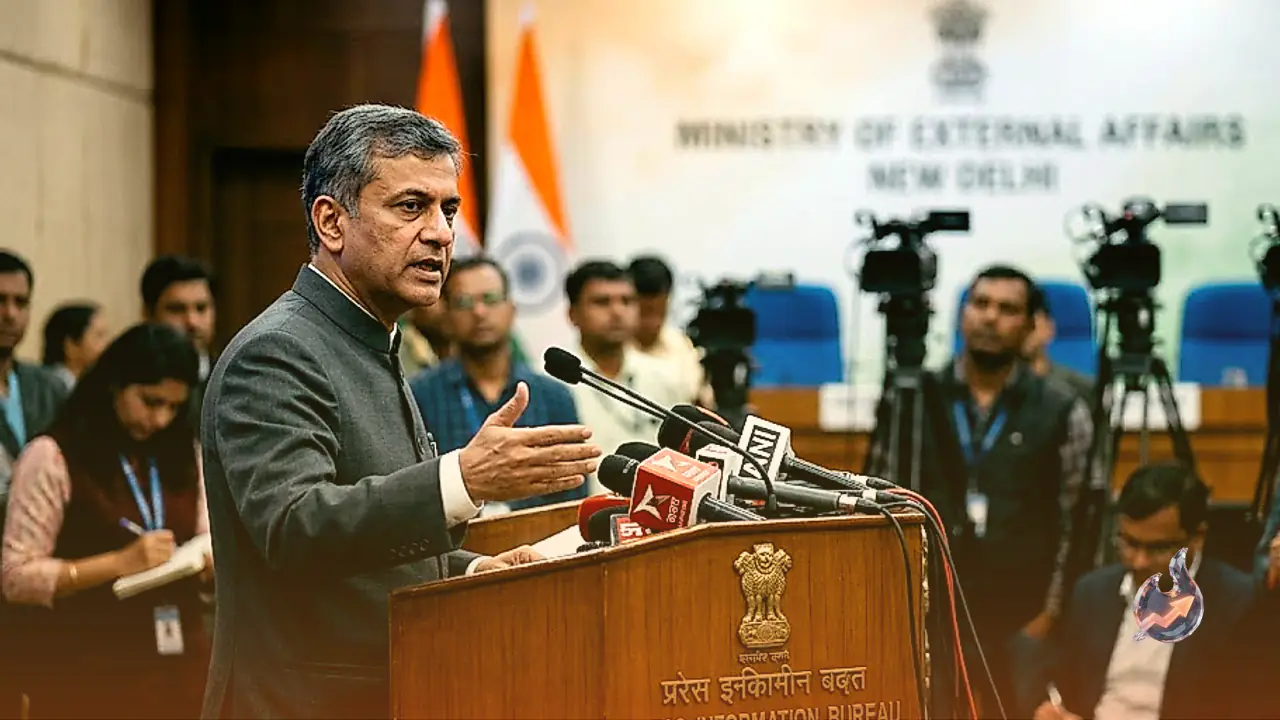
Articulating the government's stance during a routine press briefing on Tuesday, Ministry of External Affairs spokesperson Randhir Jaiswal made it clear that India unequivocally denounces the Pakistani aerial attacks launched against Afghan territory. Randhir Jaiswal pointed out that credible reports indicate multiple civilians lost their lives during the bombardments. The spokesperson conveyed India's heartfelt condolences and sympathies to the bereaved families who lost their loved ones in the military assault.
Direct Message on Cross-Border Terrorism
Randhir Jaiswal also addressed Islamabad's broader rhetoric regarding militancy, stating that Pakistan must replace mere public statements on cross-border terrorism with concrete, measurable actions on the ground. The Ministry of External Affairs spokesperson remarked that the international community will place trust in Pakistan's commitments only when it initiates authentic, verifiable, and decisive measures to dismantle terror networks operating across borders.
Three Months of Relative Calm Shattered Along the Border
New Delhi's sharp diplomatic remarks arrive amid a fresh spike in hostilities between Pakistan and Afghanistan, reigniting volatile cross-border friction. Following an uneasy truce and roughly three months of relative peace, the two neighboring states have once again slid into direct military confrontation. The frontier has previously witnessed intermittent aerial strikes, armed drone operations, and heavy cross-border artillery shelling, but major aerial incursions continually heighten the risk of an uncontained military escalation.
Pakistan Asserts 28 Militants Neutralized in Strikes
Pakistani security forces initiated the aerial bombardment across eastern Afghanistan on Monday. Pakistani officials stated that the military operation specifically engaged suspected militant hideouts, claiming that 28 terrorists were killed in the targeted strikes.
Islamabad defended the mission as a direct retaliatory measure following a wave of lethal assaults directed against its own armed forces and security personnel. Pakistani authorities have persistently alleged that militant outfits based inside Afghanistan are orchestrating and executing terror plots targeting Pakistani installations. In particular, Islamabad accuses the Tehrik-e-Taliban Pakistan, commonly referred to as TTP, alongside allied factions, of operating from Afghan soil to mount cross-border attacks across Pakistan. Consequently, Pakistani authorities have repeatedly demanded that the administration in Kabul crack down on these hideouts. The aerial offensive followed several deadly strikes on Pakistani security units, including a significant attack targeting a police compound situated in Kohat, located within Khyber Pakhtunkhwa.
Afghanistan Condemns Incursion, Cites Civilian Deaths
The Afghan Taliban administration reacted with fierce outrage, condemning the Pakistani air strikes as a blatant violation of Afghanistan's national sovereignty and territorial boundaries. Afghan officials reported that Pakistani ordnance struck a private residential home located in Kunar province, killing three civilian members belonging to a single family and leaving four others with severe wounds. The United Nations Assistance Mission independently confirmed the death of the three civilians caught in the strike.
Following the bombardment, Afghan authorities formally summoned Pakistan's charge d'affaires in Kabul to submit a vehement diplomatic protest against the military violation. Afghan representatives firmly dismissed Islamabad's assertions that recent acts of terror within Pakistan originated from groups operating inside Afghan borders. The Taliban government has long rejected these accusations, maintaining that Pakistan should resolve its domestic security deficiencies rather than deflecting blame onto Afghan soil.
Regional Ramifications of Growing Cross-Border Clashes
The persistent cycle of allegations and recriminations between Islamabad and Kabul continues to serve as the primary catalyst for unrest along the contentious border. While Pakistan frames its military sorties as legitimate strikes against terrorist encampments, Afghanistan regards the operation as an unlawful foreign aggression on its territory. Regional governments now observe the situation closely to see whether diplomatic channels can defuse the standoff or if security conditions will deteriorate further in the days ahead.