






















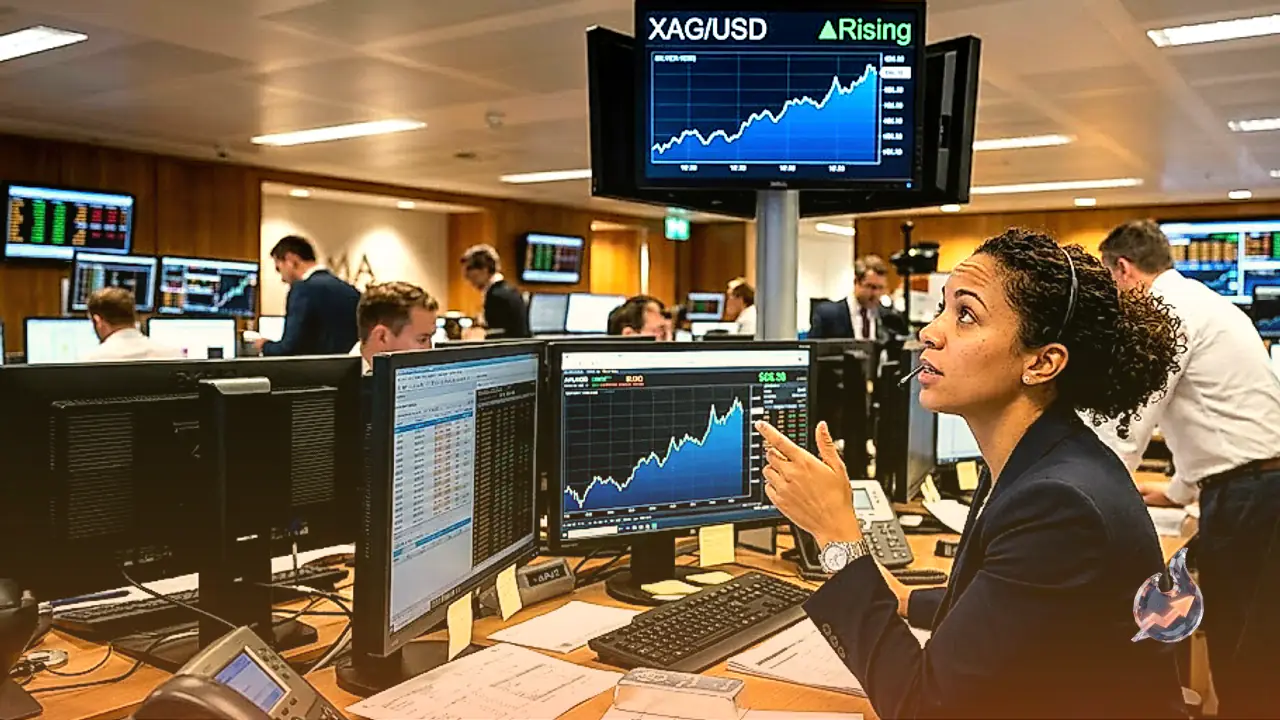

Precious metals found renewed buying interest as the US Dollar lost ground, lifting silver prices higher toward the $66.40 mark in recent trading sessions. Market participants are closely monitoring upcoming economic indicators while pricing in expectations that the Federal Reserve could announce an interest rate hike in the coming week. A softer greenback has reduced currency headwinds, making dollar-denominated bullion more attractive for global market participants looking to balance their portfolios against macroeconomic uncertainty.
US Dollar Weakness and Currency Market Movements
At press time, the US Dollar Index, which measures the greenback against a basket of six major currencies, traded slightly lower near the 98.76 level, hovering close to the two-week low of 98.72 reached on Tuesday. This softness in the currency market has provided a favorable risk-reward environment for silver investors. According to forecasts from TD Securities, core inflation likely moderated further in August, with analysts projecting a year-on-year increase of 2.3 percent in the core consumer price index, marking a 10 basis point decrease compared to July. Meanwhile, headline inflation is anticipated to have remained flat at 3.4 percent year-on-year. However, economists caution that risks to these projections remain skewed to the upside due to assumptions around potential price declines in tariff-exposed goods.
Technical Outlook and Chart Indicators
On the daily price chart, silver trades around $66.42, maintaining a position very close to the 20-period Exponential Moving Average positioned at $65.79, which points toward an ongoing sideways consolidation phase. Furthermore, the 14-period Relative Strength Index stands at 53.68 within neutral-positive territory, indicating mild bullish momentum without entering overbought levels. Traders continue to watch these technical thresholds for near-term breakout signals as market conditions evolve.
Investment Characteristics and Market Drivers
Silver has historically served as an alternative store of value and a medium of exchange, prized for both its industrial utility and its role as a portfolio diversifier during inflationary periods. Investors gain exposure to the metal through physical acquisitions such as coins and bullion, or via financial instruments like exchange-traded funds that track global spot valuations. Price action is influenced by multiple macroeconomic drivers, including safe-haven demand during geopolitical tensions, currency fluctuations, and prevailing interest rate policies. Because silver is a non-yielding asset, lower borrowing costs generally support higher valuations, while a strong dollar acts as a natural ceiling against aggressive rallies.
Industrial Applications and Global Demand Trends
Beyond investment demand, silver plays a vital role across modern manufacturing, particularly within the electronics and solar energy sectors, owing to its superior electrical conductivity compared to copper and gold. Regional economic dynamics in the United States, China, and India also shape pricing trends. Industrial consumption remains robust in North America and Asia, while traditional retail demand for jewelry and physical holdings across the Indian subcontinent contributes significantly to underlying market support. Analysts also monitor the gold-silver ratio to gauge relative valuations between the two precious metals during broader market cycles.