





















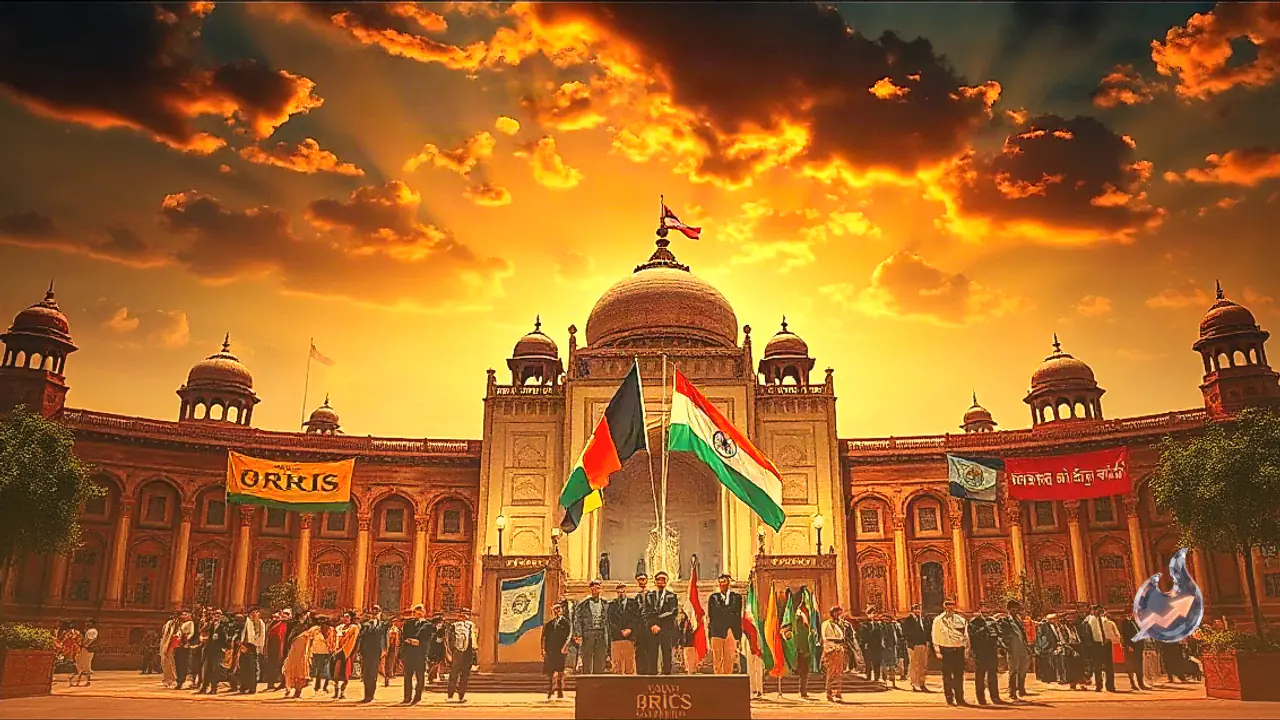

Against the backdrop of intensifying global conflicts and economic uncertainties, India is preparing to host the 18th BRICS Summit, marking the fourth time the nation has assumed the hosting duties for this influential bloc. Former Ambassador Mahesh Sachdev has characterized this upcoming summit as a pivotal juncture for emerging economies seeking to fortify a balanced, multipolar international framework. As the global community navigates severe disruptions caused by the Russia-Ukraine war, escalating friction between the United States and Iran, punitive commercial sanctions, and fragmented supply chains, the BRICS forum stands out as an essential venue for collaborative problem-solving. India's leadership offers a timely platform to address pressing international bottlenecks and reconcile divergent geopolitical interests.
Global Supply Chain Strain and Inflationary Pressures
The fallout from ongoing geopolitical struggles has transcended regional borders, casting a wide shadow over the global economy. Continued warfare between Russia and Ukraine, coupled with heightened tensions surrounding the United States and Iran, has severely disrupted global supply networks. This turmoil has exerted immense upward pressure on the prices of vital commodities, including food grains, crude oil, natural gas, and agricultural fertilizers. Former Ambassador Mahesh Sachdev pointed out that existing diplomatic endeavors to resolve these conflicts have largely fallen short of expectations. The lack of consensus stems primarily from the inability of involved parties to agree on terms that are mutually acceptable, thereby leaving international commodity markets vulnerable to sustained instability and supply bottlenecks.
Unilateral Sanctions and Mounting Recessionary Risks
The imposition of economic sanctions and restrictive trade measures has further compounded the pressures facing international markets. Trade barriers and punitive financial policies enacted by major economies have restricted market access and heightened the threat of a global economic slowdown. According to Sachdev, the 18th BRICS Summit provides an indispensable opportunity for major emerging nations to deliberate directly on these financial headwinds. Bringing together key developing economies allows leaders to craft collective strategies aimed at mitigating trade barriers, safeguarding supply corridors, and insulating national economies from external financial shocks. India's role as host is critical in steering these discussions toward tangible economic stability.
Western Skepticism and Alternative Financial Architecture
Western powers have traditionally viewed the BRICS grouping with a degree of apprehension, harbouring concerns that the bloc could be influenced heavily by China and Russia toward an anti-Western posture. At the same time, BRICS has steadily expanded its institutional capabilities through successful mechanisms such as the New Development Bank and the Contingency Reserve Arrangement (CRA). Furthermore, ongoing debates surrounding de-dollarization and the use of national currencies in cross-border settlements have raised anxieties in Western capitals. These developments are frequently perceived as a direct challenge to the post-World War II international financial framework that has long been anchored by Western financial institutions.
India as a Pragmatic Diplomatic Bridge
In this divided geopolitical climate, India occupies a uniquely positioned middle ground. Mahesh Sachdev emphasized that India does not align with anti-Western rhetoric within BRICS, nor does it function as a subordinate member of Western alliances. This non-aligned, pragmatic posture enables India to act as a credible bridge between BRICS nations and the Western bloc. During the summit, India has the diplomatic capacity to shape joint declarations and policy agendas into balanced, practical frameworks. Rather than allowing discussions to devolve into ideological polarization, India can steer the agenda toward objective, solution-oriented outcomes that appeal to a broad spectrum of international actors.
Moving Beyond Formal Diplomacy to Real-World Impact
The agenda for the 18th BRICS Summit encompasses critical issues including global tariff disputes, energy security, and conflict resolution mechanisms for the Russia-Ukraine and US-Iran confrontations. The former ambassador voiced hope that India will leverage its hosting privilege to promote dialogue over confrontation. By focusing on actionable agreements, the summit can help stabilize global supply networks and foster reforms within the international financial architecture. For India, the summit represents far more than a ceremonial gathering; it is an extraordinary platform to demonstrate global leadership, champion the interests of emerging markets, and deliver concrete avenues for international stability.