





















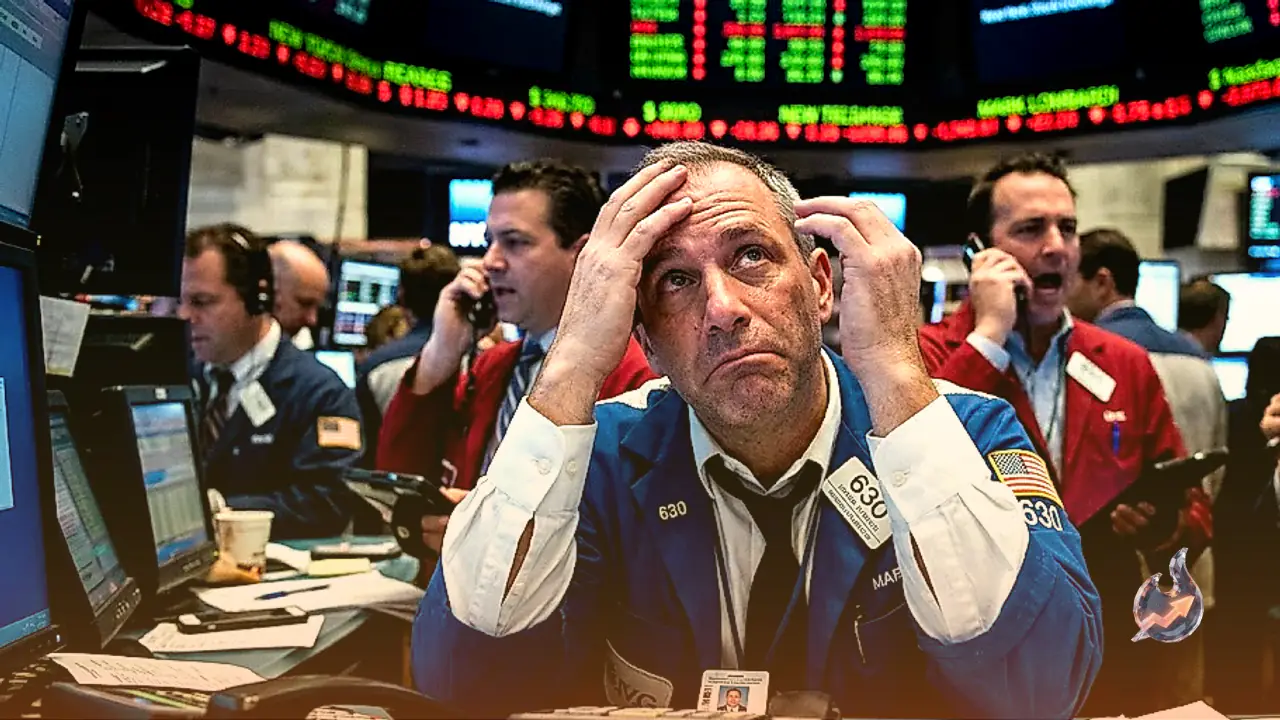

The United States stock market experienced a sharp overnight crash following a three-day holiday weekend, pressured by rising crude oil prices and an intensified geopolitical crisis in the Middle East. In response to attempted missile attacks by Iran on US warships, the US eliminated five Iranian tankers near Kharg Island. Amidst the ongoing conflict, fears regarding inflationary risks have heavily impacted market sentiment as investors await crucial US inflation data scheduled later in the week. Meanwhile, US stock futures steadied during early trading hours on Wednesday.
Dow Jones Leads Broad Market Decline
The Dow Jones suffered the heaviest blow among its peers, crashing 628.18 points or 1.2 percent to finish the session at 52,786.07. Major draggers included Amgen, which slumped over 10 percent, followed by Salesforce with a 4 percent drop. Stocks such as Home Depot and Sherwin-Williams both tanked 2.3 percent, while Johnson & Johnson, Nvidia, and Visa Inc declined roughly 2 percent each.
Heavyweights Slide Across Major Indices
Market heavyweights including JP Morgan, Merck, IBM, Apple Inc, Microsoft, Walmart, Travelers Cos, Nike, and Boeing also plunged between 1 percent and 1.5 percent, heavily impacting the Dow Jones. The Nasdaq Composite closed down 36.45 points or 0.12 percent at 29,507.70, while the S&P 500 index slipped 45.08 points or 0.58 percent to settle at 7,673.52. Credit-sensitive equities also dragged down Wall Street, with Palantir and Amazon dropping 2.3 percent and 0.6 percent respectively ahead of their sterling bond offerings.
Futures Stabilize as Rate Hike Expectations Shift
During early trading on Wednesday, Dow Jones futures traded down 35 points at 52,797. Conversely, Nasdaq 100 futures gained a marginal 58.50 points to trade at 29,597.25, and S&P 500 futures edged up 6.25 points to 7,686.75. US stock futures stabilized after the previous session's sell-off, which was triggered by surging oil prices that heightened worries over inflation and potential interest rate hikes. According to Trading Economics, markets are currently pricing in approximately a 60 percent probability of a 25-basis-point rate hike at the upcoming Federal Reserve meeting.
Jobs Data and Upcoming Inflation Readings
According to research from Charles Schwab, investors spent the long weekend digesting robust August U.S. jobs data while preparing for upcoming inflation metrics. With the corporate earnings season concluded, central bank actions and geopolitical developments remain at the forefront. Analysts noted that six consecutive months of payroll gains, combined with potential rate decisions at the next Federal Open Market Committee meeting, keep inflation as the primary market driver.
With jobs data now in the past, Thursday's Producer Price Index and Friday's Consumer Price Index represent the final key economic indicators ahead of the central bank meeting. Early consensus points to a 0.4 percent monthly increase for headline CPI and 0.2 percent for core CPI. Market analysts maintain a cautious outlook given the combination of geopolitical escalations, rising treasury yields, and historical September seasonality trends.