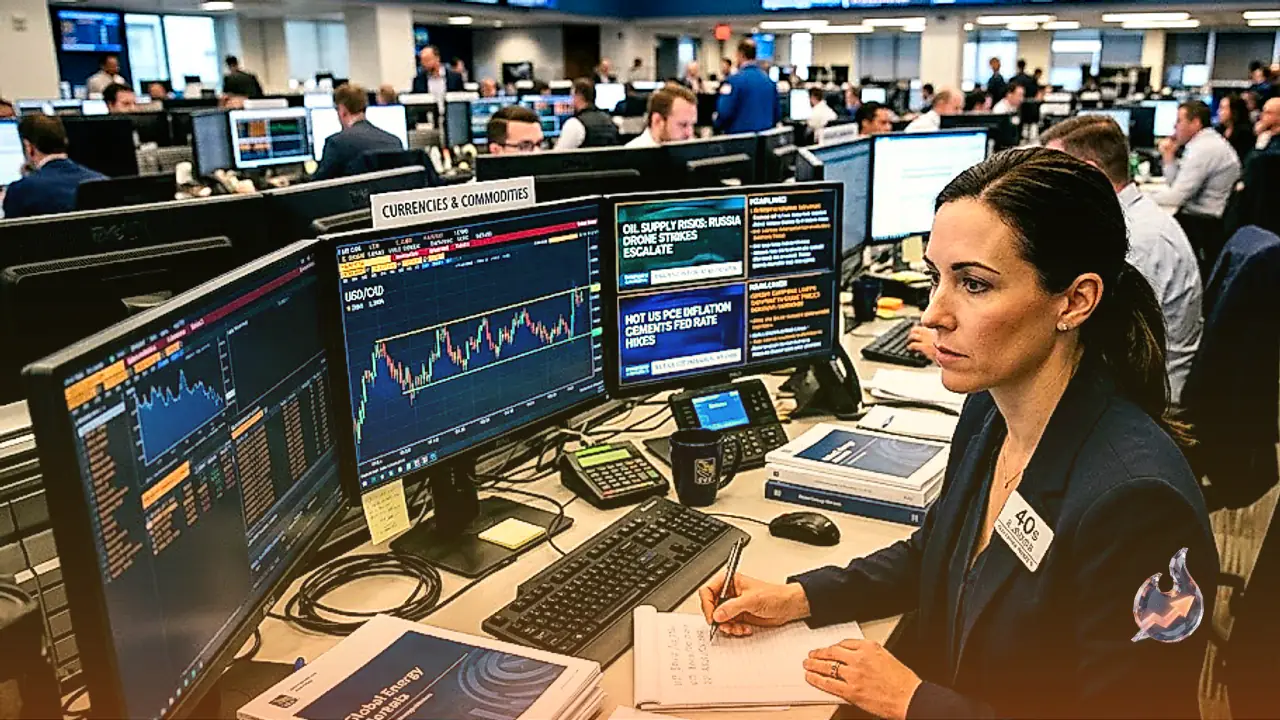
























Precious metals markets are demonstrating notable resilience as global financial participants scrutinize the future path of Federal Reserve monetary policy ahead of next month's crucial decision. Amid this cautious backdrop, spot Silver (XAG/USD) has maintained a firm footing above the critical $69.00 per ounce threshold. The metal's steadying coincides with fresh macro data released on Wednesday, revealing that the US Personal Consumption Expenditures (PCE) price index accelerated to 0.2% month-on-month in July. This figure topped expectations of a 0.1% rise and pushed the annual headline PCE inflation rate up to 3.7%. The persistence of elevated inflationary pressures has reinforced expectations that the central bank will maintain a stringent monetary posture, keeping traders closely tuned to upcoming policy catalysts.
All Eyes on Federal Reserve Chair Kevin Warsh Ahead of Jackson Hole Speech
The primary focal point for global financial markets this week is the annual economic symposium hosted in Jackson Hole, Wyoming. Federal Reserve Chair Kevin Warsh is scheduled to deliver his first keynote address at the event on Friday. Market participants are eager to parse his remarks for definitive signals regarding whether interest rates will be raised or kept unchanged at the impending September Federal Open Market Committee meeting. Beyond interest rate expectations, precious metals continue to draw support from the debasement trade. Investors are increasingly seeking structural hedges against potential US national debt risks, fiscal deficits, and long-term currency depreciation by allocating capital into tangible commodities.
Industrial Surge Driven by Solar Energy, Electric Vehicles, and AI Datacenters
Unlike gold, silver derives a substantial portion of its intrinsic value from industrial applications. The metal is experiencing a powerful structural tailwind fueled by the rapid global expansion of green technologies and next-generation computing infrastructure. Silver is a critical component in solar photovoltaic (PV) panel fabrication, electronic systems within electric vehicles (EVs), and the physical hardware powering artificial intelligence (AI) data centers. Boasting the highest electrical conductivity of any metal on earth—surpassing both copper and gold—silver remains irreplaceable in high-performance electronics. As capital expenditure into renewable energy grids and AI hardware continues to rise globally, industrial demand offers a durable foundation for spot prices.
Economic Dynamics Across North America, China, and India Shaping Metals Market
Global demand dynamics for silver are heavily influenced by industrial and consumer trends in key national economies. In the United States and China, massive industrial manufacturing sectors absorb vast quantities of silver across advanced technological and chemical processes. Manufacturing indicators from Beijing and industrial production metrics from Washington directly impact physical consumption levels. Meanwhile, consumer demand in India plays an equally critical role in price formation. Indian retail buyers consistently purchase silver for jewelry, cultural festivities, and long-term wealth preservation. This combination of Western and East Asian industrial demand alongside South Asian physical retail buying creates a broad floor under international spot valuations.
Safe-Haven Asset Characteristics and Portfolio Diversification Dynamics
Throughout financial history, silver has served as a recognized store of value and a trusted medium of exchange. While gold remains the primary safe-haven choice for institutional portfolios during periods of acute geopolitical crisis or deep recessionary fears, silver offers compelling diversification benefits. Investors hedge against high-inflation cycles by holding physical silver coins and bullion bars, or by trading exposure through Exchange Traded Funds (ETFs) that closely track spot market benchmarks. As a non-yielding asset, silver generally prospers in environments characterized by lower real interest rates. Furthermore, because silver is denominated in US Dollars (XAG/USD), fluctuations in the Greenback directly alter its price action: a weaker dollar typically propels silver higher, whereas a strengthening dollar exerts downward pressure.
Deconstructing the Gold/Silver Ratio and Valuation Benchmarks
Professional traders closely monitor the Gold/Silver ratio to evaluate the relative valuation between the two primary precious metals. This mathematical metric specifies the exact number of silver ounces required to equal the market value of a single ounce of gold. Because silver historically tracks gold's broader price movements due to their shared monetary characteristics, divergence in this ratio provides actionable market signals. A historically high Gold/Silver ratio suggests that silver may be undervalued relative to gold, or conversely, that gold has reached overbought territory. Conversely, a depressed ratio indicates that gold may be relatively underpriced compared to silver. Supply dynamics also play a role, as annual mining output for silver is considerably more abundant than gold, complemented by active secondary recycling streams.
Broader Foreign Exchange Movements: British Pound and Euro Under Selling Pressure
The broader currency landscape reflected a firmer tone for the US dollar following the inflation data release. GBP/USD resumed its downward trajectory on Wednesday, completely reversing Tuesday's bullish advance and sinking below the 1.3600 psychological mark. The pullback in Cable came as investors weighed sticky US economic data against ongoing geopolitical developments. Similarly, EUR/USD faced renewed selling pressure, sliding back toward the mid-1.1600s ahead of the Asian trading session. The European currency lost momentum amidst steady dollar demand and market caution ahead of the European Central Bank (ECB) Accounts publication scheduled for Thursday.
Gold Rebounds Above $4,600 as Yields Slide and Hormuz Developments Unfold
In adjacent commodity markets, spot gold staged a modest recovery during Thursday's Asian session, climbing back above the $4,600 per ounce level. Gold reclaimed a portion of the previous day's losses, which had dragged prices to weekly lows. The rebound in bullion was facilitated by sliding US Treasury yields and shifting market sentiment regarding conditions around the Strait of Hormuz, which tempered aggressive dollar buying. However, with July's elevated PCE inflation metrics keeping Federal Reserve rate-hike possibilities firmly on the table, the upside for yieldless bullion remains capped, leaving both gold and silver navigating a complex macroeconomic landscape of sticky inflation and steady industrial consumption.