




















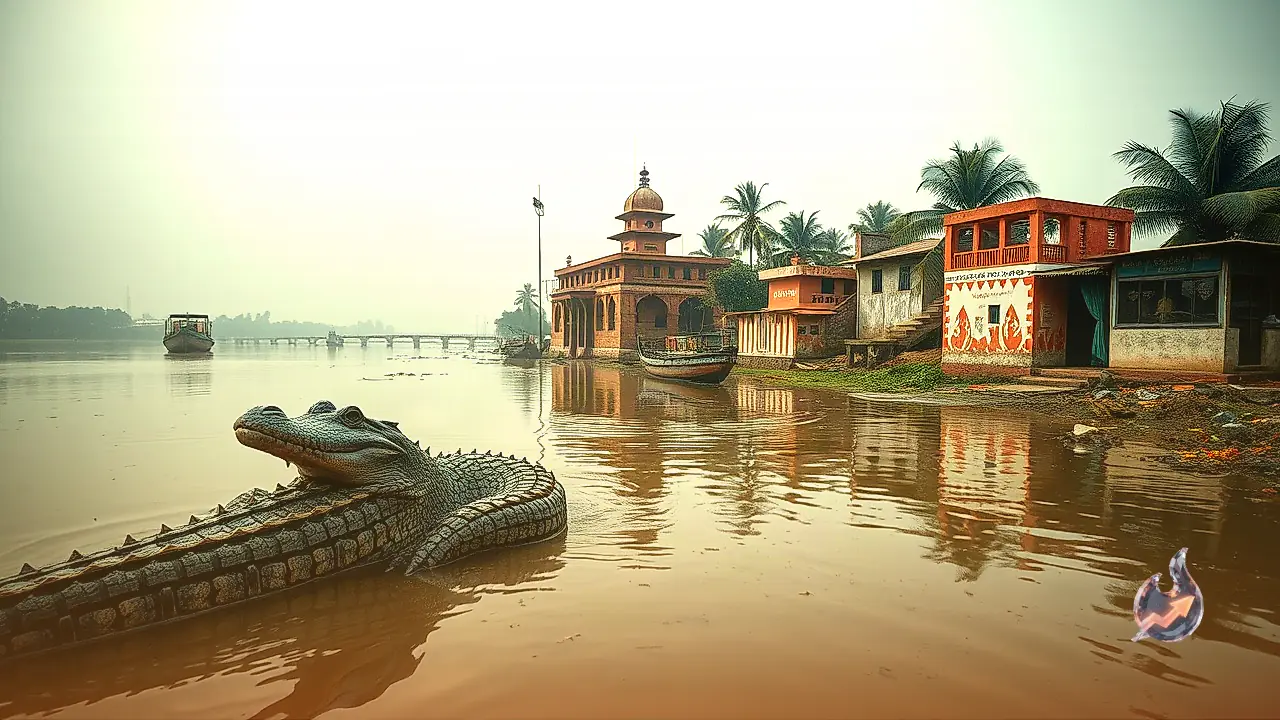

The Chambal River flowing through Rajasthan's Dholpur district is facing a remarkably low probability of severe flooding this season, driven by a sluggish monsoon pace and minimal rainfall in the catchment areas. Although water levels briefly neared danger marks earlier due to discharges from the Kali Sindh Dam, the river currently flows in a completely calm and steady state. With the month of August drawing to a close, a period when the Chambal traditionally assumes a fierce and raging form, the absence of floods is bringing immense relief to the natural ecosystem and aquatic wildlife.
A Vital Lifeline for Newborn Hatchlings
The fading flood threat is expected to deliver the most direct and profound benefit to the newborn gharial hatchlings inhabiting the Chambal River. Every year during May and June, young gharials emerge from their eggs. The subsequent monsoon floods immediately pose the most severe natural hazard to these fragile creatures. Raging currents and swollen waters sweep away countless infant gharials annually, leading to premature deaths.
The Struggle for Survival in Natural Habitats
According to experts, the baseline survival rate for gharial hatchlings in their natural habitat is a mere 1 to 2 percent. Alongside swift water currents, predators such as kites, jackals, and other wild animals prey heavily on the small reptiles and their eggs. On numerous occasions, infant gharials also become entangled in illegal fishermen's nets, and destructive floods multiply these losses exponentially. To safeguard the species from these combined perils, roughly 200 eggs are brought to the Devari gharial breeding center in Dholpur, where the hatchlings are reared in a secure environment before being released back into the river.
Surviving Rates Projected Up to 70 Percent This Year
Forest and wildlife experts estimate that in the absence of severe flooding in the Chambal River this season, the survival rate of gharial hatchlings in the wild could climb as high as 70 percent. This dramatic improvement is anticipated to trigger a notable growth in the gharial population within the National Chambal Sanctuary, marking a highly encouraging sign for environmental conservation.
Current Water Levels and Central Water Commission Monitoring
The standard gauge level of the Chambal River hovers around 120 meters, resting at approximately 121.66 meters during the final week of August. By comparison, severe floods struck the Chambal during the exact same period in 2025, severing connection to roughly 20 riverside villages. According to the Central Water Commission, water levels are being monitored around the clock. Although future rainfall could prompt minor rises in the water level, current conditions indicate that the likelihood of a destructive flood remains extremely low.