




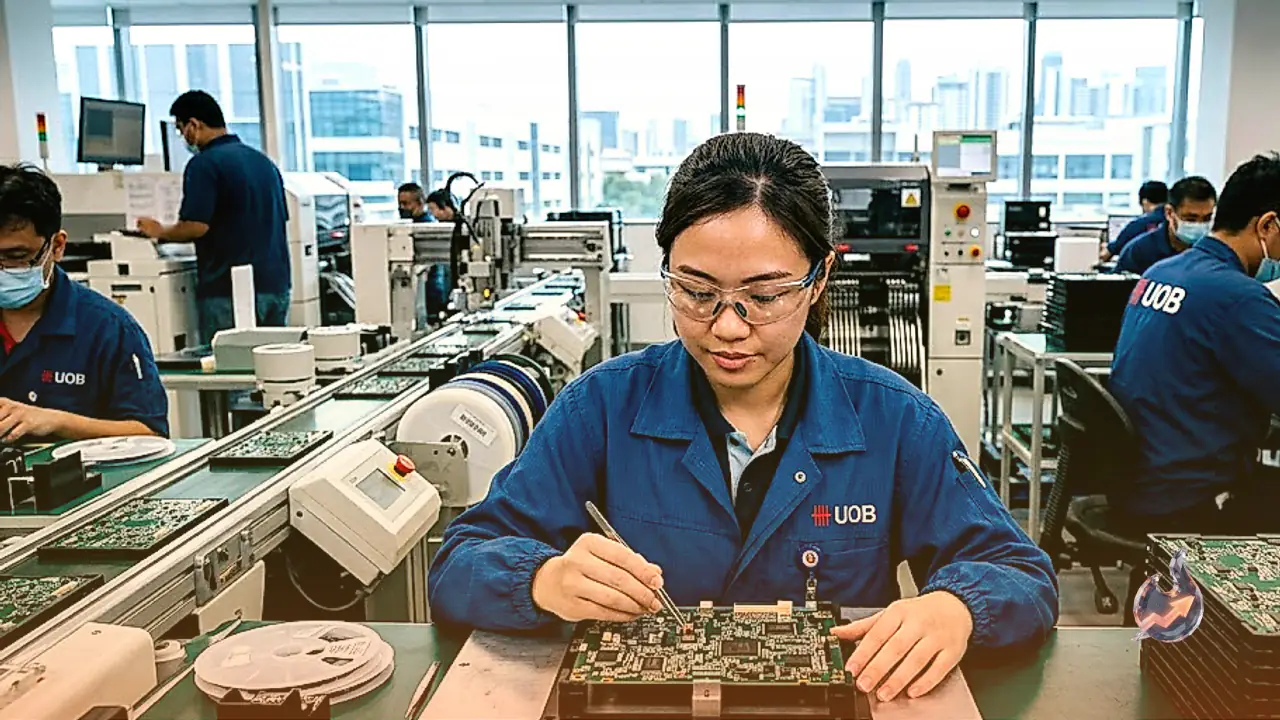



















Singapore's electronics Purchasing Managers Index rose during August, underpinned by broad-based growth across new export orders, overall output, and order backlogs. UOB economist Jester Koh points out that the recent moderation observed in electronics NODX and industrial production reflects capacity constraints rather than any genuine softening in end-user demand. Furthermore, ongoing inventory drawdowns alongside artificial intelligence tailwinds are expected to provide solid support for future electronic manufacturing activities.
Inventory Depletion and Production Outlook
The stronger performance in the August electronics PMI strongly suggests that the recent sluggishness stems from production limits rather than fading demand. This is further corroborated by the continued downward trend in the finished goods inventory sub-index, which recorded 49.0 in August compared to 49.3 in July, demonstrating that local businesses are actively utilizing existing stock piles to fulfill rising customer orders. As the eventual need for inventory replenishment arises, it should naturally bolster electronic industrial output in the upcoming months.
Supply Chain Disruptions From Middle East Tensions
The re-escalation of geopolitical conflicts in the Middle East since July has triggered a fresh deterioration in the supplier deliveries sub-index. The overall reading slipped to 47.5 from 47.8, while the electronics-specific index dipped to 47.3 from 47.6. Delivery lead times have lengthened significantly as maritime cargo shipments were forced to reroute away from the traditional Suez Canal and Bab el-Mandeb Strait passages, opting instead for the longer journey around the Cape of Good Hope.
Rising Input Costs and Tech-Inflation Pressures
Input price sub-indices witnessed upward movement across both the broader economy and the electronics sector specifically. The overall input price index rose to 51.8 in August from 51.6 in July, while the electronics sector index climbed to 53.0 from 52.7. This upward pressure was largely driven by a surge in global energy prices during August, with the impact being more pronounced in electronics manufacturing due to persistent tech-inflation pressures tied to the ongoing global semiconductor shortage.
FX and Commodity Market Movements
Parallel developments across global foreign exchange markets show the USD/JPY pair bouncing off multi-month lows, heading toward the 156.00 threshold ahead of the Asian opening bell. This sharp spot pullback follows a sudden strengthening of the Japanese Yen, fueled by growing investor speculation that the Bank of Japan might announce another interest rate hike during its upcoming policy meeting on September 18.
Meanwhile, the AUD/USD pair extended its Wednesday gains, touching fresh four-month highs above the 0.7200 mark late Thursday. This solid performance came on the heels of a steep sell-off in the US Dollar as traders positioned themselves ahead of the crucial US Non-Farm Payrolls report scheduled for Friday. Gold prices also capitalized on the tumbling US Dollar and declining Treasury yields, reclaiming territory near the key 4,500 dollar per troy ounce mark.
Diesel Market Divergence
While the broader crude oil market may appear relatively calm compared to previous months, the diesel sector is signaling a starkly different trend. The US diesel crack spread, which measures the premium of ultra-low sulfur diesel futures over West Texas Intermediate crude, recently surpassed 100 dollars per barrel for the first time ever, eventually touching an intraday record high just above 102.00 dollars.