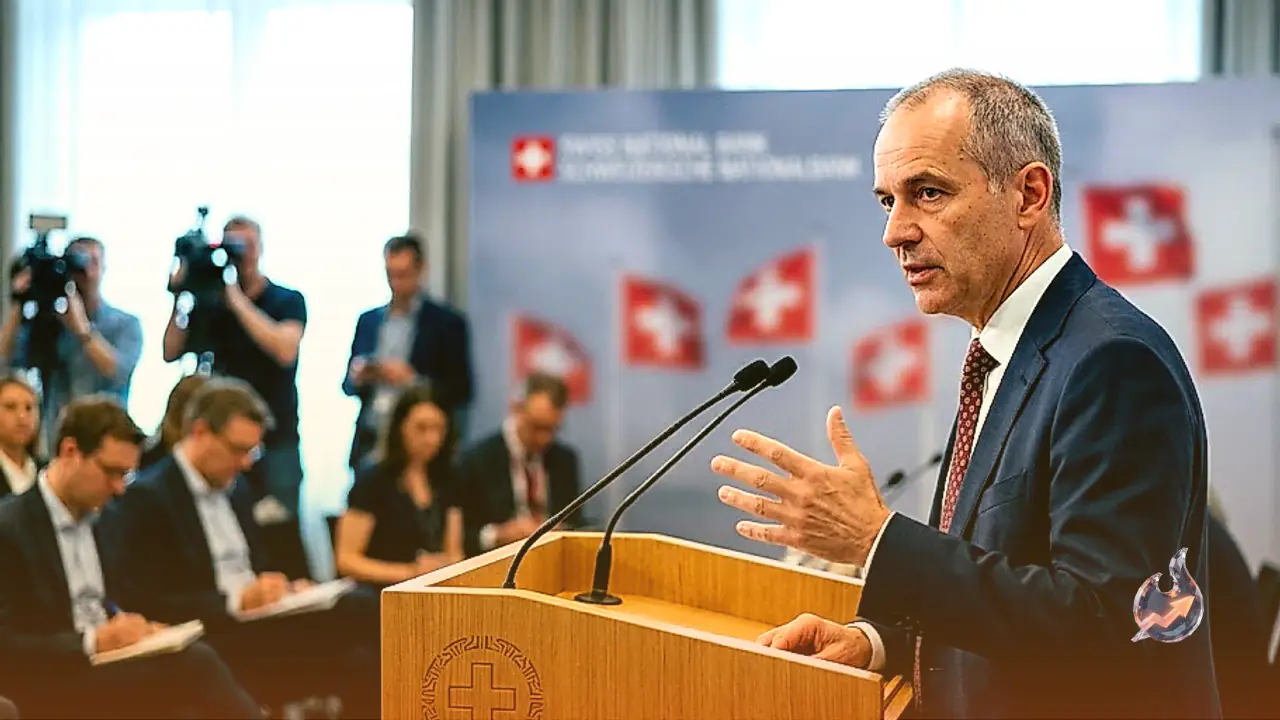























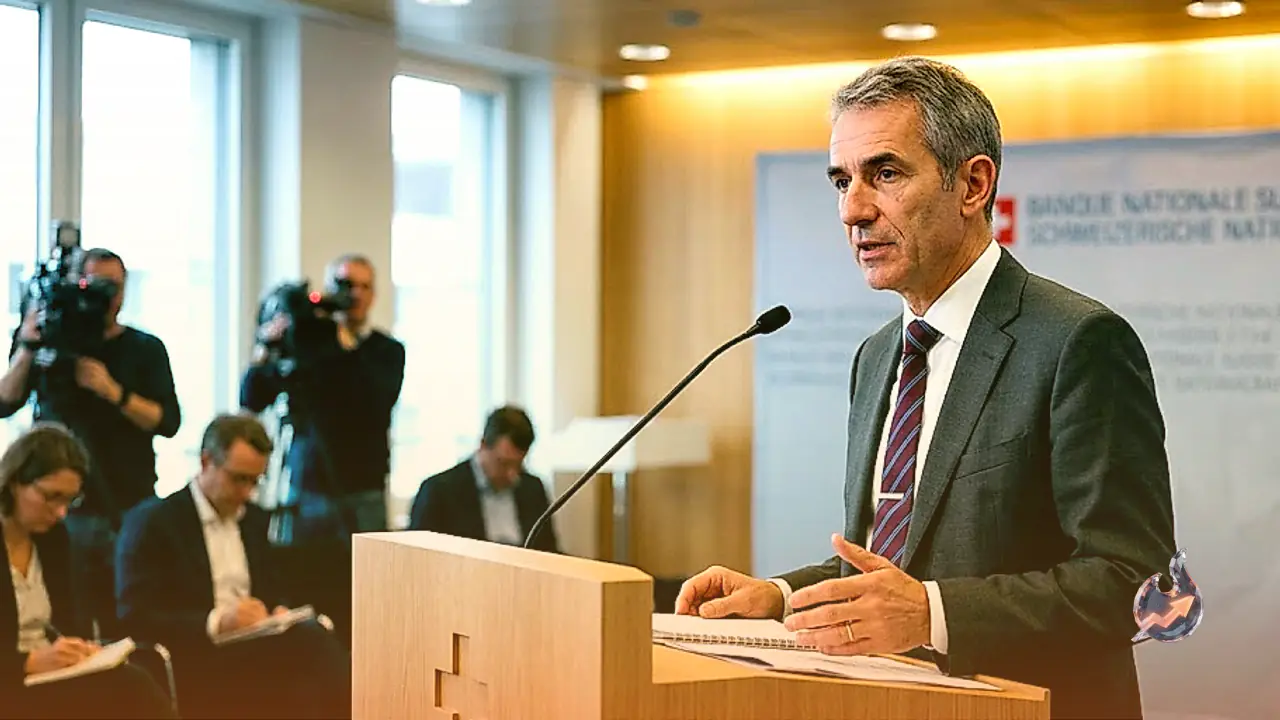

The Swiss National Bank concluded its September monetary policy assessment by keeping its benchmark interest rate unchanged at 0%, matching broader financial market projections. Addressing the media following the policy determination, Vice Chairman Antoine Martin provided detailed insights into the central bank's perspective on international macroeconomic conditions, geopolitical headwinds, and domestic monetary projections.
Central Bank Assessment on Inflation and Global Growth
Vice Chairman Antoine Martin stated that inflation is likely to remain elevated for some time, cautioning that energy prices could turn out to be significantly higher than expected. He pointed out that elevated uncertainty continues to cloud the outlook, largely due to ongoing developments across the Middle East, which present downside risks to stability and commodity pricing.
Evaluating global economic activity, Martin noted that expansion in the second quarter proved stronger than initially anticipated. Over the coming quarters, the central bank expects the global economy to expand at a moderate pace. He observed that consumer spending has barely slowed down despite the erosion of purchasing power, and highlighted that the ongoing improvement in manufacturing momentum will continue to support broader economic expansion.
Capital Backing Observations and Foreign Exchange Reactions
Touching upon structural regulatory cushions, Martin commented that a 90% backing of foreign units with Common Equity Tier 1 capital represents a good amount, though having 100% backing would have been even better. The assessment highlights the institution's ongoing focus on institutional balance sheet resilience.
In currency markets immediately surrounding the briefing, the Swiss Franc lost ground against the US Dollar, with USD/CHF climbing 0.28% on the session to hover around 0.8270. Across major cross-currency pairings on the day, the Swiss Franc recorded its softest performance against the New Zealand Dollar.
Key Policy Parameters and Swiss Outlook
Beyond maintaining the benchmark policy rate at 0%, the Swiss National Bank laid out operational measures concerning banking liquidity. Sight deposits held by commercial banks at the central bank will continue to be remunerated at the policy rate up to a designated threshold.
On the inflation trajectory, the central bank adjusted its domestic outlook upward, forecasting Swiss inflation in 2026 to reach 0.7%, compared with its prior forecast of 0.6%. The monetary authorities emphasized that the primary risk to the domestic economic outlook stems directly from shifting developments across the broader global economy.
Broader Asian Session Developments Across Major Currencies
Global foreign exchange desks navigated several key macro releases during Thursday's Asian trading session. The AUD/USD pair retreated toward 0.7000 after Australia's August labour data revealed an unemployment rate increase to 4.6% against the anticipated 4.5%, despite net employment change exceeding consensus projections with an addition of 39.5K positions. Market participants also maintained a cautious stance ahead of the critical diplomatic bilateral between US President Donald Trump and Chinese President Xi Jinping.
Meanwhile, USD/JPY pulled back from recent three-week highs, stabilizing near 158.00 during Asian trading hours. Rising Japanese government bond yields provided support to the Japanese Yen against the backdrop of potential official intervention risks, while the US Dollar retained overnight strength near two-month highs bolstered by firm Treasury yields and expectations of an assertive Federal Reserve policy path.
Commodity Movements and the Bank of Japan Rate Hike
Precious metals experienced measured movement, with gold consolidating close to a one-week low as investors refrained from large commitments before the high-profile meeting between Donald Trump and Xi Jinping. Although market participants do not foresee major breakthroughs, close attention remains fixed on potential developments surrounding rare earth materials, cross-border technology curbs, and the continuation of the active trade truce.
In a separate major policy decision across Asia, the Bank of Japan implemented another rate increase, lifting its short-term interest rate target from 1.00% to 1.25% via a 7-2 majority vote. The decision marked another planned step in normalizing its monetary policy framework, fully delivering on several weeks of firm market expectations.