






















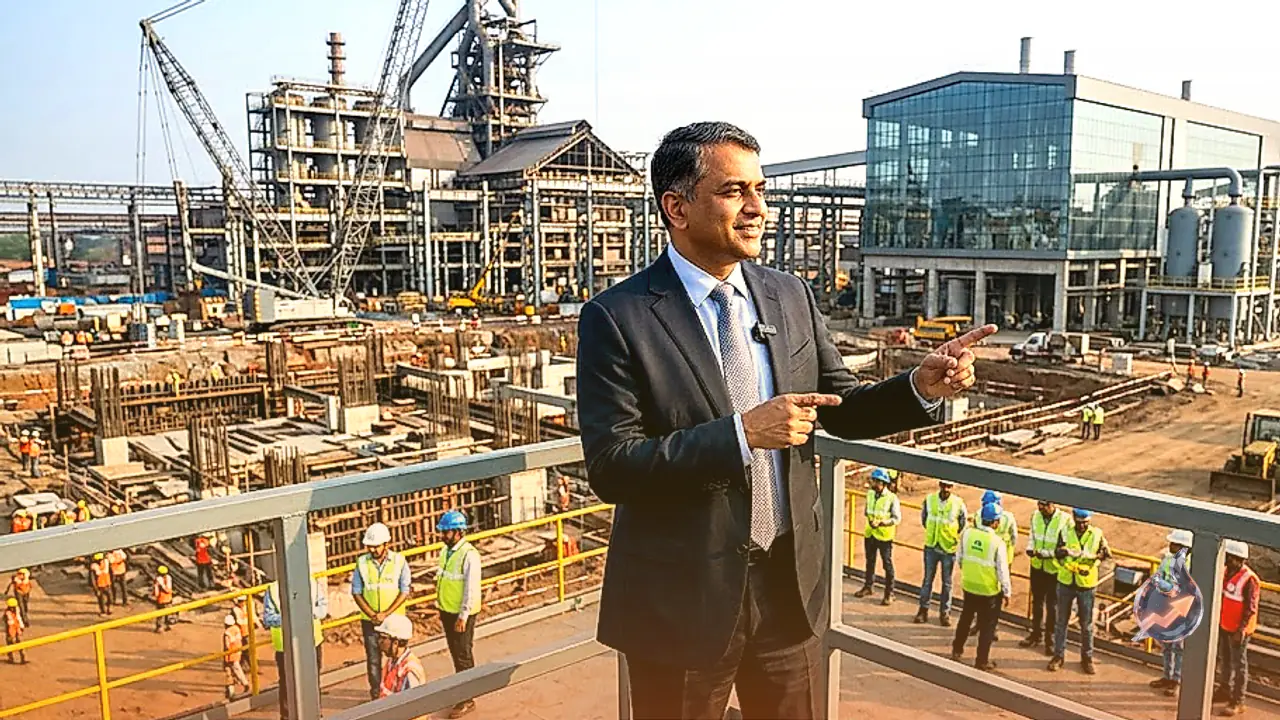

Tata Steel, one of the nation's premier steel manufacturing giants, has officially announced a massive capital injection into the state of Jharkhand, revealing concrete plans to invest approximately ₹10,000 crore by the year 2028. This substantial financial commitment is systematically designed not only to drastically scale up the company's steel manufacturing capabilities across multiple facilities but also to stimulate local economic growth by generating roughly 2,000 direct and indirect employment opportunities. Company representatives and industry watchers have emphasized that this upcoming wave of industrial development will further cement Jharkhand's historic status as a vital, high-output industrial manufacturing hub within the country, ensuring sustained economic momentum for years to come.
Major Financial Allocations for New Projects
Breaking down the ₹10,000 crore investment strategy in greater detail, Tata Steel has earmarked the largest portion of its capital directly for next-generation manufacturing techniques and infrastructural upgrades. Specifically, a massive sum of ₹7,000 crore will be channeled directly into the development and integration of the HIsarna and Asan melting technology projects. Beyond this central technological initiative, the company is also directing ₹2,600 crore toward a comprehensive modernization and expansion of its existing Tinplate Division. Additionally, a further ₹1,500 crore is firmly scheduled to be invested in the upcoming Combi Mill project. Together, these strategic infrastructure upgrades are fully expected to significantly accelerate the transition toward highly modern, environmentally sustainable, and highly efficient steel production methods across the entire organizational footprint.
Driving Down Emissions and Operational Costs
The core centerpiece of this sweeping technological upgrade is the planned integration of HIsarna, which is Tata Steel's proprietary, fully patented low-carbon iron making technology. The most notable operational and environmental advantage of the HIsarna system is that it completely bypasses the need for conventional coke, sinter, and pelletizing plants during the rigorous manufacturing cycle. By eliminating these traditional, energy-heavy preparatory steps, the process effectively slashes total carbon emissions by roughly 20 percent overall. Furthermore, this highly advanced method allows for the optimal, high-efficiency utilization of coaking coal that is abundantly available within India's borders. This increased efficiency will consequently lower the nation's heavy reliance on expensive imported raw materials while simultaneously driving down overall production costs for the company, making the final product far more cost-competitive.
New Jamshedpur Pilot Plant Underway
As part of the immediate rollout of these future-focused technologies, Tata Steel confirmed that it will be establishing a dedicated, large-scale HIsarna pilot plant located right in Jamshedpur, engineered specifically to handle a massive capacity of 1 million tonnes. The preliminary engineering study required for this ambitious and highly specialized facility has already commenced in full force. Once fully operational, the premium hot metal generated at this specific site will be routed directly for immediate use inside Jamshedpur's existing and highly active steel melt shops. Integrating this output is expected to make the overarching manufacturing pipeline substantially more modernized, streamlined, and notably energy-efficient.
Aggressive Capacity Expansion Targets
Looking at the broader domestic footprint and corporate ambition, Tata Steel currently commands a robust steel manufacturing capacity of 27.35 million tonnes per annum (MTPA) across its various plants in India. However, the corporate leadership is actively working to push this metric significantly higher, aiming to hit a near-term capacity milestone of exactly 40 MTPA. Looking even further ahead into the future, the company's long-term strategic goal is to permanently surpass a total production capacity of over 50 million tonnes. The vast majority of this ambitious structural expansion will be concentrated strictly within India, with a particular geographical and operational focus placed squarely on the resource-rich states of Jharkhand and Odisha.
Wider Economic Implications for the Region
Leading industry experts and economic analysts are strongly projecting that this large-scale corporate investment will trigger a rapid acceleration of allied industrial activities and downstream businesses throughout Jharkhand. The massive infusion of capital is heavily anticipated to create a welcome wave of fresh employment pathways tailored specifically for the region's local youth, thereby deeply fortifying the underlying state economy from the ground up. On a much broader, national scale, the rapid adoption of these new, environmentally conscious production technologies is widely viewed as a critical and necessary step in helping India's domestic steel sector remain highly competitive on the global stage for many years to come.