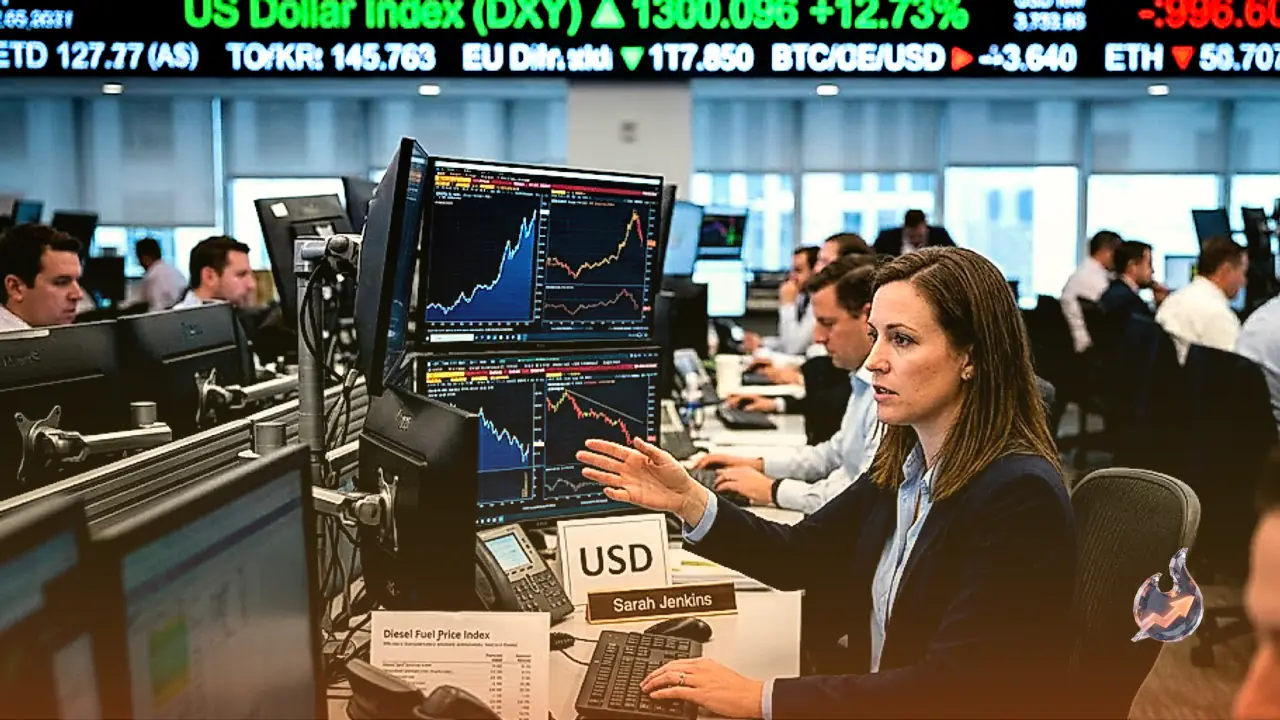
























Global financial markets are witnessing a distinct divergence as solid manufacturing momentum across Southeast Asia contrasts sharply with a surge in the US Dollar that is weighing heavily on commodities, major foreign currencies, and digital assets. According to an updated economic assessment from DBS Group strategists, Vietnam's trade-oriented economy continues to show exceptional resilience. Driven primarily by robust global appetite for electronics, Vietnam's goods exports are projected to expand by an impressive 27.0 percent year-on-year in August 2026, accelerating from the 25.0 percent annual growth recorded in July.
Vietnam's Industrial Momentum and Domestic Inflation Trends
DBS Group strategists Taimur Baig and Nathan Chow highlighted that Vietnam's export sector is set to sustain its run of strong double-digit expansion. The primary catalyst behind this upward trajectory is the sustained strength in electronics shipments, supported by firm external demand from key international markets. Beyond the industrial sector, Vietnam's domestic economy remains equally supportive. Retail sales and tourism-related expenditures have demonstrated solid momentum through August, providing a sturdy foundation for overall economic activity.
On the price stability front, Vietnam's inflation dynamics present a nuanced picture. Headline consumer price inflation is expected to hold at an elevated 4.4 percent year-on-year in August 2026. While this level remains above comfort thresholds, it represents a notable moderation from the peak of 5.6 percent recorded in May. The cooling of transport price inflation from previous highs has offered some relief, though firm food and housing costs continue to keep headline figures sticky at current levels.
Jackson Hole Hawkishness Fueling US Dollar Resurgence
In foreign exchange markets, the US Dollar has mounted a broad-based rally following hawkish commentary from Chair Warsh at the Jackson Hole Symposium. Chair Warsh's firm stance on monetary policy has prompted market participants to reprice the probability of a Federal Reserve interest rate hike in September. Consequently, US Treasury yields experienced a sharp rebound, overriding the potential drag from the US Non-Farm Payrolls (NFP) annual revision, which showed a downward adjustment of 79,000 jobs (-79K).
The surging Greenback has forced major currency pairs into sharp corrections. GBP/USD has added to its weekly decline, receding toward the 1.3530 zone during Friday trading. Similarly, EUR/USD accelerated its downside move, dropping to a seven-day low below the 1.1600 handle. The broad dollar strength continues to restrict upside potential across G10 currencies.
Precious Metals Slump and Record Diesel Refining Margins
The combination of a stronger US Dollar and rising Treasury yields has exerted significant pressure on precious metals. Gold prices extended their weekly slide, threatening key technical levels while testing the critical 200-day Simple Moving Average (SMA) near $4,530 per troy ounce. Investors rebalancing portfolios ahead of upcoming central bank decisions have trimmed exposure to non-yielding assets.
Conversely, energy markets are displaying severe localized stress. While headline crude oil prices appear relatively stable, the refined products market is signaling tightening supply conditions. The US diesel crack spread, measuring the premium of ultra-low sulfur diesel futures over WTI crude oil, breached the $100 per barrel mark for the first time in history, recording an intraday high of just over $102.00 per barrel.
Crypto Retrenchment and Global Monetary Outlook
Risk assets in the cryptocurrency space have mirrored the broader tightening of financial conditions. Bitcoin fell back below the $80,000 mark on Friday following an unsuccessful second attempt to clear technical resistance between $81,000 and $82,000. Live trading places Bitcoin around $77,683 amid broader market cooling. Altcoins followed suit, with Ethereum sliding to $2,500 and Ripple (XRP) falling toward key technical support at $1.40.
Looking ahead, market focus remains centered on upcoming economic releases, including the US ISM PMI and fresh NFP employment data. Central bank activity will also take center stage: the Reserve Bank of New Zealand (RBNZ) is widely expected to raise benchmark interest rates, with investors scrutinizing its forward guidance. Meanwhile, the Bank of Canada (BoC) is expected to hold policy rates steady, leaving markets to speculate on potential policy tightening in 2027.