

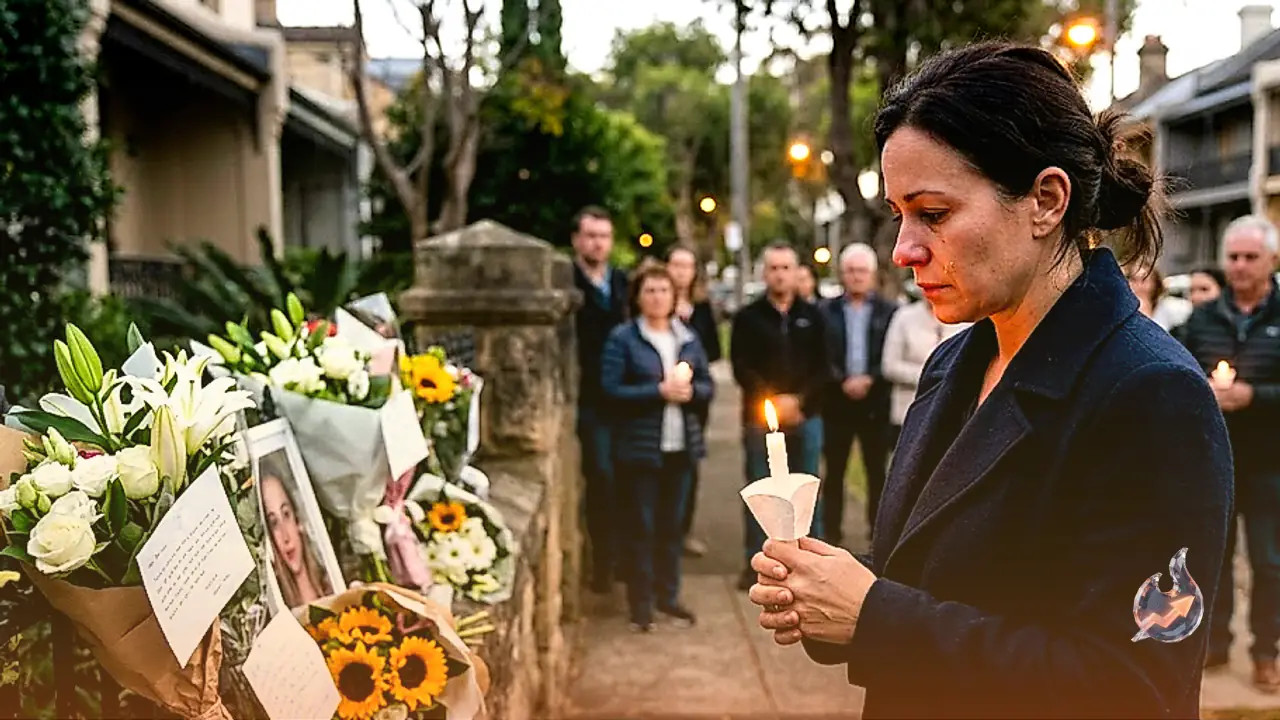





















A harrowing incident in Sydney, Australia, has left the community in shock after a 16-year-old girl lost her life under tragic circumstances involving restricted breathing during an intimate encounter. Found unconscious in Sydney's Northern Beaches area, the teenager was immediately airlifted to a hospital and admitted to the Intensive Care Unit (ICU). Despite extensive efforts by medical professionals, she could not be saved. Local police authorities are actively investigating the matter. Initial inquiries indicate that the victim suffered fatal asphyxiation caused by neck strangulation, leading to loss of consciousness and subsequent death.
Severe Health Risks and Brain Impact
This tragic loss highlights a dangerous practice increasingly observed among young individuals. Health and relationship experts in Australia have long issued warnings about the growing prevalence of neck compression and strangulation during intimate acts. Many young people acquire exposure to this behavior through online digital media, mistakenly perceiving it as a routine or exciting activity. Medical science, however, categorizes it as a high-risk practice with potentially immediate fatal outcomes.
Medical professionals explain that applying external force to the neck restricts blood flow and oxygen supply to the brain within seconds. Even in the absence of visible external trauma, severe internal physiological damage occurs rapidly. Brain cells begin to die almost instantaneously, which can trigger severe, permanent headaches, irreversible memory loss, and lasting neurological damage. Depriving the brain of oxygen for even a few minutes leads directly to brain death or systemic fatal collapse.
Impact of Violent Content and Activist Stance
The tragedy has sparked nationwide discussions concerning digital media consumption and youth safety. Chanel Contos, a 28-year-old consent activist and founder of the organization Teach Us Consent, addressed the situation by attributing the trend to violent digital material accessible online. She stated, "This innocent life was preventable, and adult content creators bear responsibility for putting young people in fatal danger."
Contos emphasized that the normalization of violent acts, such as choking and physical aggression in digital adult media, skews perception among younger audiences, framing harmful behavior as acceptable entertainment. She cautioned that without systemic accountability, similar incidents would continue to recur. Notably, in 2021, Contos spearheaded a major national campaign addressing sexual misconduct in Australian schools, which prompted federal authorities to implement stricter, mandatory consent education reforms across school curricula.
Debunking the 'Safe Strangulation' Myth
Discussions across social media often perpetuate the misconception that choking can be performed safely if controlled. Experts and activists firmly reject this notion, clarifying that no method of strangulation is medically safe. While young adults often believe they can manage the associated risks, the physiological reaction of the vascular and nervous systems remains entirely unpredictable and dangerous.
This concern is substantiated by empirical academic data. In 2024, a joint study conducted by Melbourne University and Queensland University surveyed 4,700 young individuals to examine the prevalence of this behavior. The findings revealed significant insights
- 57 Percent Exposure Rate: Approximately 57 percent of surveyed Australian youth aged 18 to 35 acknowledged experiencing or engaging in neck choking during intimate encounters at least once.
- Early Initiation Age: One-third of the participants reported that their initial exposure to this practice occurred between the ages of 19 and 21.
Risks of Unrestricted Smartphone and Media Access
Widespread access to smartphones among adolescents has made unregulated digital content easily accessible. Without adequate supervision or digital literacy education, young viewers frequently mistake exaggerated or violent onscreen portrayals for genuine affection or standard behavior. Attempting to replicate these acts in real life without understanding the acute biological risks continues to yield devastating real-world consequences.