























Greg Abel's Berkshire Hathaway sold every share of Amazon it held, a move that got investors talking. But the exit has done little to shift the Wall Street consensus on the stock, which currently trades around $244 while analyst price targets cluster between $295 and $312. For most long-term holders, the prevailing read is that the recent pullback is a buying opportunity rather than a signal to follow Berkshire out the door.
Reading Berkshire's Exit the Right Way
A complete exit by a firm as influential as Berkshire Hathaway naturally draws attention, but most analysts covering Amazon say the move reflects Greg Abel's own portfolio priorities rather than any verdict on the company's underlying business health. Berkshire's internal allocation needs drove the decision, and the sale should be understood in that context rather than as a bearish statement about where Amazon is headed.
Warren Buffett, Berkshire Hathaway's outgoing CEO, once spoke candidly about his complicated feelings on not getting into Amazon sooner:
"I've probably got so many psychological problems with the fact that I didn't do it that it's tough to do it now."
That admission provides useful context for Berkshire's long and complicated relationship with Amazon, and it underscores why the exit should not automatically be read as a warning sign for other investors.
Where Analyst Price Targets Land Right Now
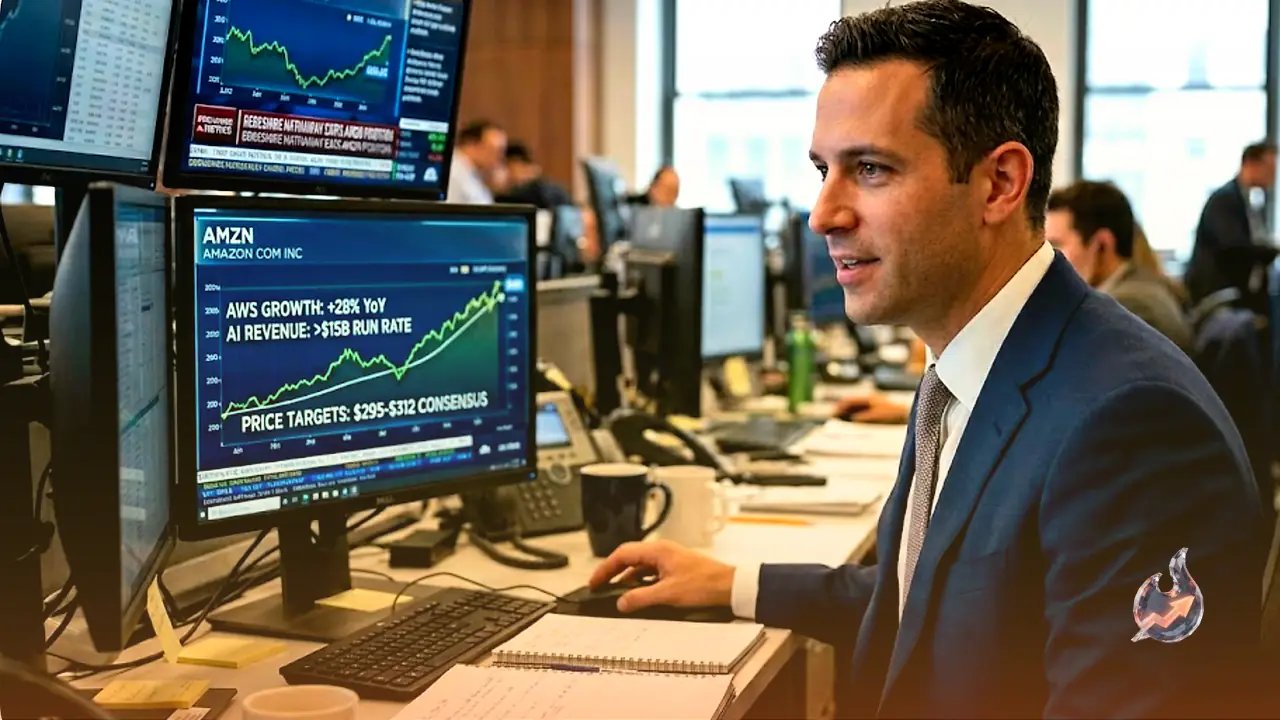
Right after Amazon's first quarter 2026 results were published, firms including New Street Research and TD Cowen reiterated their buy ratings on the stock. The median twelve-month price target across Wall Street analysts sits in the $295 to $310 range, with some individual targets reaching as high as $312. Measured against a current share price of around $244, those targets imply meaningful upside for investors who hold through the next twelve months.
The recent pullback from the 52-week high has sharpened the buy-the-dip conversation among investors, which explains why interest in Amazon stock has picked up noticeably heading into Q2 earnings.
AWS Growth and AI Revenue Are Doing the Heavy Lifting
The single biggest pillar underneath the bullish case for Amazon right now is AWS, the company's cloud computing division. In the first quarter of 2026, AWS revenue grew 28% year over year, the fastest pace of expansion the unit has recorded in 15 quarters. For a business already operating at this scale, that kind of acceleration carries real weight with analysts building their 2026 forecasts.
Amazon CEO Andy Jassy addressed the AI momentum directly on the company's Q1 2026 earnings call:
"We've never seen a technology grow as rapidly as AI. In the first three years of this AI wave, AWS's AI revenue run rate is over $15 billion, nearly 260 times larger than AWS was three years after launch."
Jassy also put the AWS growth rate in the context of the sheer scale it now represents:
"You know, 28% year-over-year, fastest growth rate in 15 quarters for us. Haven't grown at this pace since we were about half the size. Growing 28% on a $150 billion annual run rate basis is not simple to do."
Advertising, E-Commerce, and the Emerging Satellite Business
Beyond AWS, other parts of Amazon's business delivered solid results in the first quarter. Advertising revenue rose 22% year over year, adding another strong and growing revenue stream to the company's financial profile, while e-commerce contributed meaningfully to the overall picture as well.
Longer-term investors are paying particular attention to the Amazon Leo satellite business, which already has ten satellites in orbit. This venture opens an entirely new revenue avenue for the company beyond its established cloud and retail operations, and it forms one more plank of the constructive 2026 outlook that analysts keep pointing to when making the bull case.
The Risk That Cannot Be Ignored
The bull case comes with a genuine complication. Amazon plans to spend close to $200 billion in capital expenditure in 2026, and that level of investment is putting real pressure on free cash flow in the near term. Most analysts who actively cover the stock have already built this spending cycle into their 2026 forecasts, so it is not a hidden risk, but it is something every prospective investor should factor into their thinking before buying.
The Final Verdict on Buying or Selling
When you put together the AWS growth trajectory, the AI revenue run rate crossing $15 billion, advertising momentum, the new satellite business, and the consensus across Wall Street research desks, most of the Street arrives at the same place: buy the dip. Berkshire's departure is a portfolio story about one investor's internal needs, not a business story about Amazon. For long-term investors who can look past the near-term free cash flow pressure from elevated capital spending, the dominant view among analysts at the time of writing still leans toward buying at current levels rather than following Berkshire out the door.