























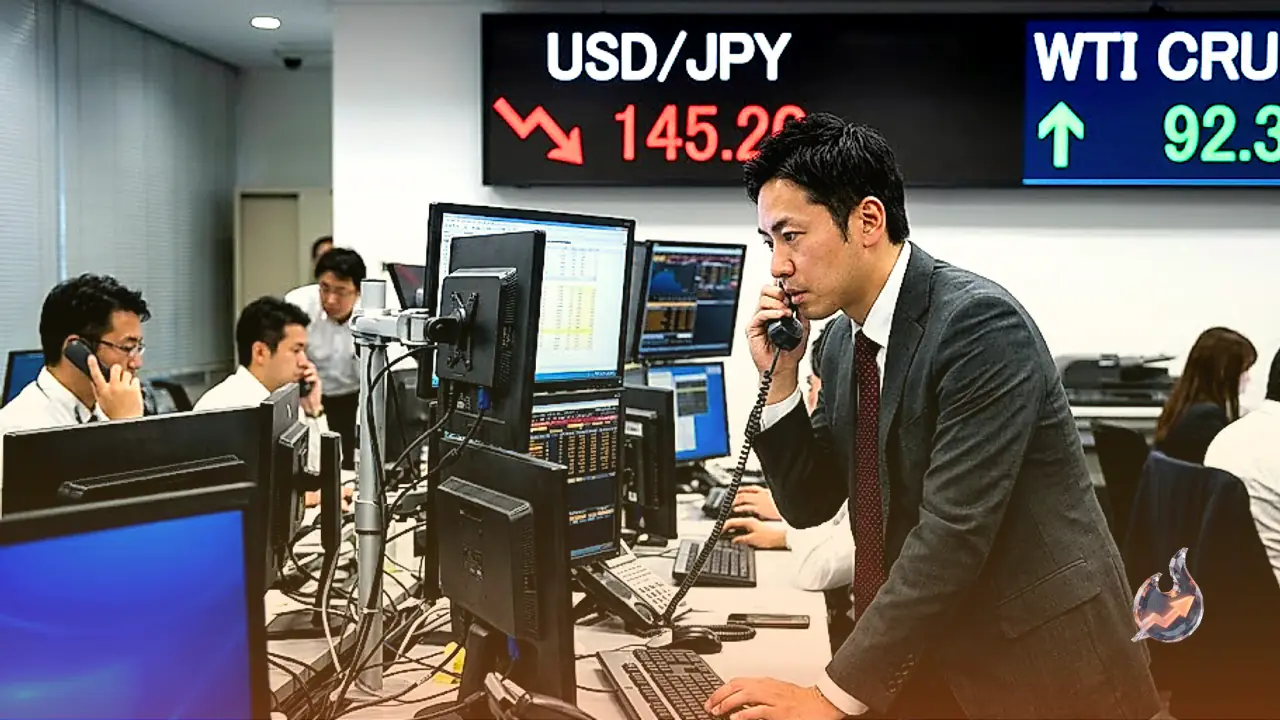

Global financial markets are experiencing significant volatility on Tuesday, September 8, driven by escalating geopolitical tensions in the Middle East and a noticeable shift in central bank policy trajectories across major economies. As risk aversion spreads through global trading desks, the Japanese Yen (JPY) extended its strong rally during Asian trading hours, surging to its highest level against the US Dollar (USD) since mid-February. Concurrently, energy markets witnessed a sharp upward repricing, with West Texas Intermediate (WTI) Crude rising past $92 per barrel following threats of maritime disruptions in the Persian Gulf. Although the macroeconomic data calendar remains relatively quiet today, market participants are keeping a close watch on London, where Bank of England (BoE) Governor Andrew Bailey and Monetary Policy Committee (MPC) members are scheduled to testify before the UK Treasury Select Committee regarding the July Monetary Policy Report.
Japanese Yen Strength and Bank of Japan Policy Normalization
The Japanese Yen (JPY) stands as one of the most actively traded currencies globally, with its exchange rate determined by a complex interplay of Japan's domestic economic performance, Bank of Japan (BoJ) monetary policy, government bond yield differentials between the US and Japan, and broader international risk sentiment. According to foreign exchange heatmap data for the current week, the Yen outperformed all other major currency peers, recording its strongest appreciation against the New Zealand Dollar (NZD).
A fundamental driver behind the Yen's structural valuation is the policy stance of the Bank of Japan. Between 2013 and 2024, the BoJ maintained an ultra-loose monetary policy framework, keeping interest rates near or below zero while central banks like the US Federal Reserve engaged in aggressive rate-hiking cycles. This massive policy divergence expanded the yield differential between 10-year US Treasury bonds and Japanese Government Bonds (JGBs), favoring the US Dollar and causing prolonged Yen depreciation. While the BoJ holds a mandate for currency stability, it historically refrains from frequent direct market interventions due to geopolitical and trading partner considerations.
However, the macroeconomic landscape shifted significantly in 2024 as the BoJ initiated a gradual exit from its ultra-loose policy, raising interest rates while major global central banks began easing cycles. This policy convergence is steadily narrowing the yield gap between US and Japanese debt instruments. Furthermore, the Yen retains its status as a premier safe-haven asset. In periods of geopolitical instability or heightened market anxiety, global investors routinely reallocate capital into JPY, propelling its surge against risk-sensitive currencies.
Persian Gulf Escalation Drives WTI Crude Oil Above $92
Energy markets are pricing in heightened geopolitical risk premiums as conflict in the Middle East shows no signs of abatement. On Tuesday, September 8, Mohsen Rezaei, Secretary of Iran's Supreme National Security Council, issued a stern warning stating that Tehran would retaliate against US "economic warfare" by establishing a maritime exclusion zone across the Persian Gulf.
The tangible impact of regional hostilities on maritime trade is underscored by tracking data from energy analytics firm Kpler. Following recent US and Iranian strikes targeting oil tankers, commodity vessel traffic through the strategic Strait of Hormuz dropped to an average of just 10 ships per day over the past 10 days. This represents the lowest transit volume recorded since May, signaling severe friction in critical sea lanes.
Reacting to these supply disruption fears, WTI Crude futures extended their upward momentum. After advancing more than 1.5% on Monday, WTI Crude gained another 1.4% during Tuesday's session, trading firmly above $92 per barrel. Market analysts warn that any formal operationalization of a maritime exclusion zone could trigger further price spikes in international energy markets.
US Diesel Crack Spread Hits Record High Above $100
While crude oil prices have rallied significantly, the refined products market is displaying even more dramatic stress. The US diesel crack spread—which measures the price differential and refining margin between ultra-low sulphur diesel futures and WTI crude—surged past the $100 per barrel mark for the first time in history.
During intraday trading, the crack spread reached a record high of just over $102.00 per barrel. This unprecedented surge reflects tight global refining capacity, heightened shipping risks across Middle Eastern transit corridors, and robust demand for industrial distillates. Such high refining spreads indicate substantial underlying inflationary pressures within the commercial transportation and freight sectors.
USD/JPY Rebounds From Six-Month Low Near 152.89
In European trading on Tuesday, the USD/JPY currency pair staged a mild recovery from a six-month low of 152.89, retesting the 154.00 handle. However, market strategists note that upside momentum for the pair remains capped due to opposing fundamental forces.
Japan's recent economic indicators, including robust wage growth figures and an upward revision to second-quarter (Q2) GDP, have solidified market expectations that the Bank of Japan will deliver another interest rate hike at its upcoming policy meeting next week. These domestic tailwinds continue to bolster the Yen. Conversely, persistent selling pressure on the US Dollar—despite hawkish Fed interest rate expectations and safe-haven demand—is preventing USD/JPY from establishing a sustained recovery.
Australian Dollar (AUD/USD) Holds Near Multi-Month Highs
The Australian Dollar traded comfortably above 0.7200 during Tuesday's Asian session, remaining close to its highest level since May 14. Broad-based weakness in the US Dollar, brought about by the Yen's powerful rally, provided a favorable backdrop for AUD/USD.
In addition, market expectations are firming for the Reserve Bank of Australia (RBA) to implement another interest rate hike later this month, bolstering yield support for the Aussie dollar. Nevertheless, gains in the pair were somewhat restrained by mixed trade balance data out of China, which highlighted uneven demand in Australia's primary export market.
Gold Holds Above $4,400 Amid Federal Reserve Rate Expectations
Gold prices experienced a minor pullback toward the lower boundary of their daily trading range ahead of the European session, yet bullion maintained its position above the critical $4,400 per ounce threshold. A weaker US Dollar offered underlying support for the precious metal.
However, headwind pressures persist as financial markets continue to price in a hawkish posture from the US Federal Reserve. Expectations of prolonged higher interest rates elevate real bond yields, capping gains for non-yielding bullion even as ongoing Middle Eastern geopolitical uncertainty sustains baseline safe-haven demand.
British Pound Stabilizes Following UK Fiscal Discipline Speech
Sterling (GBP) displayed resilient price action following a supportive session. Market strategists at ING highlighted that the British currency derived marginal support from the first major policy speech delivered by UK Chancellor John Healey.
Chancellor Healey emphasized a firm commitment to fiscal discipline, a message intended to reassure institutional bond markets ahead of the upcoming October budget. Healey's stance helped keep long-end UK gilt yields aligned with the broader global bond market sell-off rather than experiencing idiosyncratic spikes. Investors are now turning their attention to scheduled testimonies before the UK Treasury Select Committee, where BoE Governor Andrew Bailey and MPC members will defend July's Monetary Policy Report, providing further clarity on Britain's interest rate outlook.