


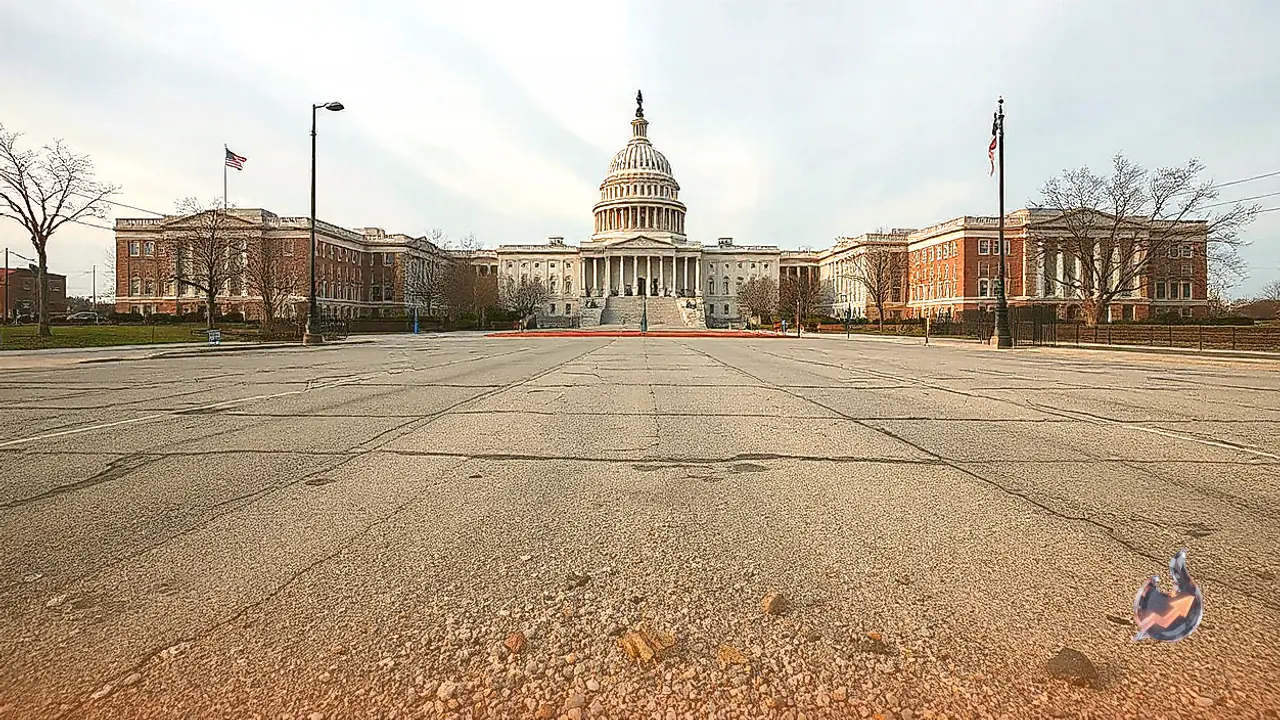






















Global currency markets experienced dramatic volatility following the latest developments around the US midterm elections, with the US Dollar rebounding from steep early declines and halting the Japanese Yen's advances. The USD/JPY pair successfully traded back above the 158.00 threshold after finding firm ground at a daily trough of 157.39. Earlier during Wednesday's Asian trading session, market participants had aggressively dumped the Greenback across major currency pairs following reports that Democrats secured control of both the House of Representatives and the Senate. The political outcome was perceived as a significant challenge to President Donald Trump's economic agenda, driving the US Dollar Index to its lowest reading since late September.
Midterm Election Shakeup and Legislative Gridlock
Heightened political uncertainty rippled across trading desks on Wednesday morning as early vote counts and projections indicated a unified Democratic takeover of Congress. Capturing the Senate, in particular, had been viewed as a closely contested race. The prospect of an entrenched legislative gridlock in Washington immediately spurred defensive positioning across capital markets. When the executive branch and legislative chambers are split between rival parties, sweeping changes to tax policy, regulatory frameworks, and federal expenditure generally encounter severe resistance. This looming standoff prompted a notable downward shift in US Treasury yields, eroding bets on further Federal Reserve interest rate hikes and compounding the early pressure on the greenback.
Macroeconomic Fundamentals Anchor Greenback Stability
Despite the initial electoral shockwave, the broader narrative for the US Dollar continues to be underpinned by resilient macroeconomic fundamentals that are seen putting a floor beneath steep declines. Investor attention is swiftly turning toward upcoming economic data releases, chief among them the US ADP Employment Change Report, which is projected to reflect a moderate deceleration in private payroll expansion for October. Concurrently, the ISM Services Purchasing Managers' Index (PMI) is slated to print at levels that signal continuing solid momentum across domestic business activity. These robust economic backdrops have provided traders with reasons to buy the dip, driving the currency's rebound from session lows.
Middle East Hostilities and Energy Market Dynamics
Beyond macroeconomic indicators, simmering geopolitical tension across the Middle East remains an influential driver supporting the US currency. The ongoing regional confrontation remains in a grey zone, despite active diplomatic attempts to kickstart formal negotiations. Tensions escalated sharply after the US conducted military strikes against Iranian targets hours prior to the elections, and President Donald Trump has explicitly kept the prospect of additional military actions on the table. Fears of an uncontained regional conflict have helped anchor Brent crude oil prices securely above the $100 per barrel benchmark. A further escalation into a wider war would likely drive crude prices even higher, reinforcing the US Dollar's role as a primary global safe haven.
Midterm Framework and the Balance of Power
Federal midterm elections in the United States occur at the exact midpoint of a president's four-year administration. During these contests, citizens cast ballots for all 435 seats within the House of Representatives, alongside approximately one-third of the Senate chamber, while numerous states simultaneously conduct elections for governors and local administrations. Federal statute establishes Election Day on the Tuesday following the first Monday of November, landing on Tuesday, November 3, 2026, though extensive early and mail-in balloting had already been underway in multiple states. The outcome determines which political party commands the chambers of Congress throughout the concluding two years of President Donald Trump's presidential term. The majority party wields the authority to establish the legislative agenda, head vital oversight committees, and, within the Senate, determine the confirmation of judicial nominees and executive personnel. The presidency itself is not contested during midterms, with the nation electing its commander-in-chief every four years, setting the next presidential race for November 2028. Historically, midterm contests serve as a performance appraisal on the sitting president's party, which routinely surrenders seats in the House.
Currency Behavior and Bond Yield Dynamics
Market strategists predominantly anticipate that currency reactions to midterm election outcomes remain short-lived rather than initiating durable trends. A divided government had already been widely anticipated as the baseline outcome and was partially priced into financial instruments. Fixed-income markets often register more pronounced reactions to the voting figures. Election outcomes that foster expectations of aggressive fiscal expansion generally pull Treasury yields and the US Dollar upward, whereas legislative gridlock that restrains federal outlays can depress both metrics. Conversely, political frictions surrounding federal budget appropriations and statutory debt-ceiling showdowns can temporarily revive safe-haven bids for the Dollar. When evaluated across an extended horizon of six to twelve months, structural economic growth and Federal Reserve monetary policy exert a vastly superior influence over assets than election outcomes.
Wall Street Historical Trends and the S&P 500 Milestone
Historical trading patterns show that US equity markets often display pre-midterm weakness followed by notable post-election rallies. Dating back to 1950, the benchmark S&P 500 index has finished higher twelve months following every single midterm election, maintaining a perfect track record of 19 gains across 19 cycles, delivering an average return of approximately 15%. Strategists attribute this reliable pattern to the lifting of political ambiguity once election outcomes are settled. Nevertheless, past performance remains no assurance of future returns, with several market analysts observing that elevated equity valuations in 2026 could put this multi-decade streak under pressure. Wall Street has routinely welcomed divided governance because legislative gridlock drastically diminishes the likelihood of disruptive changes to tax codes, public spending, and corporate regulations. Under a Republican executive, the S&P 500 has traditionally delivered solid gains in years featuring split legislative authority, with primary headwinds limited to spending deadlines, debt limit fights, and congressional probes that inject episodic volatility.
Movements in Gold and Major Crosses
The fluctuating fortunes of the greenback resonated across other key assets throughout Wednesday's sessions. The AUD/USD pair held above its recent two-week nadir, hovering around 0.6965 in Asian trading as initial election counts stoked broad-based volatility. The simultaneous softening in US government bond yields offset rate-hiking expectations from the Federal Reserve, though a less hawkish posture from the Reserve Bank of Australia placed a cap on the Australian currency's upward trajectory. Meanwhile, physical gold maintained firm intraday gains above its weekly highs, trading comfortably north of the psychologically critical $4,000 threshold during the early European session. Heightened geopolitical jitters alongside potential Washington policy deadlock drove capital into traditional safe-haven assets, boosting the precious metal while the Dollar sought to re-establish its footing after touching a one-month low.