





















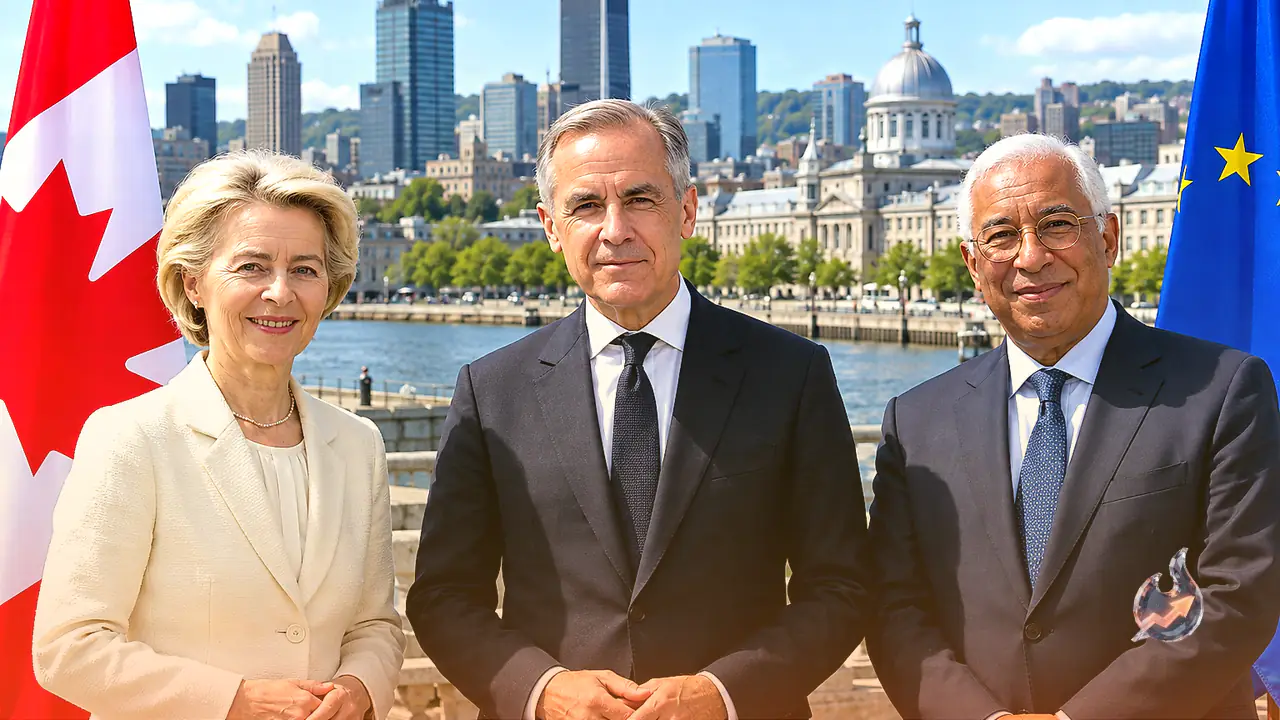

Leaders from Canada and the European Union convened in Montreal for a crucial two-day summit aimed at forging a significantly closer strategic alliance. The high-level discussions unfolded against the backdrop of escalating trade tensions triggered by US President Donald Trump, compelling both traditional partners to seek collective insulation against growing geopolitical volatility and economic coercion. Canadian Prime Minister Mark Carney and European Commission President Ursula von der Leyen used the gathering to articulate a shared vision where national sovereignty is defended through fortified supply routes, collaborative industrial strategies, and reduced exposure to external unilateral shocks.
Sovereignty and the Rising Costs of Economic Weaponization
The primary concern voiced throughout the opening sessions centered on the dangerous shift in how global commerce is conducted. Trade linkages and traditional supply channels, once seen as purely economic engines, are increasingly functioning as instruments of leverage. Ursula von der Leyen remarked that when trade is turned into an instrument of economic coercion, everyday families bear the brunt, visible everywhere from retail supermarket shelves to the retail price tags on newly manufactured vehicles. She pointed out that democratic societies are witnessing direct attacks on their sovereign decision-making in real time. Backing this assessment, Prime Minister Mark Carney emphasized that an enduring alliance serves as an indispensable buffer against international turbulence, stating that maintaining sovereignty in an unstable world is what ultimately allows nations to withstand systemic shocks.
Associate Membership Debate and Practical Objectives
A key proposal introduced by Ursula von der Leyen positioned Canada to become the very first associate member of the European Union. While this designation was intended to symbolize a profound deepening of institutional ties, several EU member state governments voiced resistance against adopting such terminology. Prime Minister Mark Carney, however, downplayed the diplomatic friction over labels, remarking that the initiative is far from a branding effort and that formal titles hold little significance compared to concrete economic dividends. Despite the cooperative framing, US President Donald Trump characterized the emerging agreement as potentially adversarial and warned of possible tariff retaliation. A senior Canadian government official had earlier noted on Wednesday that the Montreal summit is not designed to target the United States, but rather reflects longstanding shared interests. Carney later reiterated the concept of associate membership during an address to a business roundtable, underscoring immediate, practical benefits for private businesses, academic researchers, and household budgets.
The Alliance for the Future and Advanced Computing Integration
The summit was positioned to formally inaugurate an overarching framework designated as the Alliance for the Future. This cooperative architecture is set to focus primarily on international trade, national defense, critical mineral flows, emerging technology, and scientific research. Von der Leyen delineated a clear boundary between this broader alliance and the formal associate membership track, noting that associate status necessitates strict alignment across regulatory policies, joint programming, and governance standards, with room for other dependable international allies to participate eventually. In a tangible breakthrough, von der Leyen confirmed that both sides would finalize a bilateral agreement on Friday granting Canadian enterprises and scientific researchers direct operational access to Europe's continent-wide network of 12 advanced supercomputers. Working groups will also lay the groundwork for consolidated supply resilience and co-investment models, with comprehensive proposals slated for potential formal endorsement by 2027.
Reducing Reliance on Washington and Procurement Dynamics
European Council President Antonio Costa traveled to Montreal to join the deliberations, reinforcing the collective push to decrease overdependence on Washington across essential sectors. The policy direction aligns closely with arguments presented by Prime Minister Carney during the World Economic Forum in Davos, Switzerland, in January, where he observed that the longstanding US-led international order is steadily fragmenting. Carney maintained that foreign administrations and global tech conglomerates must not be permitted to dictate domestic policy choices in Ottawa. Concurrently, von der Leyen warned that concentrated reliance on single-source suppliers for energy, semiconductors, and raw inputs creates unacceptable strategic vulnerabilities.
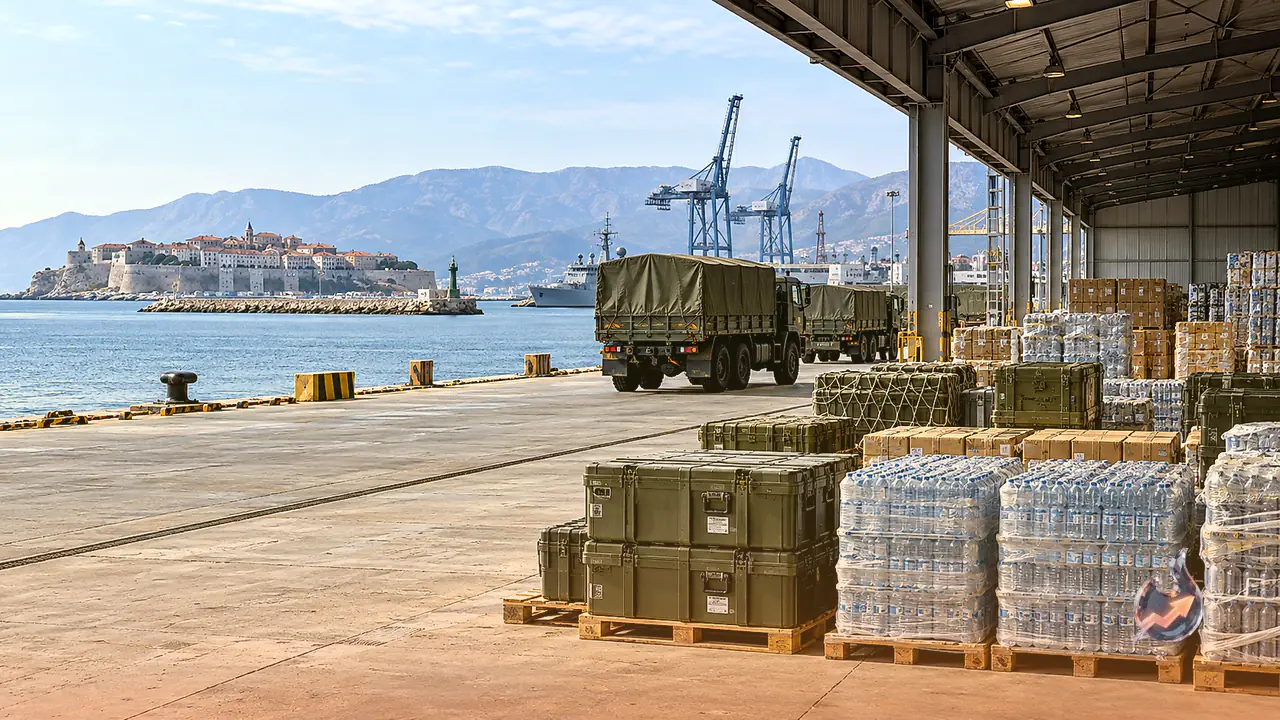
In defense cooperation, Canada already participates in the European Union's defense procurement apparatus through the SAFE initiative. Canada holds the distinction of being the sole non-European participant within the 150-billion-euro, approximately 167-billion-dollar program, enabling Canadian defense contractors to compete in unified European military procurement tenders. Yet, deeper integration faces notable hurdles. Anand Sundar noted that France continues to insist on stringent Made in Europe procurement criteria, whereas Germany favors a more open framework accommodating external allies. Sundar observed that the dismissal of the associate membership label by several European capitals represents an awkward setback for von der Leyen. For his part, Carney firmly dismissed any ambition of Canada formally seeking full EU accession, pointing out that any structural upgrade would inevitably require legislative approval.
Critical Mineral Supplies and Long-Term Trade Diversification
Although the existing Comprehensive Economic and Trade Agreement, known as CETA, has already dismantled most tariff barriers between Canada and the European Union, Canada's commercial footprint remains heavily tied to its southern neighbor. The United States absorbed 71.7 percent of Canada's total merchandise exports in 2025. In response to this vulnerability, Prime Minister Carney articulated an ambitious goal to double Canadian merchandise shipments to non-US destinations within the coming decade.
Critical minerals constitute one of the most promising avenues for expanding bilateral trade. Von der Leyen revealed that European Union imports of critical raw materials originating from Canada surged by 62 percent over the previous year, achieving a total transaction volume of 3.3 billion euros, or roughly 3.7 billion dollars. Shipments included high-demand minerals such as lithium, cobalt, nickel, and graphite, all essential for green technologies and advanced industrial manufacturing. Both delegations affirmed that diversifying input sources is fundamental to national economic defense. Tobias Gehrke pointed out that internal disputes over terminology will unlikely derail tangible collaboration, observing that while there is no simple formula to abruptly end European and Canadian economic and defense reliance on the United States, particularly with the risk of retaliation from Washington, the current geopolitical window offers unprecedented momentum for meaningful alignment.