


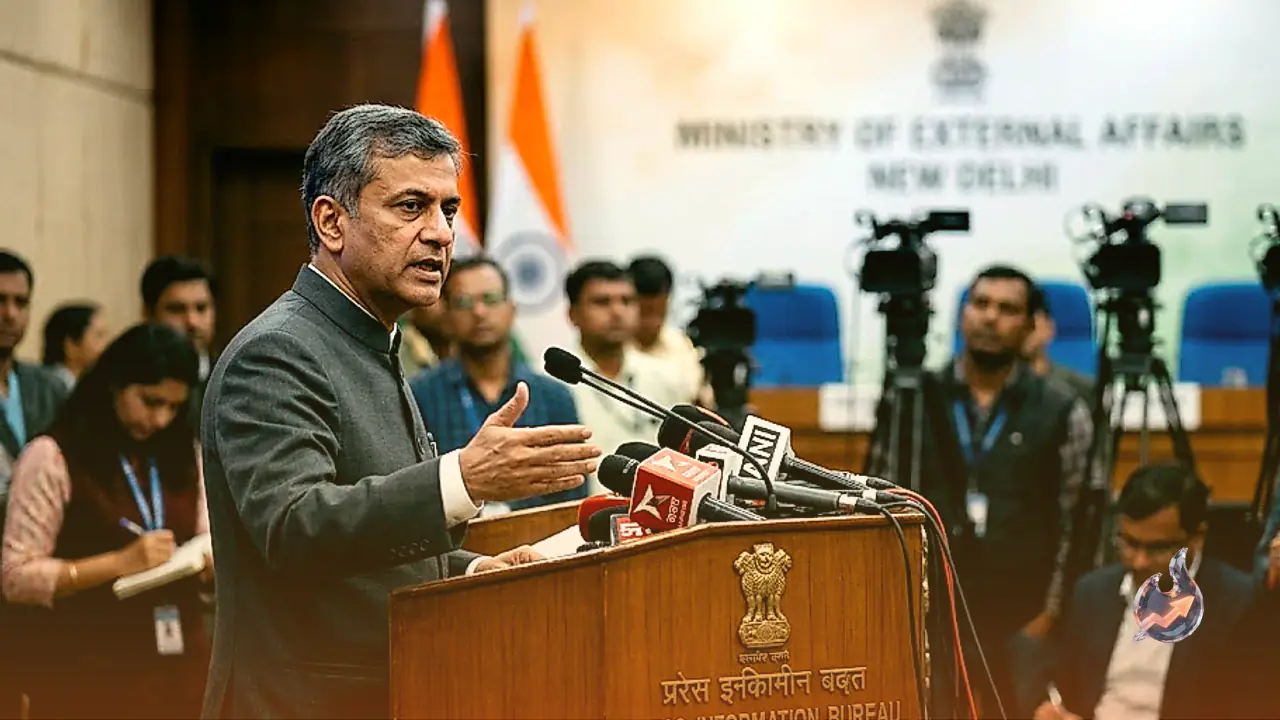
















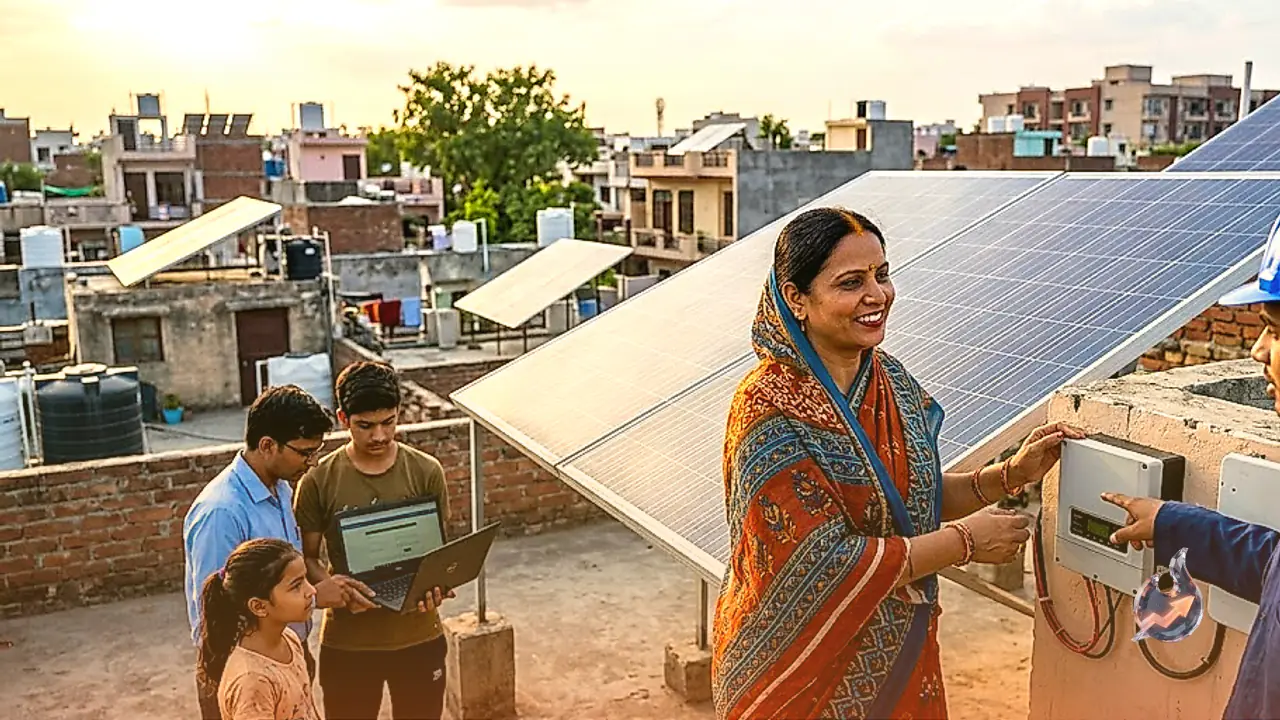

Residential consumers in the national capital can now transition to renewable energy without bearing installation expenses. Delhi Chief Minister Rekha Gupta on Monday, September 21, announced the rollout of a dedicated digital portal designed to facilitate citizen registrations under the PM Surya Ghar Muft Bijli Yojana. Through the state-specific adaptation of this initiative, the regional administration will absorb the entire installation expenditure for rooftop solar arrays holding a capacity of up to 3 kW. Because the administration is picking up the complete bill, qualified households will not need to spend any personal funds to set up the clean power systems.
Allocations Set on a First-Come Basis for 2.25 Lakh Units
The program outlines the deployment of rooftop solar panels across 2.25 lakh homes situated in Delhi. Administrative authorities will process incoming candidate submissions strictly on a first-come, first-served schedule. Given the targeted deployment ceiling, residents seeking to transition their domestic power supply to solar energy are encouraged to register promptly, ensuring timely feasibility assessments and vendor coordination.
Central Initiative Backed by a Rs 75,021 Crore Capital Layout
The program functions within the overarching framework of the PM Surya Ghar Muft Bijli Yojana, a nationwide energy program officially unveiled by Prime Minister Narendra Modi in February 2024. Backed by a total budget outlay amounting to Rs 75,021 crore, the central drive is designed to transition 1 crore homes throughout the country toward solar-assisted self-generation, granting beneficiaries up to 300 units of free power each month.
Official records from the central initiative state that standard subsidies provide Rs 30,000 per kW across the initial 2 kW tier. Consumers electing to add more capacity receive an additional Rs 18,000 per kW up to 3 kW. For installations expanding beyond that threshold, total central aid reaches a permanent ceiling of Rs 78,000.
Subsidy Tiers Based on Monthly Consumption Bands
The volume of central subsidy allocated to an applicant corresponds directly to historical household consumption patterns and necessary hardware sizing. Domestic premises with an average monthly demand between 0 and 150 units typically deploy systems sized between 1 and 2 kW, qualifying them for financial disbursements ranging from Rs 30,000 to Rs 60,000. Consumers using between 150 and 300 units per month generally install setups between 2 and 3 kW, receiving support valued between Rs 60,000 and Rs 78,000. Residences consuming in excess of 300 units per billing cycle require arrays larger than 3 kW, where assistance remains capped at the flat Rs 78,000 maximum.
Shared residential entities also qualify for support under specific terms. Group Housing Societies and Resident Welfare Associations can secure funding valued at Rs 18,000 per kW for community-wide utilities, including EV charging hubs, for configurations up to 500 kW. Furthermore, households located in special category territories, specifically Assam, Manipur, Meghalaya, Himachal Pradesh, Uttarakhand, and Jammu & Kashmir, receive an additional 10% financial allocation per kW.
Why Delhi Residents Pay Zero Upfront Costs
In standard jurisdictions across India, property owners must finance the cost margin that remains after deducting central grants. Delhi residents, however, are exempt from hardware charges up to the 3 kW mark. By combining standard central subsidies directly with dedicated state budget allocations, the territorial government completely neutralizes installation fees. Consequently, local participants secure complete solar panel arrays without disbursing personal capital.
Mandatory Qualifications for Homeowners
To secure admission into Delhi's zero-cost solar rollout, applicants must fulfill several mandatory requirements
- Applicants must legally own the underlying residential structure along with the roof designated for panel placement.
- The residence must feature an active, valid power meter registered under the applicant's name.
- The premises must offer an unshaded, structurally suitable expanse of roof adequate for mounting solar hardware.
- Applicants must not have received previous state or central subsidies earmarked for residential solar installations.
- Program rules limit benefits to a single subsidized installation per distinct family household.
Step-by-Step Pathway from Registration to Disbursement
Homeowners seeking to install rooftop systems must complete an established six-stage application journey
- System Authentication: Navigate to the central PM Surya Ghar digital platform or Delhi's new portal, completing identity verification via an OTP sent to a registered mobile number.
- Submitting Power Data: Complete the digital form by entering consumer identification information and personal records, proceeding independently or with the help of an approved vendor.
- Utility Feasibility Review: Finalize submission and wait for the relevant electricity distribution company (DISCOM) to evaluate technical feasibility at the property.
- Vendor Selection: Pick an authorized solar vendor and supply official banking records, including a passbook duplicate or a cancelled cheque, for eventual payment routing.
- Inspection by DISCOM: Following hardware mounting by the vendor, technicians from the local DISCOM conduct an on-site inspection to approve setup standards.
- Financial Settlement: The allocated subsidy lands directly in the applicant's designated bank account within 30 to 45 working days following formal inspection and sign-off.