























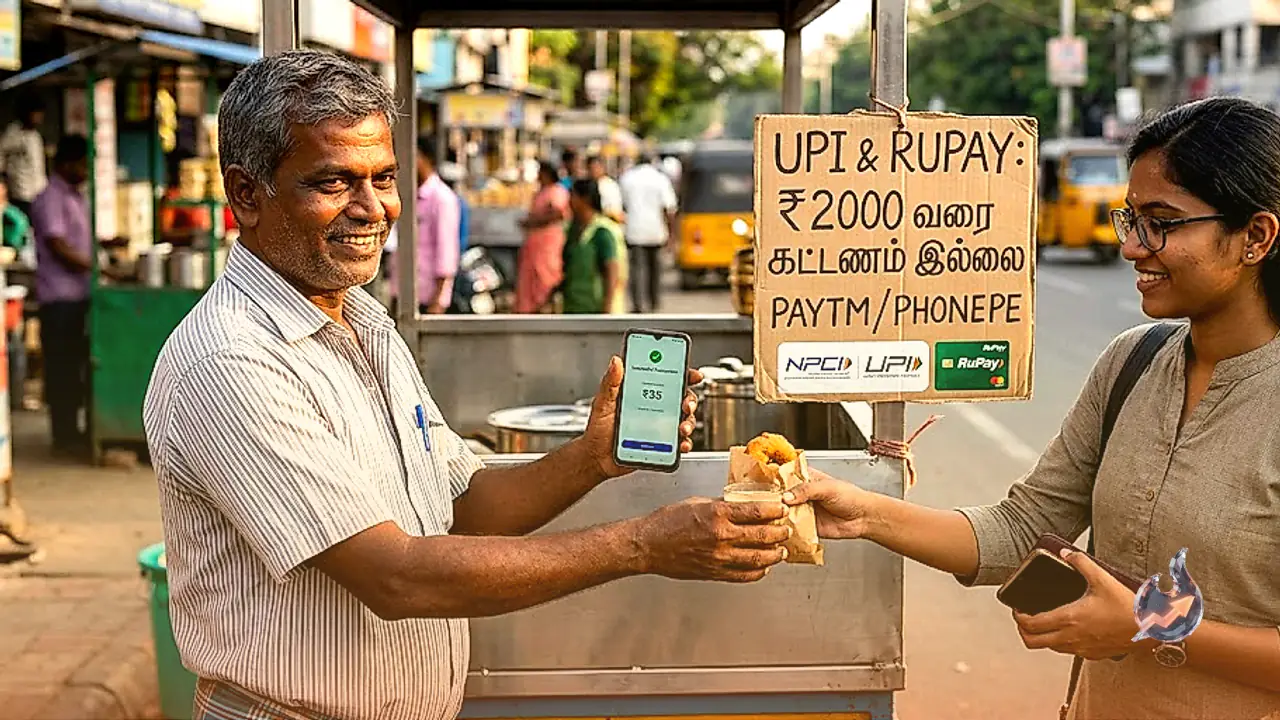

The central government has officially clarified the regulatory stance regarding transactional levies on low-ticket digital payments across the country. According to a formal gazette notification issued by the Finance Ministry on Monday, September 14th, all Unified Payments Interface transactions up to Rs. 2,000 as well as RuPay debit card payments up to the identical threshold will remain completely exempt from charges. This directive ensures that commercial banks and payment system operators cannot levy any convenience fees, processing charges, or surcharges on individuals conducting transactions within this specified ceiling.
Complete Protection for Daily Household Expenses
This policy declaration brings significant operational certainty to millions of citizens who rely on digital channels for routine purchases such as groceries, food items, local commuting, and essential utilities. Under the outlined provisions, two distinct electronic payment segments have received explicit regulatory safeguards against transaction costs: RuPay-powered debit card swipes and online payments up to Rs. 2,000, alongside all standard UPI transfers capped at Rs. 2,000. Consumers handling everyday domestic expenditures can thus continue making small digital payments without fear of unanticipated financial deductions.
Current Status of Payments Exceeding the Threshold
A critical point of clarity for end users concerns whether transfers above the Rs. 2,000 limit will immediately attract transactional fees. The government has clarified that no consumer fee has been introduced or enforced for higher-value digital payments at this stage. However, the published notification does not guarantee that every category of electronic transaction will stay permanently free of cost. Instead, it establishes an enabling administrative framework under which charges could potentially be structured or introduced on larger transfers at a later date.
NPCI to Determine Long-Term Policy on Higher Transactions
Under the prospective framework, whether an individual executing a Rs. 2,500 transfer or a Rs. 20,000 payment encounters additional levies in the coming period will hinge directly on future regulatory determinations by the National Payments Corporation of India, known as NPCI. Because no formal consumer fee has been authorized or notified for transactions above the Rs. 2,000 mark as of now, retail users face zero cost adjustments across their personal transfers for the time being.
Revenue Implications for the Payment Infrastructure Sector
The economic considerations surrounding digital settlement networks have also been brought into focus through industry analyses. Based on research estimates compiled by Jefferies, introducing merchant fees on higher-value digital transfers could theoretically yield between Rs. 50 billion and Rs. 100 billion in annual revenue for the wider payments industry. While such structural mechanisms remain open for policy evaluation in the future, the immediate mandate strictly isolates grassroots digital adoption from commercial overheads.