























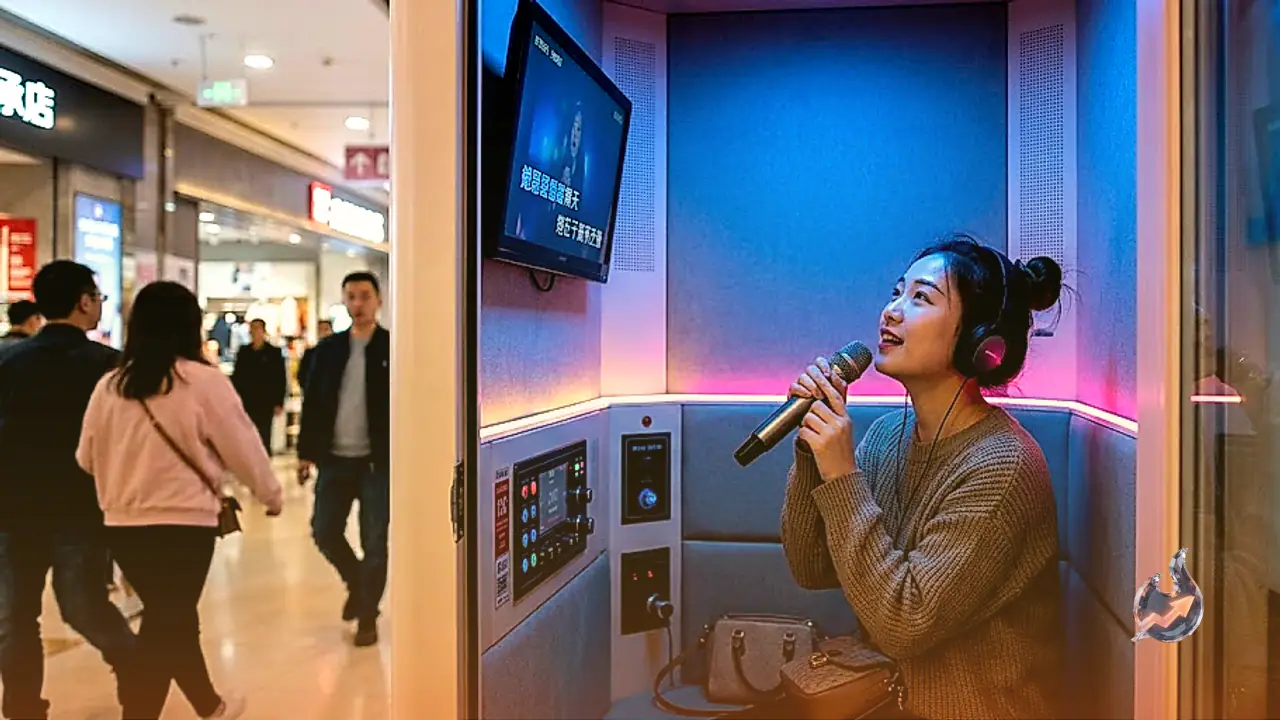

A profound socioeconomic shift is reshaping consumer behavior across China, transforming personal solitude and urban isolation into a rapidly expanding commercial frontier. Driven by an expanding cohort of citizens who live, dine, and spend without domestic partners, companies are re-engineering their entire product offerings around the individual. From artificial intelligence romantic partners and lifelike virtual pets to miniature solo karaoke booths and single-diner hotpot stations, a dynamic market has materialized to cater to people seeking emotional comfort, convenience, and autonomy without social compromises.
Urban Pressures and the Rise of Solo Living
China's rapid economic modernization has fundamentally transformed the domestic structure of everyday life. Millions of ambitious young professionals have relocated from provincial towns to dense metropolitan centers pursuing higher education and specialized employment. However, the realities of city life, characterized by relentless work schedules, steep living costs, inflated real estate, and financial uncertainty, have made conventional life milestones such as marriage, buying a home, and child-rearing increasingly difficult to attain. Concurrently, a growing segment of the urban populace is deliberately choosing singlehood, placing a premium on personal freedom, career flexibility, and unconstrained self-determination.
This cultural evolution has presented modern enterprises with a strategic question: how can brands successfully cater to consumers who desire to eat, travel, unwind, and socialize strictly on their own schedule? Traditional retail and hospitality models built around extended families are adjusting to accommodate individual households. Industry estimates examining these shifts indicate that total spending by single consumers reached approximately $1 trillion in 2025. This valuation reflects a multifaceted spectrum of spending across personal dining, leisure, tech gadgets, housing services, and travel, rather than the isolated revenue of any single commercial segment.
The Ascent of Synthetic Intimacy and Virtual Companions
Technological advancement has pushed the boundaries of the loneliness market into unprecedented territory. Leveraging a sophisticated domestic hardware manufacturing ecosystem and a digitally fluent populace, Chinese tech enterprises are developing sophisticated conversational artificial intelligence models designed to emulate empathetic human connection. These virtual companions can recall nuanced details of previous exchanges, adjust their conversational tone, and simulate roles spanning supportive confidants to customized romantic partners. For workers returning from exhausting office shifts, these applications offer an accessible outlet for emotional release and uninhibited role-play.
In a parallel development, digital and robotic pets have carved out a dedicated consumer niche. Unlike biological animals, these artificial creatures demand no physical feeding, daily walks, or expensive veterinary appointments. Designed with responsive sensors and adaptive software, they react to human interaction, cultivate individualized behaviors, and provide the sensation of a continuous bond. Nevertheless, the rapid proliferation of synthetic companionship has prompted debate among sociologists and mental health practitioners regarding emotional dependency, data security, and whether algorithmic interaction genuinely remedies social disconnection. In response to potential psychological harms and predatory manipulation, Chinese authorities have introduced regulatory measures overseeing anthropomorphic artificial intelligence services.
Reimagining Public Spaces for the Solitary Consumer
Beyond digital software, physical retail and entertainment spaces across urban centers are undergoing structural redesigns to accommodate solo visitors. Private karaoke booths provide a clear manifestation of this shift. Rather than renting an expansive lounge that necessitates organizing a large social gathering, customers can reserve compact soundproof cabins to select tracks and sing privately without feeling scrutinized by peers.
Similar adaptations have permeated fitness centers, movie theaters, and the restaurant industry. Food establishments are incorporating partitioned tables and individual hotpot stations, allowing single patrons to enjoy complex communal meals without social awkwardness. Travel providers are similarly rolling out curated solo itineraries, enabling adventurers to explore destinations without coordinating timelines with companions. For commercial operators, the solo model offers operational resilience: businesses can generate steady foot traffic and revenue from individual transactions rather than waiting for large party reservations, appealing directly to younger demographics who prioritize personal indulgence over collective social validation.
The Emergence of the Paid Companionship Economy
Another striking development within this landscape is the institutionalization of paid companionship. Across multiple metropolitan areas, individuals are paying vetted companions on an hourly or daily basis to accompany them during recreational outings, including city explorations, hiking trails, museum tours, and shared dinners. These arrangements are typically non-romantic in nature; patrons are primarily securing presence, active listening, and a shared social environment to make unfamiliar settings or solo leisure pursuits feel less daunting.
For university students and flexible freelance workers, this sector provides a viable supplementary income stream with self-directed hours. This arrangement defines a specialized service economy where the traded commodity is not a physical good, but dedicated human time, presence, and undivided attention. The popularity of such services illustrates how consumers are increasingly comfortable paying monetary premiums for interpersonal comfort and practical companionship, even for activities they could technically complete alone.
Economic Undercurrents and Future Sustainability
As policymakers seek to rebalance broader economic growth toward domestic consumer demand, challenges such as subdued consumer confidence, competitive employment markets, and cautious household budgets remain persistent. The emergence of businesses catering to solo lifestyles demonstrates how commercial sectors can pivot to uncover value by servicing single-person units rather than relying solely on traditional family spending patterns. Furthermore, as delayed marriage, declining birth rates, and solo urban living accelerate across other global regions, these business templates are likely to be adopted in markets well beyond China.
Despite this commercial momentum, analysts caution against treating human isolation purely as an exploitable profit stream. Algorithmic partners and transactional companions may provide fleeting emotional respite, but they cannot inherently resolve chronic disconnection or replicate authentic community bonds. Long-term commercial viability will ultimately hinge on consumer retention once the novelty recedes, alongside rigorous privacy compliance and fair pricing structures. The trajectory of this market reflects an enduring transformation in how modern city dwellers navigate personal independence and negotiate companionship.