
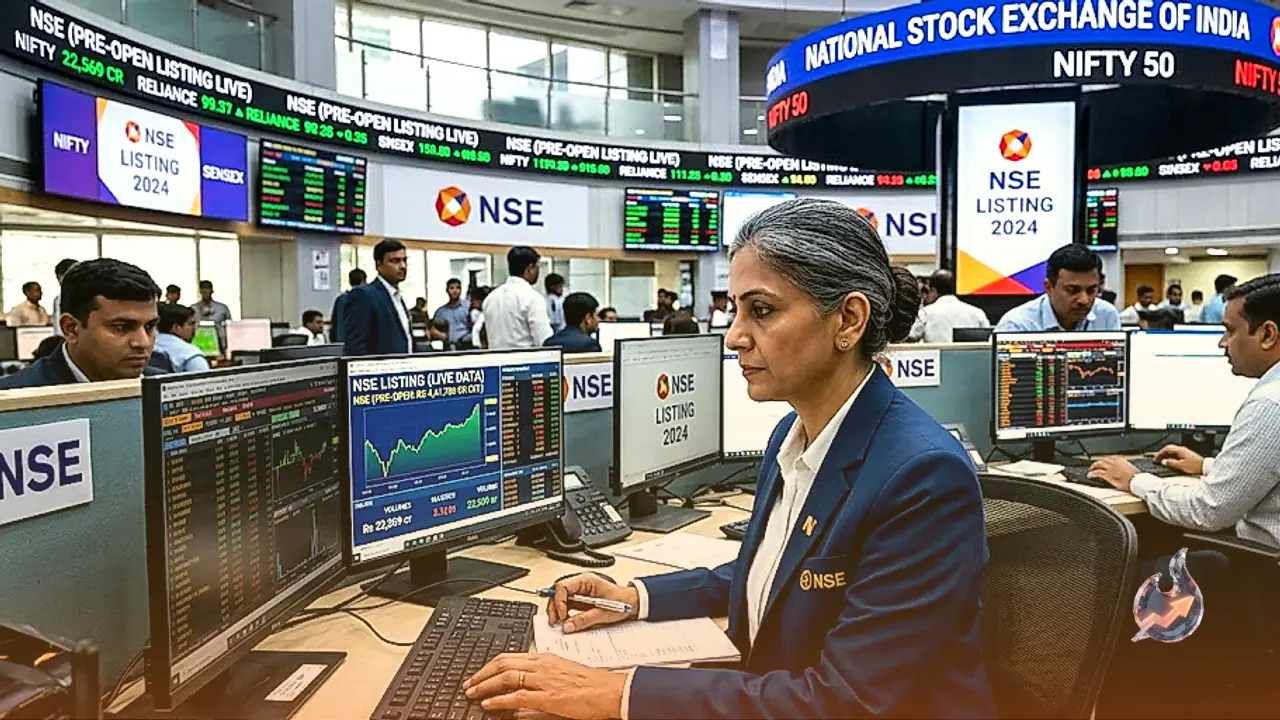




















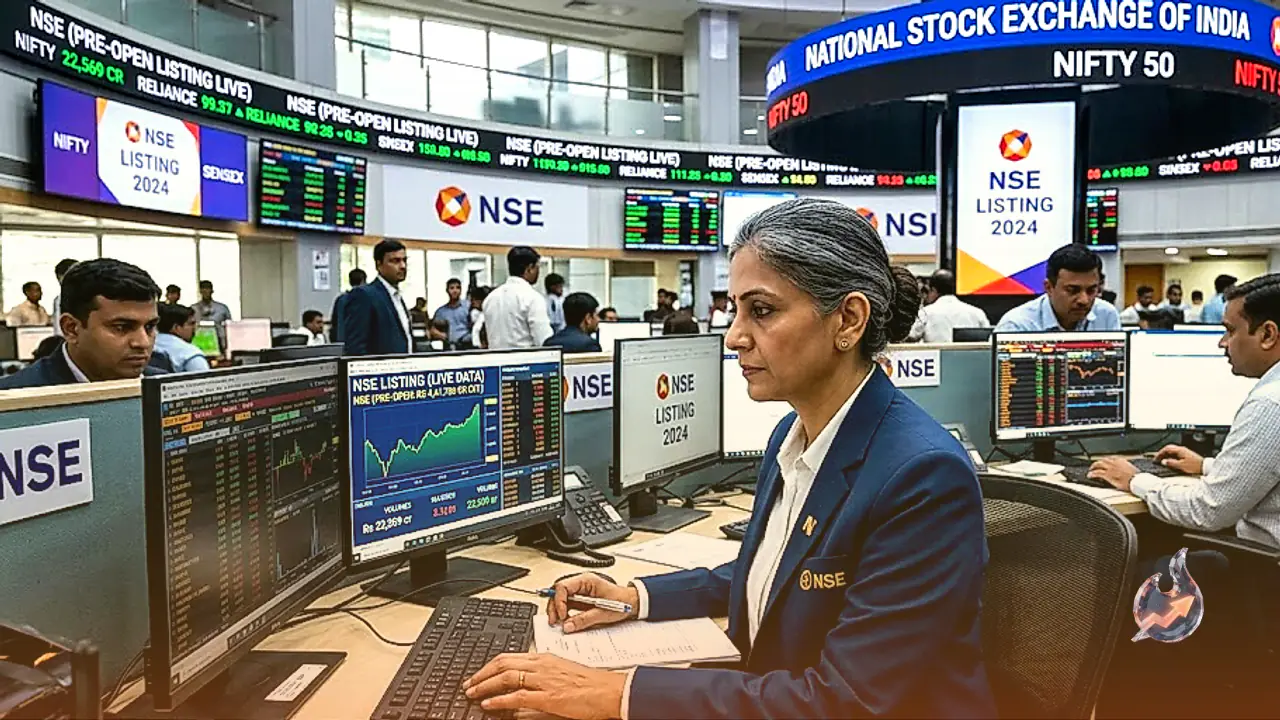

A defining milestone in India's capital market history is unfolding as the premier bourse, the National Stock Exchange, prepares to open its public subscription window between September 17, 2026, and September 21, 2026. Priced at a valuation band reaching up to Rs 1,785 per share, the overall issue size stands at Rs 22,569 crore at the upper threshold. This massive transaction secures its position as the largest stock exchange share sale and the second-largest public offering ever conducted in the domestic primary market. Furthermore, equity research projections indicate that upon debut, the market valuation of the benchmark exchange could exceed that of its older, listed peer, BSE, by more than three times. The scale of the offering underscores the rapid expansion of domestic financialization and retail participation across India over the past decade.
Offer Structure, Bidding Parameters, and Selling Shareholders
The pricing bracket for the public issue has been fixed between Rs 1,700 and Rs 1,785 per equity share. An employee concession offering a discount of Rs 170 per share has been extended to eligible staff members. Market participants can place bids starting with a minimum block of 8 shares and continuing in exact multiples thereof. Structurally, the entire issue is formulated as an offer for sale, meaning no fresh capital is being injected into the exchange's balance sheet; instead, existing institutions are offloading a cumulative total of up to 12,64,36,650 equity shares to institutional and retail buyers.
A substantial portion of this share sale is driven by public sector undertakings and state-backed financial corporations seeking to monetize their early holdings. Notable institutions divesting equity include State Bank of India, Bank of Baroda, General Insurance Corporation of India, The New India Assurance Company, National Insurance Company, and United India Insurance. Distribution across investor categories follows standard regulatory quotas, allocating 50 percent of the issue to qualified institutional buyers, 15 percent to non-institutional high-net-worth applicants, and the remaining 35 percent to retail individual bidders.
Positioning in the Hierarchy of Historic Indian Offerings
Aggregating to Rs 22,562 crore at the specified base size calculation, this issuance trails only the mammoth Rs 27,870 crore offering executed by Hyundai, which retains the pinnacle ranking in India's public issue records. The exchange has effectively surpassed the previous benchmark set by Life Insurance Corporation of India, whose 2021 float generated Rs 21,008 crore. Rounding out the historical top five are the public offerings of digital payments firm Paytm, which raised Rs 18,300 crore in 2021, and mining behemoth Coal India, which mobilized Rs 15,200 crore back in 2010.
Originating in 1992, the bourse established itself as the country's preeminent financial exchange and developed into one of the premier multi-asset operating environments globally. Its fully unified operational architecture encompasses trading infrastructure, clearing operations, listing frameworks, indices, algorithmic market data feeds, terminal access, and software licensing. Ever since fiscal year 2001, it has commanded the domestic equity landscape by generating the highest aggregate turnover across both spot cash market transactions and equity derivative contracts, solidifying its position in the domestic exchange duopoly.
Entry Trajectory into the Nation's Top 15 Corporate Giants
Evaluating the corporate entity against the upper pricing threshold of Rs 1,785 implies an expected post-listing market capitalization of approximately Rs 4,41,788 crore. Achieving this market valuation upon floatation will automatically propel the market infrastructure institution into the 13th spot among India's most valuable listed enterprises. Such a ranking places the exchange ahead of several long-standing commercial giants, including information technology leader Infosys, banking majors Kotak Mahindra Bank and Axis Bank, passenger vehicle manufacturer Maruti Suzuki, and Adani Group flagship entities such as Adani Enterprises, Adani Ports, and Adani Power.
This projected valuation places the company directly behind healthcare and pharmaceutical leader Sun Pharmaceuticals, which occupies the 12th position with a market capitalization of Rs 4,41,947 crore. Capital market observers point out that a strong listing-day performance could potentially allow the exchange to challenge the market standings of consumer goods major Hindustan Unilever and lifestyle retail giant Titan Company.
The Threefold Valuation Differential with BSE
At present, BSE holds an established market capitalization exceeding Rs 1,38,231 crore, an amount that represents less than one-third of the anticipated listing valuation of its larger competitor. The primary exchange commands over 90 percent market dominance across virtually all equity trading classifications, with the exceptions of commodities and index option products where competition remains active. It stands as the most comprehensively diversified platform in the nation, supported by an expanding technology, analytics, and data services arm that contributed 12 percent of total revenues in fiscal year 2026.
Explaining the rationale for comparative assessment against BSE, research analysts at JM Financial noted that the older exchange functions as a directly comparable listed multi-asset platform operating across the cash segment, equity derivatives, mutual fund platforms, and wholesale debt divisions while sharing identical revenue channels including transaction fees, listing levies, and data distribution services. While operational expansion has been steady, with compound annual growth rates of 6 percent in revenue and 11 percent in net profit between FY24 and FY26, recent profit trajectories absorbed one-time regulatory burdens. These liabilities stemmed from settlement procedures with SEBI alongside financial provisions established for dark fiber connectivity and colocation matters. Nevertheless, analysts at SBI Securities maintained that the exchange remains the best franchise among peers, supported by strong structural drivers across India's evolving financial ecosystem.
Financial Health and Professional Investment Verdicts
The exchange generated top-line revenue of Rs 16,601.3 crore in fiscal year 2026, representing a 3.1 percent contraction from the Rs 17,140.7 crore recorded during fiscal year 2025. Operating earnings before interest, tax, depreciation, and amortization fell 11.1 percent year-on-year to Rs 11,264.6 crore, moderating the operating margin from 73.9 percent down to 67.9 percent. Annual net profit declined by 12.2 percent to settle at Rs 10,071.3 crore, which translated to a net profit margin of 60.7 percent.
Despite these headline moderation figures, underlying operational efficiency remained robust, demonstrated by a return on equity of 32.1 percent and a return on capital employed of 24.2 percent in FY26. Balance sheet resilience is further insulated by an extensive Core Settlement Guarantee Fund totaling Rs 13,392.30 crore, offering substantial protection against systemic defaults.
Priced at 42.9 times its FY2026 diluted earnings per share of Rs 41.62, the valuation is viewed as reasonable by market professionals given the company's commanding market position, superior cash flow generation, and structural economic moat. Research analysts at Sushil Finance advised a subscribe rating on the issue, pointing toward both near-term listing gains and durable long-term exposure to the Indian capital market story. Echoing this positive stance, analysts at Ventura Securities emphasized that despite regulatory oversight and operational execution dependencies, the public issue provides the exchange with the institutional footing necessary to drive strategic long-term capabilities.