




















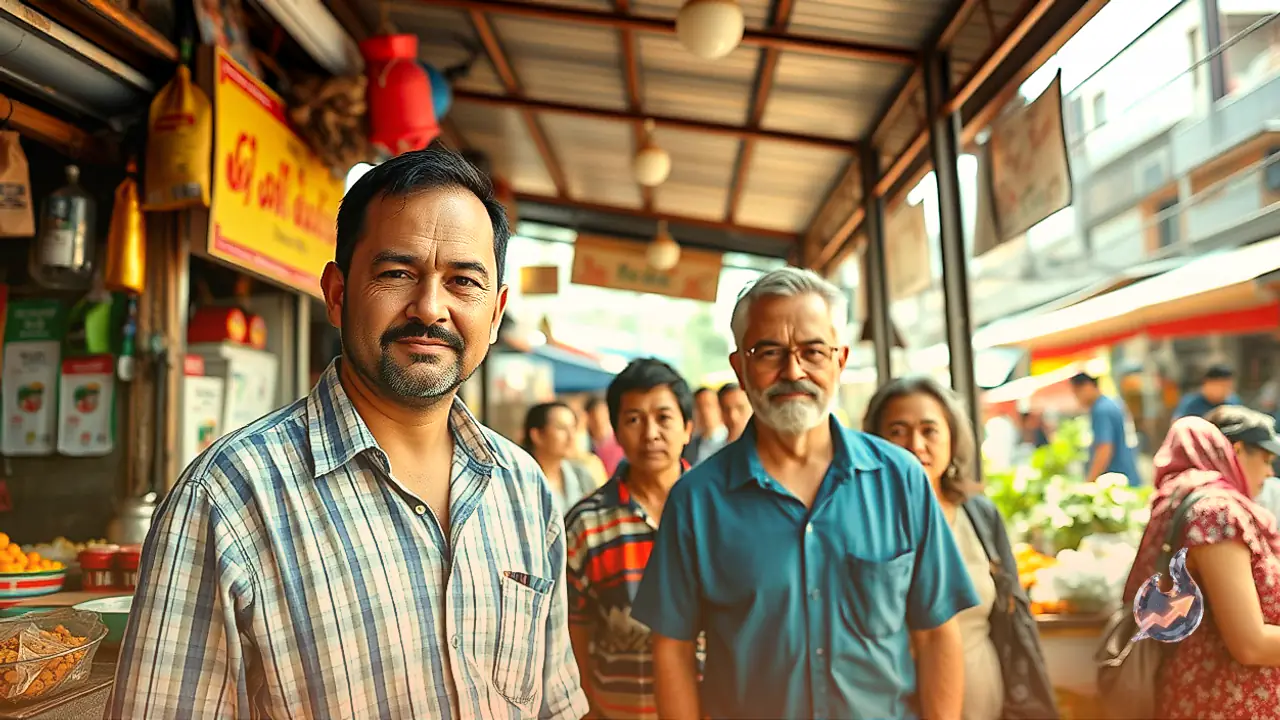

Starting a self-employment venture in rural areas or small towns does not require extensive capital or elaborate infrastructure. Small enterprises centered around daily refreshments and popular street snacks can be launched on minimal budgets while establishing dependable revenue streams. One of the primary advantages of doing business in a village environment is the minimal overhead expense, which allows operating profits to materialize quickly. In most cases, a modest investment between Rs 5,000 and 10,000 is sufficient to set up a functional cart or stall. With consistent preparation standards and appealing taste, such roadside food ventures can yield monthly earnings in the range of Rs 40,000 to 50,000.
Setting Up a Tea Stall
Opening a tea stall remains one of the simplest and most immediately lucrative ventures in rural settlements. Basic requirements involve nothing more than a standard gas stove, a kettle, and an initial set of serving cups. The commercial viability of the stall rests heavily on choosing the right spot. Positioning the cart near bus stops, railway stations, or central village gathering points ensures an uninterrupted flow of daily patrons. In such high-traffic spots, daily sales can comfortably touch 200 cups, allowing operators to earn between Rs 25,000 and 30,000 each month in clear profit.
Selling Fresh Samosas
Samosas enjoy enduring popularity across villages, townships, and residential neighborhoods alike, appealing uniformly to children, working adults, and senior citizens. Due to the affordable price point of the item, consumers rarely stop at a single portion and often purchase two or three pieces in a single visit. This higher sales volume generates strong profit margins relative to the small ingredient expense. Setting up a mobile cart near schools, colleges, or weekly community markets naturally draws concentrated foot traffic without requiring promotional spending.
The Daily Panipuri Business
Among everyday street snacks, panipuri holds an unmatched appeal, especially during late afternoon and evening hours. It commands a dedicated base among local women and children, whose buying pattern typically involves multiple servings rather than a single plate. An entrepreneur can easily operate this business on a compact scale without operational friction. All essential elements, from spiced water to fillings, can be prepared at home during the morning, leaving only the evening serving tasks to be handled on the cart. Setting up stall near central squares, temple gates, or regular street markets guarantees steady patronage.
Catering to the Demand for Momos
The appetite for momos has steadily expanded among younger populations across small towns and rural pockets. The distinct spicy flavor profile offers a departure from traditional snacks that appeals directly to student crowds. An operational advantage of this item is that young patrons predominantly arrive in groups of friends, leading to multiple plate orders simultaneously. Locating a stall in the vicinity of educational institutes or coaching hubs pulls in immediate demand. While the preparation involves higher manual labor, each serving delivers a comparatively healthy profit margin.
Serving Chaat and Chowmein
Rural consumers increasingly seek modern urban culinary options, leading to sustained demand for fast-food favorites like chaat and chowmein. These outlets function not merely as quick-bite stalls but also as casual social spaces where friends and family gather to spend time together. As a result, the enterprise continually attracts new daily walk-in customers. Vendors can operate from a fixed roadside stall or travel across multiple residential lanes using a pushcart. When flavor and hygiene are maintained, customers care only about product quality rather than whether the establishment sits in a metropolis or a quiet village.