






















Rising inflation and mounting routine expenses frequently strain family budgets well before the month concludes. Fixed salaries often fall short, making it difficult for many households to cover essential purchases without financial stress. Under such economic circumstances, establishing a micro-enterprise directly from home serves as a reliable remedy. Crafting and selling homemade pickles emerges as a practical, high-margin venture that demands minimal initial capital while delivering consistent financial returns.
Low Capital Outlay and Flexible Home Space
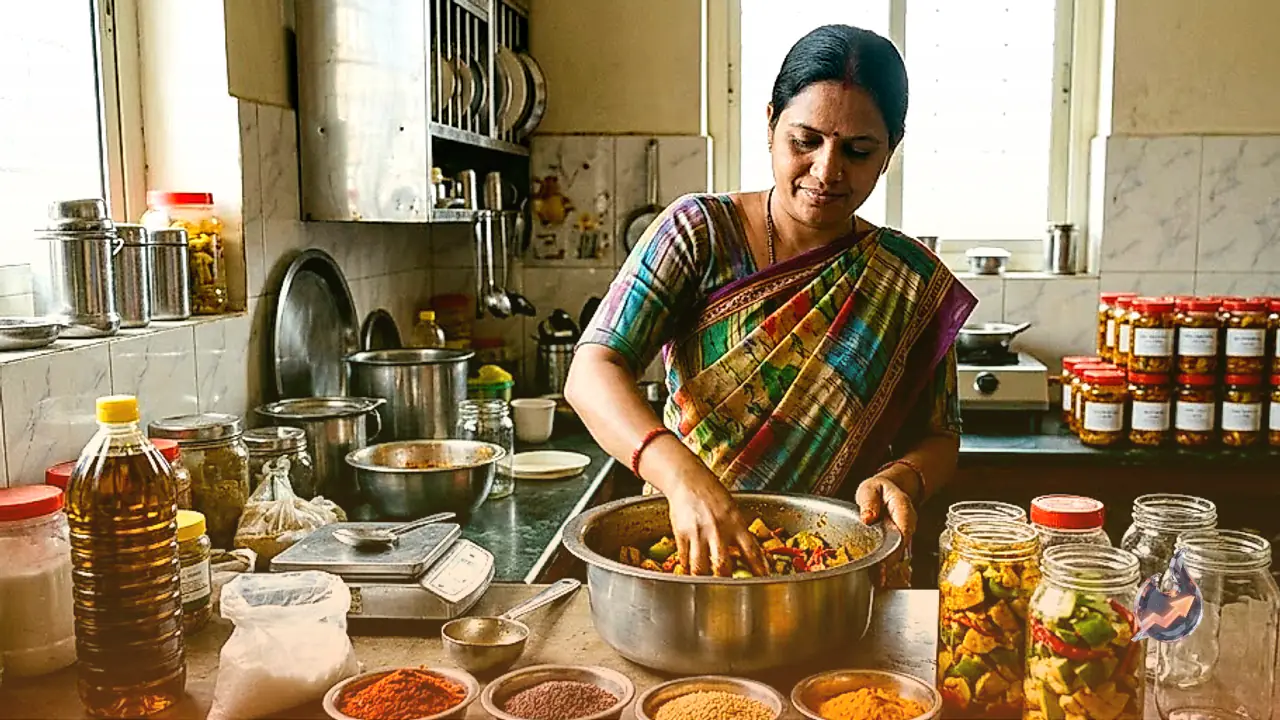
Getting this enterprise off the ground requires an initial outlay of merely Rs 10,000 to 15,000. Aspiring micro-entrepreneurs do not need to lease expensive commercial space, hire warehouses, or invest in extensive infrastructure. A spare room, a domestic kitchen, or any modest corner within the household provides sufficient workspace to initiate small-batch preparation and packaging.
Given that retail shelves already stock numerous varieties, possessing an authentic and distinctive culinary recipe represents the single most crucial factor for commercial success. When flavor and texture stand out from mass-produced alternatives, purchasers return repeatedly. Pairing that distinct taste with an appealing, recognizable brand name ensures the product carves out its own identity amid competitive retail environments.
Selecting Flavors and Building Customer Reach
Consumer preferences span diverse varieties, though traditional mango and lemon formulations continue to dominate market demand throughout the year. Alongside these staples, health-conscious buyers increasingly seek functional offerings such as Indian gooseberry (amla), drumstick (sahjan), and green chili pickles. Pinpointing target flavor profiles in advance helps streamline raw material procurement and customer outreach.
Distribution can occur through multiple parallel channels, including direct retail sales to individuals, wholesale supply arrangements with neighborhood grocery stores, and listings across digital commerce portals. Small-scale domestic operators face straightforward legal formalities without cumbersome paperwork. The primary regulatory requirement remains obtaining an FSSAI food processing license, which can be secured smoothly via online submission.
Empowering Women Through Institutional Guidance
Home-based pickle production offers an accessible avenue for financial independence, particularly for women across rural and urban locations. Its operational flexibility allows individuals to balance household routines while managing production schedules.
Multiple state-backed programs, alongside community self-help groups, extend formal skill training, food preparation guidance, and practical operational mentoring for such initiatives. Leveraging these educational sessions equips women with standardized production methods, paving the way toward a dependable, autonomous stream of domestic income.
Marketing Channels, Packaging, and Income Prospects
Smart visibility and brand presentation remain pivotal in accelerating sales momentum. Word-of-mouth recommendations, residential neighborhood networks, WhatsApp communities, and digital social platforms provide zero-cost avenues for early customer acquisition. Furthermore, presenting products in hygienic, well-sealed jars with clean labeling significantly enhances consumer trust. Maintaining uncompromised taste standards and dependable delivery schedules ensures sustained loyalty.
During early phases, this domestic venture can generate net monthly earnings ranging from Rs 25,000 to 30,000. As market reputation solidifies, batch sizes scale up, and newer flavor options join the portfolio, overall proceeds can expand into several lakhs of rupees annually, turning a small domestic experiment into a full-fledged enterprise.