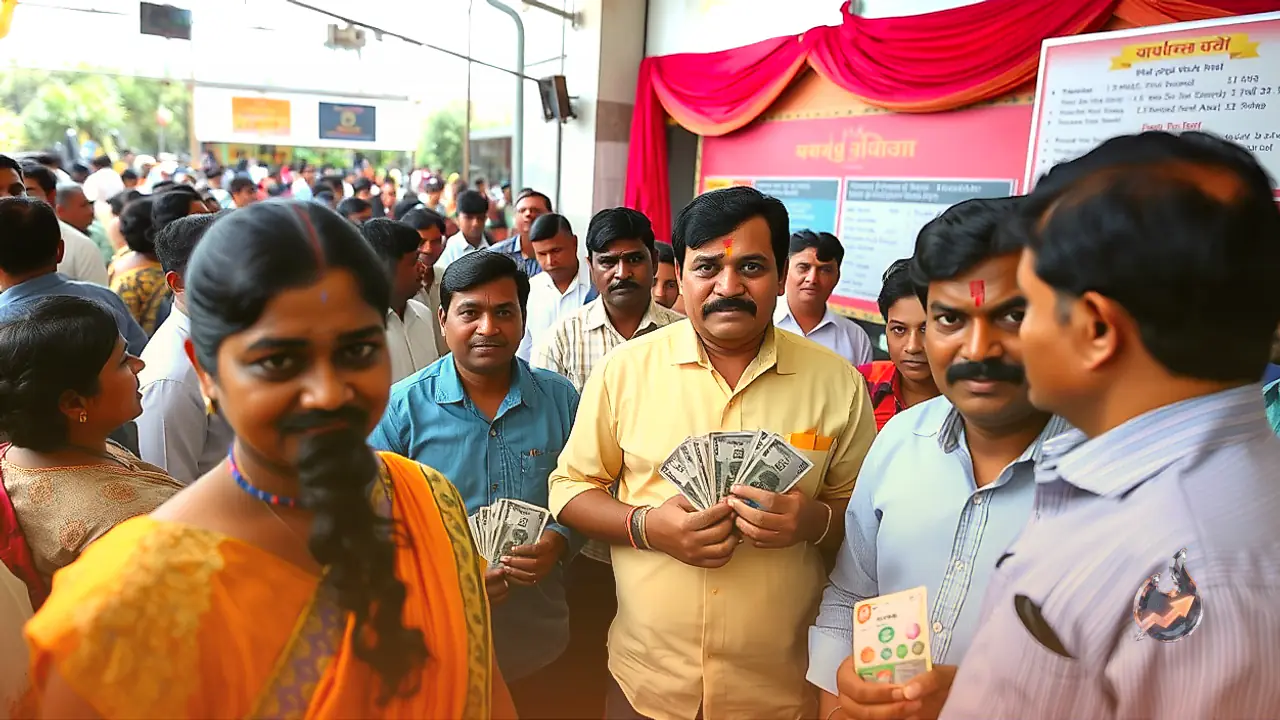






















Gold buyers across India witnessed a welcome price correction on October 12, 2026, coinciding with the second day of the festive Navratri period. Spot and retail rates for 24-carat, 22-carat, and 18-carat purities pulled back across major metropolitan centers. For the purest 24-carat grade, a 100-gram tranche declined by Rs 4,400, while the widely referenced 10-gram denomination dropped by Rs 440. An 8-gram unit declined by Rs 44, and the single-gram benchmark similarly slipped by Rs 44, providing immediate relief to retail jewelry consumers and bullion allocators alike.
Breakdown of 24-Karat Benchmarks by City
In extensive southern and western trading hubs including Chennai, Mumbai, Pune, Kerala, Hyderabad, Bangalore, and Kolkata, 24-carat bullion traded at uniform levels. In these markets, 100 grams of 24-carat material changed hands at Rs 15,09,800. The standard 10-gram bar traded at Rs 1,50,980, while the single-gram price settled at Rs 15,098.
In contrast, the national capital Delhi witnessed higher retail prices, remaining firmly above the Rs 1.51 lakh mark per 10 grams. In Delhi, 100 grams of 24-carat metal stood at Rs 15,11,300, 10 grams were quoted at Rs 1,51,130, and 1 gram held at Rs 15,113. Meanwhile, western commercial hubs Ahmedabad and Vadodara recorded slightly lower figures than the capital, with 1 gram trading at Rs 15,103, 10 grams priced at Rs 1,51,030, and 100 grams listed at Rs 15,10,300.
Retail Figures for 22-Karat Jewelry Bullion
The standard 22-carat alloy, which forms the overwhelming backbone of traditional Indian ornamental purchases, also reflected the downward trend. In Chennai, Mumbai, Kolkata, Kerala, Hyderabad, Pune, and Bangalore, 22-carat gold stood at Rs 13,840 per single gram. Consequently, 10 grams traded at Rs 1,38,400, and 100 grams were marked at Rs 13,84,000 across these retail hubs.
Delhi jewelers quoted slightly higher figures for 22-carat stock, listing 1 gram at Rs 13,855, 10 grams at Rs 1,38,550, and 100 grams at Rs 13,85,500. Buyers across Ahmedabad and Vadodara saw 10 grams priced at Rs 1,38,450, 1 gram at Rs 13,845, and 100 grams at Rs 13,84,500, balancing between northern and southern pricing tiers.
Variations Across 18-Karat Gold Tiers
Modern lightweight fashion accessories and studded collections typically employ 750-purity 18-carat metal. Across Mumbai, Bangalore, Kolkata, Delhi, Kerala, Pune, and Hyderabad, 18-carat gold was quoted at Rs 11,324 per gram, translating to Rs 1,13,240 for 10 grams and Rs 11,32,400 for 100 grams.
Gujarat markets maintained a modest premium on this grade, with Ahmedabad and Vadodara posting 100 grams of 18-carat gold at Rs 11,32,900, 10 grams at Rs 1,13,290, and 1 gram at Rs 11,329. Chennai registered the steepest pricing across India for 18-carat gold, with retail quotes settling at Rs 11,370 per gram, Rs 1,13,700 per 10 grams, and Rs 11,37,000 per 100 grams.
Global Market Dynamics and Expert Projections
According to Vikram Subburaj, CEO of Giottus.com, international bullion trade provided baseline support to the market structure. In early Asian trading hours, spot gold was quoted at around $4,200.23 an ounce, while US December gold futures picked up 0.2% to trade at $4,225.50. Spot silver recorded a 0.5% gain, reaching $61.08 an ounce. A softening US dollar alongside retreating Treasury yields helped cushion the broader precious metals space, although impending US inflation data could alter interest-rate path expectations from the Federal Reserve and induce fresh volatility.
Addressing the domestic landscape, Subburaj emphasized that the Indian rupee serves as a critical pricing variable. Weakness in the domestic currency can cushion local valuations whenever global bullion experiences downside pressure. Conversely, a softer rupee can magnify gains for local holders whenever international dollar quotes advance.
Looking forward, Subburaj noted that gold maintains the stronger technical setup over the immediate horizon, whereas silver's comparatively restrained movement demands greater investor caution. Market participants need to track the US dollar, Treasury yields, the rupee, and forthcoming inflation prints before viewing the current movement as an established, sustained uptrend. These figures reflect early-session prices for December 2026 MCX contracts rather than final settlement values.