




















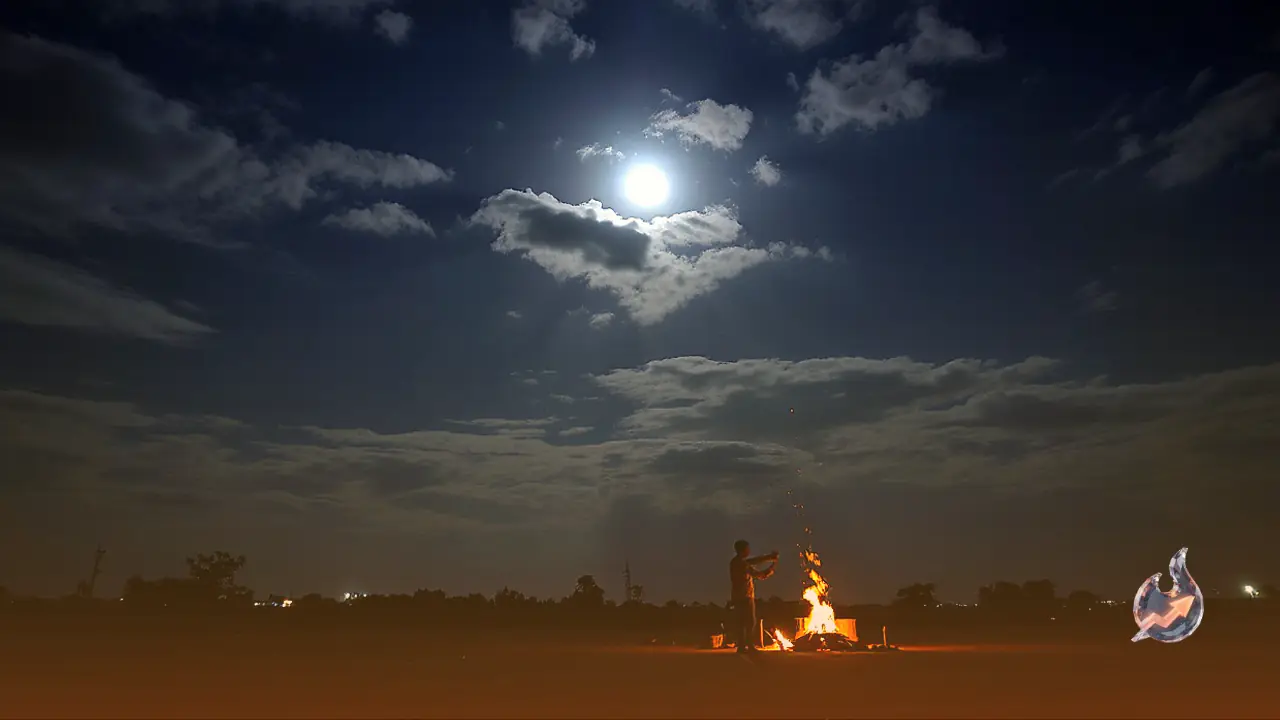

Across the nation, Thursday, October 29 marks the simultaneous observance of Karwa Chauth and Sankashti Chaturthi, two deeply revered fasting traditions centered on the nocturnal sighting of the Moon. Married women are observing a rigorous day-long Nirjala fast, abstaining from both food and water while praying for the prosperity, good health, and long lives of their husbands. Concurrently, devotees marking Sankashti Chaturthi are dedicating their day to prayers and penance for Lord Ganesha, with both sacred observances culminating in the offering of Arghya upon the Moon's appearance in the evening sky.
Geographical Variations in Regional Moonrise Timings
Calculations derived from widely followed Panchang listings demonstrate that the Moon will emerge above the horizon at distinctly varied moments across the Indian subcontinent on October 29, 2026. Due to the eastward position of the country's eastern urban centers, residents in cities such as Kolkata and Patna will witness the Moon considerably earlier in the evening. In contrast, those located across western and southern territories, notably Mumbai, Pune, and Bengaluru, face a comparatively extended wait before completing their ceremonial offerings.
These expected timings represent standard astronomical approximations and may exhibit slight minor variations depending on specific neighborhood coordinates and local elevation. Families orchestrating the concluding phases of their rituals are advised to verify the exact scheduled timing applicable to their immediate urban locality before stepping out for the customary Arghya offering.
Religious Significance and Ritual Practices of Both Observances
Karwa Chauth remains an enduring annual tradition upheld by married women, who commit to severe austerity throughout daylight hours to invoke divine protection and longevity for their spouses. The fast is brought to a formal conclusion only after women catch sight of the Moon, recite traditional hymns, and offer Arghya using a ceremonial sieve or vessel. Once the customary prayers conclude, women partake of water and food to break the day's fast.
In tandem, Sankashti Chaturthi honors Lord Ganesha as the supreme remover of obstacles. Devotees dedicate the entire day to rigorous spiritual discipline, seeking blessings for peace and wisdom. As with Karwa Chauth, the physical emergence of the Moon serves as an indispensable prerequisite for the performance of the concluding rites. Because the expected astronomical timing differs substantially between metropolitan areas, tracking local celestial tables remains essential for participants across the country.
Atmospheric Challenges Posed by Cyclone Arnab
Sighting the Moon during the evening hours may present unexpected hurdles across several pockets of India. Following the landfall of Cyclone Arnab along the coastal belts of Andhra Pradesh and Yanam on October 28, changing meteorological patterns have triggered widespread cloud buildup and heightened the likelihood of scattered rainfall. These overcast skies have sparked genuine concern among fasting households throughout Delhi-NCR and surrounding regional belts.
Meteorologists and astronomers emphasize that atmospheric disturbances such as cyclones have no bearing on the celestial schedule of moonrise itself. Moonrise remains a precise, fixed astronomical event tied directly to geographic coordinates. However, dense cloud layers, lingering haze, rain showers, and diminished ground visibility can severely hinder immediate optical observation of the lunar disc as it ascends. Devotees preparing for evening rituals will therefore need to factor in prevailing atmospheric conditions and local skyline clarity when carrying out their spiritual observances.